
A boost for PAPPS
CBN eases forex access for PAPSS, simplifies low-value trade documentation, mandates export proceeds certification to boost Nigeria's African trade role.

The Central Bank of Nigeria (CBN) has introduced measures to boost Nigeria’s role in African trade via the Pan-African Payment and Settlement System (PAPSS). Effective 28 April 2025, authorised dealer banks can now independently source foreign exchange for PAPSS transactions from the Nigerian Foreign Exchange Market (NFEM). Simultaneously, documentation requirements for lower-value PAPSS transactions have been simplified. Individuals trading up to $2,000 and corporates up to $5,000 can use existing KYC/AML documents. Higher-value transactions still require full documentation. The CBN has also mandated certification of export proceeds via PAPSS and reiterated applicants’ responsibility for goods clearance documentation.
The Pan-African Payment and Settlement System (PAPSS), an initiative conceived by the African Export-Import Bank (Afreximbank), aims to galvanise trade within Africa by fundamentally reshaping how cross-border transactions are paid for, cleared, and settled across the continent. Launched back in 2022, PAPSS was touted as a way for Africa to save upwards of US$5 billion each year in payment transaction costs, neatly aligning with the ambition of the African Continental Free Trade Area (AfCFTA). However, the rollout of PAPSS hasn't quite hit the anticipated speed, making the recent push from the Central Bank of Nigeria (CBN) a potentially crucial catalyst for progress. For PAPSS to truly gain traction and build confidence, it's vital that it provides the public with clear data and analysis on how it's performing against its initial objectives.
While making cross-border payments smoother is undoubtedly a step in the right direction, it's important to recognise that the hurdles to seamless African trade extend beyond mere payment issues. The core of the problem lies in a more complex web of broader trade policy, ongoing security concerns, inadequate infrastructure that hampers the movement of goods, and the very nature of the goods and services that African countries currently offer each other. No matter how efficient payment systems like PAPSS become, these underlying structural issues will continue to act as significant barriers unless they are directly and comprehensively addressed.
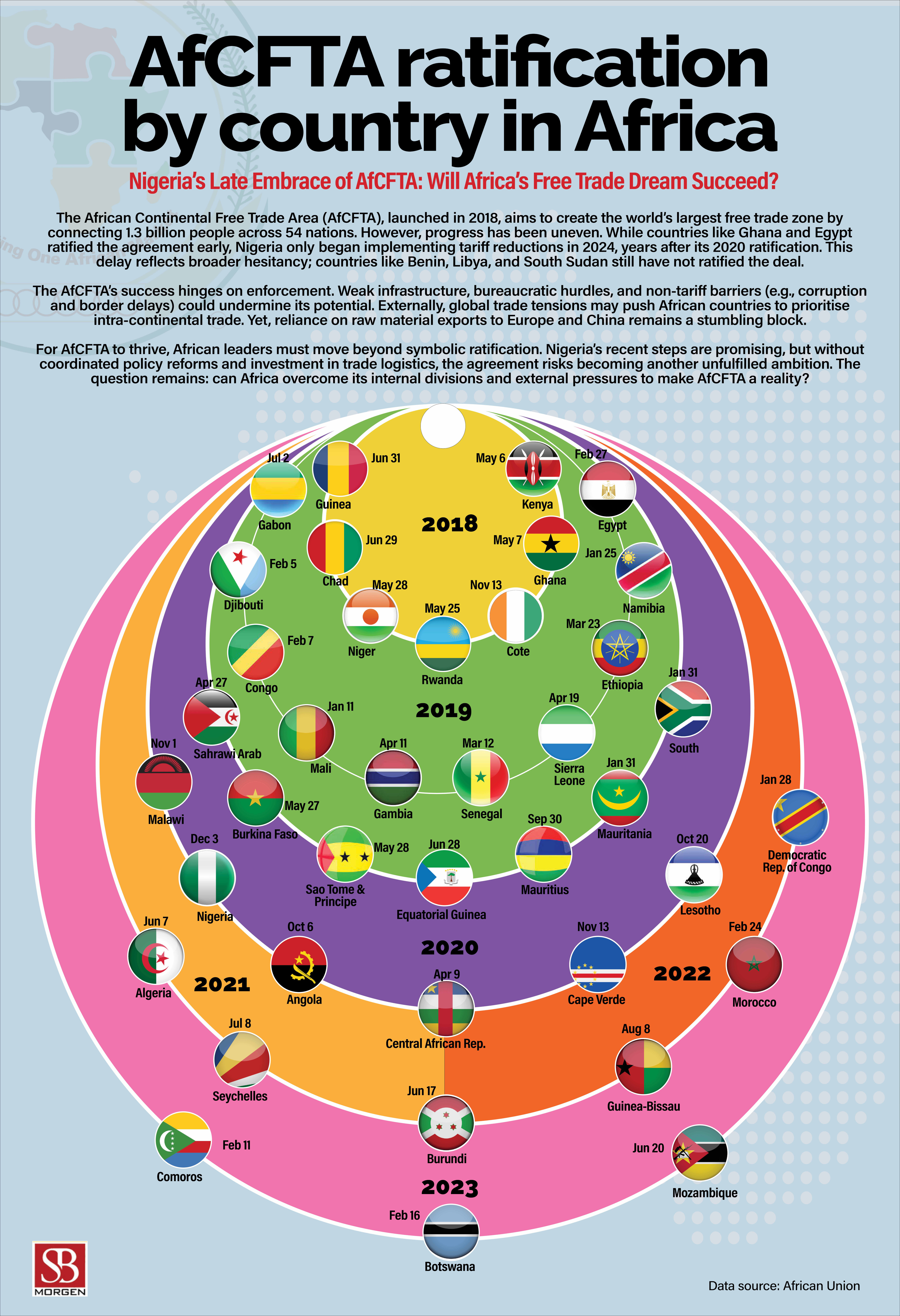
This is where the importance of coordination, particularly in the context of AfCFTA, becomes starkly apparent. As the AfCFTA, launched in 2018 with the grand vision of creating the world’s largest free trade zone, encompassing 54 nations and 1.3 billion people, represents a transformative opportunity, its success hinges on more than just payment systems. While some countries like Ghana and Egypt were quick off the mark, Nigeria’s delayed implementation of tariff reductions – only commencing in 2024, four years after ratification – mirrors a broader hesitancy across the continent. Nigeria’s recent submission of its ECOWAS Schedule of Tariff Offers under the AfCFTA is a necessary, but insufficient, step.
Therefore, for PAPSS to truly contribute to the AfCFTA's success and for Nigeria to effectively leverage the free trade area, a concerted effort across multiple fronts is essential. Simply reducing payment friction won't unlock the AfCFTA's potential if the fundamental infrastructure to move goods efficiently isn't in place, if security concerns persist in key trading corridors, or if the goods and services produced by African nations don't align with continental demand. This is precisely why PAPSS needs to publish performance data. Such transparency would allow for an unbiased assessment of whether the system is genuinely tackling the challenges it was designed to overcome and, crucially, highlight the areas where it falls short. By doing so, it would foster a clearer understanding of the wider systemic challenges at play – the inadequate infrastructure, the security risks, the production mismatches – and provide a more accurate picture of where coordinated interventions, beyond just payment solutions, are most urgently needed to truly unlock the benefits of the AfCFTA for Nigeria and the continent as a whole. Without this broader, coordinated approach, the ambition of the AfCFTA, and the potential of systems like PAPSS to support it risk remaining unfulfilled.