
A downslope
Nigeria’s petroleum industry saw a significant decline in foreign capital investments, from $720 million in 2016 to $3.64 million in 2023…

Nigeria’s petroleum industry saw a significant decline in foreign capital investments, from $720 million in 2016 to $3.64 million in 2023. In the first quarter of 2024, the industry received no foreign capital investment, according to the National Bureau of Statistics. The petroleum sector received nothing from the $3.38 billion capital importation into Nigeria during that period.
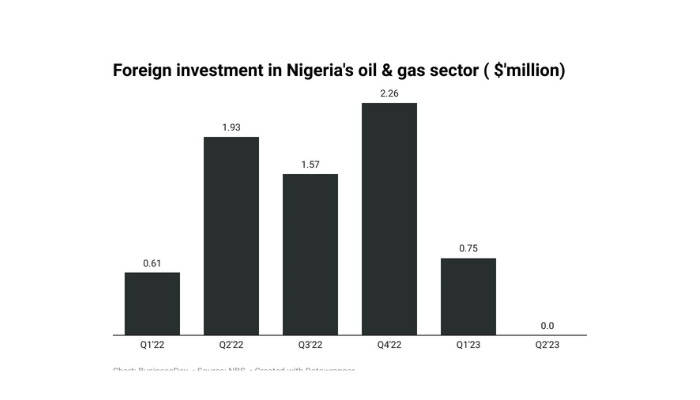
In recent years, the dynamics of the Nigerian economy have changed massively, disrupting the business environment. Before the last decade, many foreign investors set up factories and shops to produce and sell goods to Nigerian consumers, particularly in light of the growing middle class. However, in the past decade, Nigeria has experienced two recessions, significant devaluation of the Naira, and mass migration of the middle class. A recent SBM study shows that the average Nigerian now spends up to 90% of their income on food compared to 65% a few years ago, signifying an erosion of disposable income. In addition, delays in passing the Petroleum Industry Bill and insecurity in the Niger Delta have disincentivised international oil companies from investing in Nigeria’s petroleum industry. Many have put up their onshore assets for sale and focused on deep-water assets where their interaction with host communities is minimal. This lack of investment could hinder the sector’s growth and development. Foreign capital importation is crucial for the country in terms of investments, loans, and other financial resources, including Foreign Direct Investment and portfolio investment, which are essential for the sector’s progress. However, reversing this trend requires identifying the real issues, with insecurity at the top of the list, and working them out.