
A human crisis
As many as 48 million people across western and central Africa will go hungry in the coming months, the United Nations food agency said…

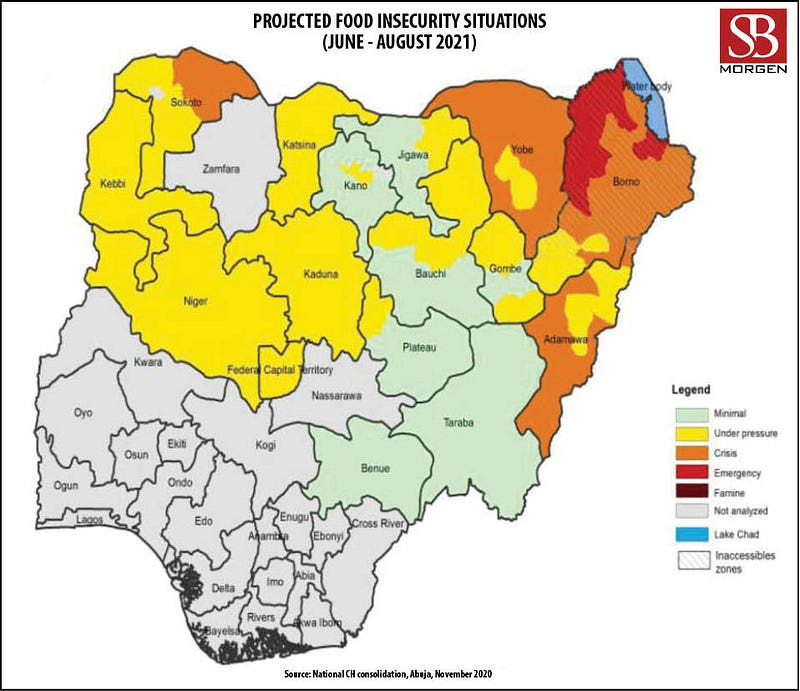
As many as 48 million people across western and central Africa will go hungry in the coming months, the United Nations food agency said. Driven primarily by violence as well as the economic fallout from COVID-19 and inflation, food insecurity has heavily impacted Burkina Faso, Mali, Niger, northern Nigeria and Mauritania. UN officials said that for the first time, some 45,000 people in the Sahel region, the arid expanse below the Sahara Desert, are on the brink of starvation. Among the vast majority facing catastrophic levels of hunger, 42,000 are in Burkina Faso, the officials reported.
The new global reality was always going to be difficult for low-income countries considering their constrained inability to absorb economic shocks. At the beginning of this year, IMF chief Kristalina Georgieva warned that a third of the global economy would experience a recession. In the Sahel, this is already a clear and present reality. From dealing with the fallout from the COVID pandemic, which brought slow growth to direct food insecurity following the war in Ukraine, the last two years have dealt stunning blows to the region. One key point to observe in the UN’s food warning is “the increase in the number of people in the region facing food insecurity to the highest level in a decade is being driven by coastal nations, including Benin and Togo, which have requested food assistance for the first time.” This coincides with an uptick in violence in the region, with coastal states now receiving a piece of the pie. When coastal West African states start requesting food assistance, we have to accept that what we have is a partly man-made problem that has to be solved by doing the right things. Take Ghana as a test case. In February, its defence minister deployed hundreds of troops to the country’s northern region to stem the tide of violence that is opening up avenues for jihadist groups to exploit. The country shares borders with Burkina Faso, where a violent insurgency has displaced more than 1.2 million people. The northern part of Ghana, home to about 20% of the population and producing most of the country’s cereals, has been affected by attacks, kidnappings, and inter-communal clashes. These incidents have hampered farmers’ access to land, inputs, markets, and humanitarian assistance, leading to reduced harvests and incomes. Moreso, the influx of refugees from Burkina Faso has increased the demand for food and services in host communities, putting pressure on already scarce resources. Another cause of hunger in Ghana is the impact of climate change, environmental degradation, and deforestation, among others. As a result, the country’s food security index has been in freefall, dropping from 63% in 2019 to less than 53% in 2022. It is almost impossible to talk about Ghana’s food security without talking about illegal small-scale mining known as galamsey, which has posed serious threats to the food security and livelihoods of millions of people in Ghana. Galamsey operators use heavy machinery, explosives, and chemicals such as mercury and cyanide to extract gold from the soil, often destroying farmlands, forests and water bodies. Illegal small-scale mining has reduced the arable land available for farming by about 40 percent; there are also contaminated water sources with heavy metals and chemicals, making irrigation impossible and affecting crop quality and yield. There are projections that if galamsey is not stopped, Ghana will face a food crisis in the near future and may end up importing water from neighbouring countries. Sub-Saharan Africa has to take a genuinely concerted and intelligent approach to deal with food security issues, and this also must include the adequate provision of protein and vitamins in the diet of Africans, especially children and women who have unique biological situations that make them somewhat vulnerable. Africa must leverage science and digital technology to adapt agriculture to climate change and improve agricultural productivity and market access for smallholder farmers. The continent must strengthen its social safety nets for its most vulnerable populations and promote dietary diversity and healthy food choices by exploring the options available across the continent for food security. Factors like insufficient funding, inadequate infrastructure, poor governance, low education levels and conflicts are largely an issue because we have placed individual short-term goals over long-term corporate goals that protect everyone, and we must accept that a key part of the change needed is value-based and cultural. The Sahel must also be rightly dealt with by engineering peace and working on irrigation systems that would help make the region an agricultural and economic powerhouse rather than the Amazon Prime of chaos and violence that it currently is.