
A land grab comes unstuck
Zimbabwe will return 67 seized farms to foreign owners to rebuild Western ties and secure debt relief.

Zimbabwe has announced plans to return 67 farms seized from foreign owners in a move aimed at rebuilding relations with Western countries and unlocking debt relief. Agriculture Minister Anxious Masuka said the farms, owned by nationals from Denmark, Switzerland, Germany and the Netherlands, are protected under bilateral investment agreements and will be restored. The farms were confiscated during controversial land reforms launched in 2000 under former leader Robert Mugabe. Current President Emmerson Mnangagwa is pursuing reforms to revive the economy and restore ties with global lenders as Zimbabwe struggles with $13.6 billion in foreign debt.
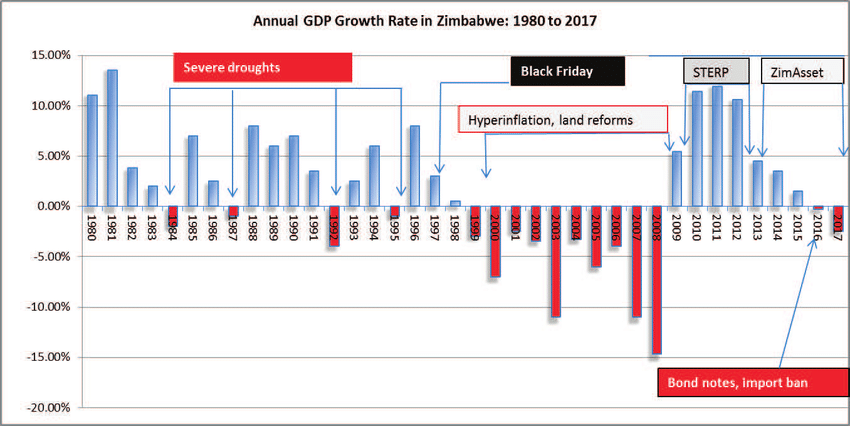
Zimbabwe’s decision to return 67 farms to European nationals is best understood not as an isolated policy reversal, but as part of a broader diplomatic and financial strategy tied to debt relief and international re-engagement. The roots of the crisis stretch back to the fast-track land seizures launched by former President Robert Mugabe and ZANU-PF in 2000, which were framed as a correction of colonial-era injustices in which white commercial farmers were seen as occupying land unfairly taken from black Zimbabweans. The programme also carried a strong political motive: after losing a constitutional referendum and facing mounting economic discontent, Mugabe used land redistribution to rebuild support among war veterans and nationalist constituencies while positioning himself against perceived Western interference.
However, the seizures devastated commercial agriculture, accelerated Zimbabwe’s economic collapse, and contributed to the hyperinflation and currency crisis that culminated in the 2008 meltdown. Calls for compensation or the restoration of seized farms emerged almost immediately, but Mugabe rejected them, arguing that revisiting the land issue would amount to surrendering the gains of the liberation struggle. For years, Harare maintained that land reform was irreversible.
Under President Emmerson Mnangagwa, the approach has shifted from ideological resistance toward pragmatic economic calculation. Zimbabwe’s $13.6 billion external debt burden, including billions in arrears, has effectively forced the government back to the negotiating table with international lenders such as the IMF and World Bank. Resolving land disputes and compensating affected investors have become central conditions for unlocking new financing, restructuring debt, and restoring access to global capital markets. The return of farms protected under bilateral investment treaties involving Denmark, Germany, the Netherlands, and Switzerland, therefore, serves a dual purpose: honouring long-violated legal obligations while signalling to creditors that Zimbabwe is willing to restore a degree of property-rights credibility.
The latest measures go beyond the headline figure of 67 farms. More than 400 white former commercial farmers are expected to regain access to all or parts of their former properties, while over 840 farms belonging to black Zimbabweans will also be restored. Separately, Zimbabwe has committed $146 million in compensation for affected foreign property owners, alongside the earlier $3.5 billion compensation framework agreed in 2020 for roughly 3,500 displaced white farmers. Yet implementation remains uneven, with many farmers dissatisfied with compensation structures heavily reliant on low-yield treasury bonds rather than cash payments.
Mnangagwa’s government has carefully balanced these concessions with assurances that the broader land reform programme will not be reversed. Officials continue to frame redistribution as historically justified and politically irreversible, even as Harare quietly pursues rapprochement with Western governments and international financial institutions. The timing is significant: Zimbabwe recently secured an IMF staff-monitored programme designed to establish a reform track record ahead of possible arrears clearance and restructuring negotiations, making the farm restitution announcement a visible demonstration of progress.
Still, the process is likely to remain slow and politically delicate. Powerful domestic beneficiaries of the original land seizures may resist implementation, while creditors continue to view governance reform, particularly on the rule of law, political freedoms, and institutional credibility, as Zimbabwe’s weakest reform area. Farm returns may improve confidence and unlock incremental diplomatic goodwill, but they alone are unlikely to secure comprehensive debt relief unless accompanied by broader political and economic reforms.