
A mass exodus
The political crisis rocking Rivers State House of Assembly took a new dimension as 27 out of the 31 lawmakers in the state defected to the…

The political crisis rocking Rivers State House of Assembly took a new dimension as 27 out of the 31 lawmakers in the state defected to the All Progressives Congress (APC). The defected lawmakers cited divisions within the Peoples Democratic Party (PDP) for defection. The defection came about two weeks after the former governor of the state, Nyesom Wike, now the FCT minister, told reporters that 27 of the state’s lawmakers opposed the state governor, Siminalayi Fubara. The 27 lawmakers belong to a faction loyal to Mr Wike.
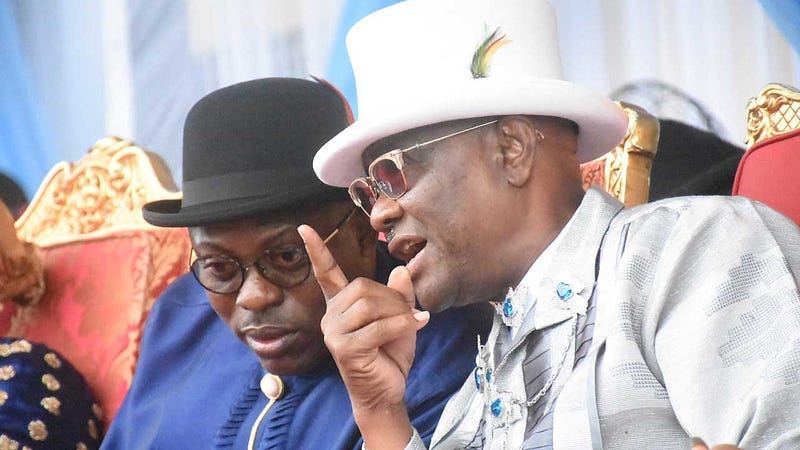
While some of the lawmakers have started to backtrack upon realising that they stand to lose their seats, three commissioners, loyal to Mr Wike, resigned yesterday. The drama engulfing politics in the state has the potential to paralyse governance and render the governor ineffective. The prospect of this defection represents a potentially groundbreaking development in a political climate where the governor’s party typically dominates state assemblies. It could shift the balance of power between the legislative and executive branches, making it possible for the legislature to actually serve as a check on the governor’s power. While Mr Wike remains a PDP member nominally, his role as a minister in an APC-led government suggests he is now working with the opposition in Rivers State to undermine his successor. This could lead to a significant shift in power dynamics within the state, with potentially significant consequences for Governor Fubara’s political future. The political impasse began in November with violence and an alleged assassination attempt using the police. A failure to resolve this via political settlement increases the risk of a spillover to the streets by proxy groups―a problem the state is familiar with. Going by its political history, the chances of this fallout between both men risks becoming a prolonged conflict that will paralyse governance for the foreseeable future. Rivers State, an oil-rich jewel in the Niger Delta, has a curious political history plagued by a recurring pattern―governors turning against the very hands that helped them ascend to power. However, Wike’s alleged sabotage of the PDP’s presidential campaign, actively working for the APC candidate Bola Tinubu, has earned him minimal sympathy from the public. This blatant betrayal of a party, which propelled him to two terms as governor, has exposed the self-serving nature of Rivers’s political landscape. The focus on planting loyal puppets in the governor’s seat rather than serving the people’s needs has led to a volatile and unproductive political environment. Instead of being channelled into development projects, the state’s oil wealth is seen as a tool for political manoeuvring and personal enrichment. Meanwhile, most of Rivers’s citizens grapple with poverty, inadequate infrastructure and environmental degradation. This cycle of betrayal and power struggles diverts resources and attention from addressing the state’s pressing issues, enables the proliferation of criminal gangs, and deepens polarisation, hindering meaningful progress towards unity and collective well-being. To break this cycle and chart a brighter future for Rivers, the state’s elite within the PDP and the APC must move beyond their petty power struggles and focus on serving the people’s needs. There is a need to move from godfatherism to a meritocratic leadership that prioritises competence and integrity over personal loyalty. Engaging in constructive dialogue and compromise, building bridges across party and ethnic lines, and prioritising the good of the state above individual agendas are also essential. The people of Rivers deserve better than a political landscape dominated by betrayals and power struggles. It’s time for the state’s elite to recognise that their true power lies not in controlling governors but in working together to build a brighter future for all Rivers’ citizens. Only then can the state’s oil wealth truly become a blessing, not a curse, for its people.