
A small light
Ghana’s fiscal policy has been characterised by recurrent periods of overspending and financial management challenges, the International…

Ghana’s fiscal policy has been characterised by recurrent periods of overspending and financial management challenges, the International Monetary Fund (IMF) has said after approving the $3 billion bailout package for Ghana to revive its economy. The IMF also disclosed in its Staff Report that Ghana is expected to reach a moderate risk of debt distress by 2028. Ghana suspended external debt payments to official bilateral and external commercial creditors since December 2022 and has accumulated arrears to these creditors, thus putting pressure on the Cedi, which surged to the world’s top-performing currency over the last two weeks.
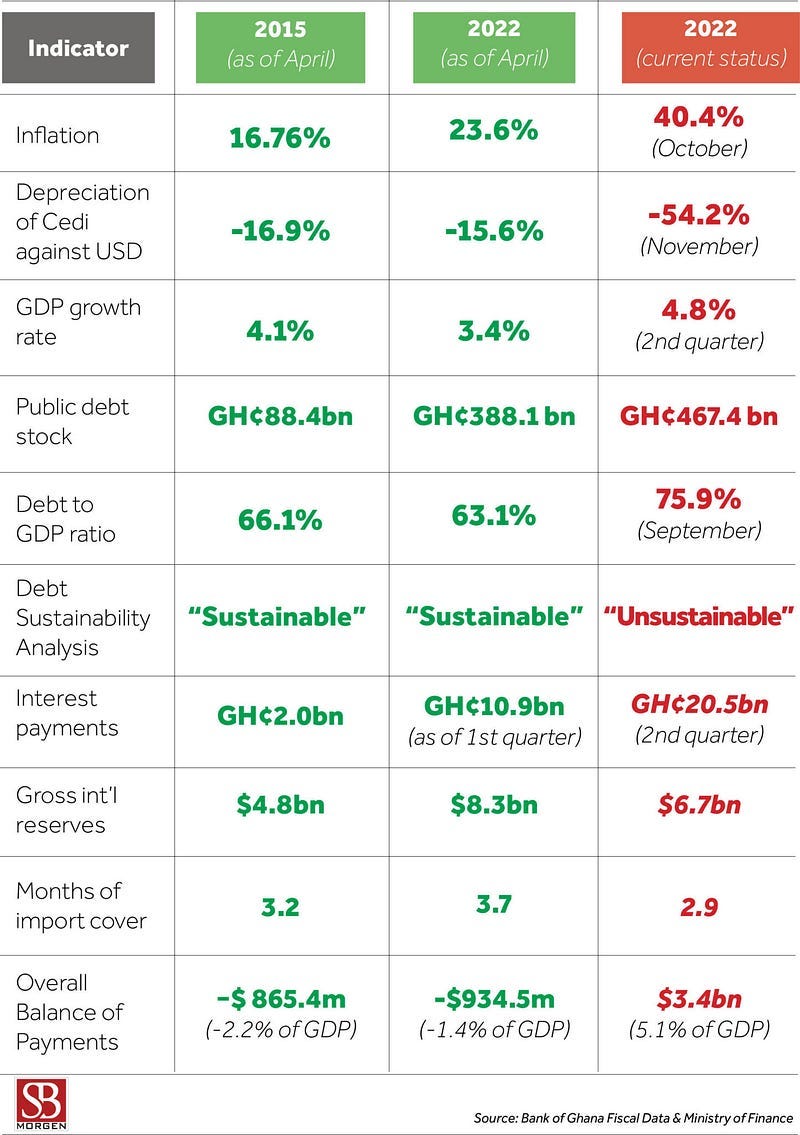
The COVID-19 pandemic has exacerbated Ghana’s fiscal and debt vulnerabilities, tightening global financial conditions and the war in Ukraine. These factors have further strained the government’s ability to address developmental needs and navigate complex social and political situations. As a result, the government’s fiscal policy response needs to be revised. Difficulties in rolling over domestic debt have forced the government to increasingly rely on monetary financing from the Bank of Ghana, leading to a severe crisis. Consequently, Ghana sought financial support from the International Monetary Fund (IMF). One of the initial requirements for Ghana’s $3 billion bailout from the IMF was to cease financing the government’s budget deficit through the Bank of Ghana. The Bank had faced criticism for its loans to the government, which had reached nearly GH¢42 billion ($4.2 billion) by the end of 2022. Concerns revolved around the growing public debt and potential inflationary pressures. The Central Bank has been compelled to sign a Memorandum of Understanding (MOU) with the finance ministry to address these concerns, committing to a zero-percent financing policy. Despite entering an IMF-fiscal year, Ghana continues to run a significant budget deficit of over $6 billion, while projected revenue stands at $14.4 billion. On the other hand, the expenditure exceeds $20 billion, with approximately 30% allocated to servicing interest on loans. This substantial expenditure has placed immense pressure on the public purse, with debt treatment at both domestic and external levels serving as the only available lifeline. The government preached a specific medium-term plan to the IMF under the 3-year Extended Credit Facility programme. The message was that it is determined to pursue an ambitious and lasting fiscal adjustment to support restoring debt sustainability in the medium term. To get the IMF executive board’s approval, Ghana’s Authorities told the Fund it aims at reducing the primary balance (commitment basis) of 3.1 percent of the GDP. According to the government, this adjustment is underpinned by revenue-enhancing measures, which aim to increase the non-oil revenue to GDP ratio by one percentage point. It disclosed that the main elements of the revenue package included a 2.5 percentage point increase in the VAT rate, complete removal of discount on benchmark values, review of the E-levy and revision of income-based taxes, and that the tax administration and compliance efforts will continue with the implementation of the E-VAT system. A month before receiving an IMF greenlight, parliament approved three major tax bills to bolster the country’s sustainable generation of domestic revenue. The bills are the Excise Duty and Excise Tax Stamp (Amendment) Bill, 2022; the Income Tax (Amendment) (№2) Bill, 2022; the Growth and Sustainability Levy Bill, 2022. The trio passed under certificates of urgency, are projected to complement the government’s efforts to raise more than GH¢4 billion ($400 million) annually. Following the passage of these bills, the Association of Ghana Industries (AGI) and other associations have expressed their disappointment in Accra’s handling of its fiscal problems. For many, imposing taxes is a lazy way of closing the budget deficit; instead, the size of government should be cut down, tax exemptions for foreign companies should be reduced, and wasteful expenditures like the construction of a national cathedral with public funds should be scrapped. In the government’s quest to bring down its ballooning spending, it has decided to cut down the wage bill by only 0.5% of GDP this year and hopes to save just about $30 million. According to the IMF, Ghana’s debt-to-GDP ratio is expected to reach 98.1% by the end of this year and is projected to come down slightly to 86.1% by the end of 2027. However, Finance Minister Ken Ofori-Atta believes Ghana will drag down its debt-to-GDP ratio to 55% by 2028 if debt treatment goes smoothly. Many things must fall into place for that dream to become a reality.