
A tight table
The Cost of a Healthy Diet (CoHD) in Nigeria surged by 32% to ₦1,041 per adult per day in May 2024 from ₦786 in December 2023, driven by…

The Cost of a Healthy Diet (CoHD) in Nigeria surged by 32% to ₦1,041 per adult per day in May 2024 from ₦786 in December 2023, driven by steep increases in prices of staples, legumes, nuts, seeds, and animal source foods. Monthly rises were significant: rising by 9.2% to ₦858 in January 2024, followed by 9.3% to ₦938 in February, 4.7% to ₦982 in March, 5.4% to ₦1,035 in April, and a slight 0.6% increase to ₦1,041 in May. Ebonyi State reported the highest average CoHD at ₦1,225 per adult per day, while Kano State had the lowest cost at ₦898.
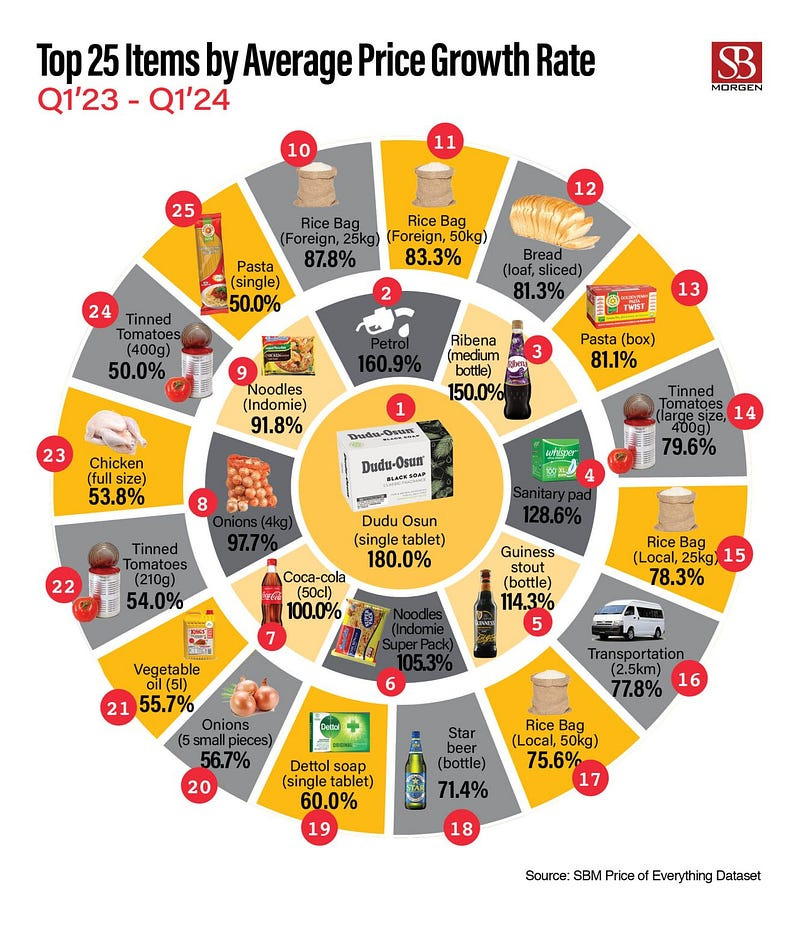
The significant increase in the Cost of a Healthy Diet (CoHD) in Nigeria, which has risen by 32% to ₦1,041 per adult per day in May 2024, poses severe challenges for a country grappling with a ₦30,000 minimum wage, a 30% unemployment rate, and an average family size of six. This surge precedes the rise in food inflation, which has only increased by up to 12%, explaining why Nigerians feel the financial strain more acutely than the inflation numbers suggest. The affordability crisis is a dangerous factor. Nigerians spend over 70% of their income on food, while much of the rest goes to servicing debt, transportation, and rent. With the CoHD at ₦1,041 per adult per day, the monthly cost to maintain a healthy diet for one person is approximately ₦31,230 — already higher than the national minimum wage of ₦30,000, which a significant percentage of people don’t even earn up to. For a family of six, this amount balloons to ₦187,380 per month, making it impossible for minimum wage earners to afford a healthy diet. This financial strain is worse for the 30% of the population who are unemployed and lack any steady income. Many workers are moving their families to the villages to live with relatives and hope that the young ones can at least get food daily while they live in shanties and hustle to earn a living. The inability to afford a healthy diet will inevitably lead to widespread malnutrition, particularly among children and pregnant women. This can cause stunted growth, weakened immune systems, and increased vulnerability to diseases. For decades, Nigeria practised an extensive subsidy regime that kept food and petrol prices low, strengthening the Naira, but this was unsustainable. Now that the subsidies are coming off, wages are still lagging, hence the distortion, which will take years to correct. In the meantime, suffering will continue, especially since governments at various levels are unable and unwilling to proffer solutions to address the issues. Given these challenges, urgent policy interventions are needed. One critical area is to increase investment in agriculture to stabilise food prices by boosting local production of staples, legumes, nuts, seeds and animal-source foods. Achieving this would require exploring the option of a large-scale mechanised agriculture programme in Nigeria. Consequently, farmers can produce more food at a lower cost, potentially reducing food prices. Lower food prices would make a healthy diet more affordable for the average Nigerian family, addressing the current crisis where the cost of a healthy diet far exceeds the minimum wage.