
A win for democracy

Ghana’s former president, John Dramani Mahama, has staged a political comeback, winning the 2024 presidential election after Vice President Mahamudu Bawumia conceded defeat. Bawumia confirmed Mahama's decisive victory and the National Democratic Congress (NDC) win in the parliamentary election. Early results showed Mahama leading with over 53% of the vote. Mahama revealed that outgoing President Akufo-Addo had called to congratulate him, and both leaders agreed to form a joint transition team, with an early inauguration set for 11 December. Mahama expressed his readiness to collaborate in the people's interest.
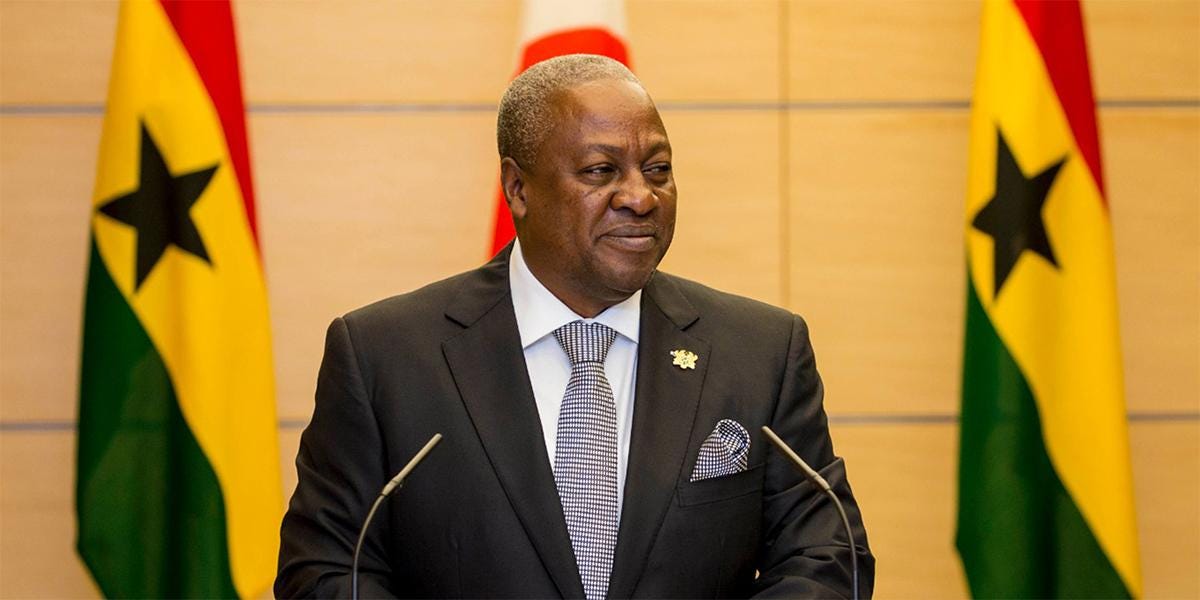
On 7 December 2024, Ghana turned a new page in its political history. With 56.55% of valid votes cast, former President John Mahama staged a historic and remarkable comeback. His victory mirrors the U.S. political landscape, where Donald Trump staged a return to the presidency by defeating Vice President Kamala Harris. This election brought numerous historic firsts, notably the election of Ghana’s first female Vice President, Professor Jane Naana Opoku-Agyemang. Mahama's victory was particularly symbolic as he became the first Ghanaian president to lose re-election in 2016, only to return triumphantly eight years later. His victory followed Ghana’s "third-time lucky" trend, as he defeated Vice President Dr Mahamudu Bawumia whose administration had been heavily criticised for economic mismanagement. In a move that surprised many, Dr Bawumia conceded defeat less than 24 hours after polls closed, setting a record for one of Africa’s swiftest concession speeches. Mahama’s campaign focused on revitalising Ghana's struggling economy and creating jobs for the country’s large youth population. His promises include transforming Ghana into a 24-hour economy and providing substantial tax reliefs, such as abolishing the 1% COVID-19 levy, the controversial electronic transaction levy (E-Levy), the emission levy and the 10% withholding tax on betting earnings. These measures are aimed at alleviating the citizens’ financial burden. Despite inheriting a nation grappling with severe economic challenges, Mahama has pledged to renegotiate the International Monetary Fund (IMF) agreement to better align with Ghana’s developmental priorities. His administration has set ambitious targets. Within his first 120 days, Mahama intends to launch an anti-corruption campaign and implement free first-year tuition for all public university students, underscoring his commitment to education and youth empowerment. Drawing on lessons from his previous tenure, he has promised bold and decisive action to address Ghana’s pressing issues. Mahama’s second coming is more of a commentary on how poorly Ghana has fared during the Akufo Addo tenure. As many will recall, Akufo-Addo’s rise to power in 2016 was fueled by dissatisfaction with how Mahama handled the economy. In a twist of fate, Mahama’s return was driven by similar frustrations with the performance of Akufo-Addo’s government. The new president inherits a nation grappling with a fiscal crisis, slow economic growth, high inflation and unemployment. Challenges around mineral rights and Ghana’s role in the global cocoa value chain complicate the landscape. Mahama’s work is cut out for him. To succeed, he must buckle down and deliver clear, actionable solutions to Ghana’s economic challenges. His promises offer hope, but Ghanaians will watch closely to see if his administration can turn bold rhetoric into tangible results.