
Access denied
Somalia’s President Hassan Sheikh Mohamud, on 6 January, signed a law nullifying an agreement by the breakaway Somaliland region to grant…

Somalia’s President Hassan Sheikh Mohamud, on 6 January, signed a law nullifying an agreement by the breakaway Somaliland region to grant Ethiopia access to the Red Sea in return for recognition as an independent country. Somalia, which considers Somaliland part of its territory, rejected the New Year’s Day deal that would allow landlocked Ethiopia to lease a 20km (12 miles) area around the port of Berbera on the Gulf of Aden, granting access to the Red Sea for 50 years for its navy and commercial activities. In exchange, Ethiopia would have been the first country to acknowledge Somaliland as independent.
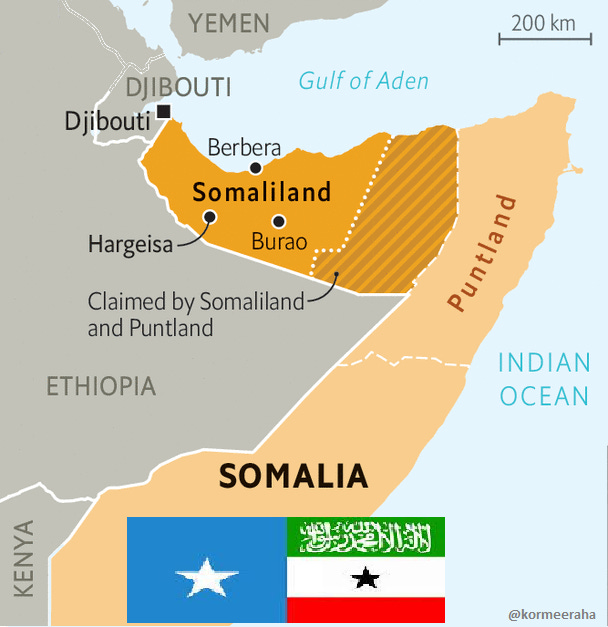
Africa’s geopolitics is ever-changing, and the pace of change for Ethiopia is particularly rapid. This deal which purportedly recognises Somaliland, is a product of several things. Currently, the most urgent concern for Ethiopia is its lack of direct access to the sea, as Prime Minister Abiy Ahmed emphasised in his 2023 speeches. He highlighted the necessity of securing port access to facilitate Ethiopia’s foreign trade and the establishment of a naval base to safeguard its trade. He stated that these objectives would be attained peacefully or, if necessary, forcefully. Ethiopia lost its Red Sea access following the defeat of the Derg in the Eritrean War of Independence in 1991, and since then, it has depended on second parties for sea access, which had threatened its economic survival. The 2018 reconciliation between Addis Ababa and Asmara, which ended over two decades of hostility and allowed for close collaboration in the fight against the Tigray People’s Liberation Front, has soured, leaving Addis Ababa needing alternatives. As part of the agreement, the specifics of which are still unclear, Somaliland is set to gain a share in Ethiopian Airlines, Africa’s most successful airline, while Ethiopia will gain access to the port of Berbera and 20 km of coastline for a naval base on the Gulf of Aden. Hargeisa is also eager for the deal, as it has been in a legal grey area regarding its international sovereignty since declaring independence from the troubled Somali state. 48% of the Somaliland government’s budget comes from trade taxes and port fees. With a GDP of just over US$3.3 billion and a population of 3.5 million, Hargeisa stands to benefit from charging Ethiopia for port access and the leased land for a naval base. However, there is a larger story to this: Somalia has not been in control for more than 30 years and has no means to enforce its wishes. Just as importantly, from a geopolitical sense, the issue of self-determination will have to be addressed, not only in this part of Africa but across the continent. Before 1960, what we know as Somalia was administered in two parts: by the British (British Somaliland) from 1887, while Italian Somaliland was Italian from 1889. Both territories unified at independence in 1960, with Mogadishu in the Italian region as the capital. However, they never quite united, and when the dictator, Mahamed Siad Barre was overthrown in 1991 and the country plunged into civil war, the former British holding declared itself as the independent state of Somaliland. It has been seeking diplomatic recognition ever since. This history points to issues of self-determination within the African continent that will only become louder as more countries fail.