
After the ballot
The Independent National Electoral Commission has declared the Edo State All Progressives Congress (APC) governorship candidate, Monday…

The Independent National Electoral Commission has declared the Edo State All Progressives Congress (APC) governorship candidate, Monday Okpebholo, the election winner. Monday Okpebholo received 291,667 votes, defeating the Peoples Democratic Party (PDP) candidate, Asue Ighodalo, who garnered 247,274 votes. The Labour Party (LP) candidate, Olumude Akpata, came in a distant third with 22,763 votes. The final results claimed that Mr Okpebholo won 11 LGAs, while Mr Ighodalo won seven. Mr Akpata did not win in any LGA. Meanwhile, the state’s PDP has protested the election results, alleging they were manipulated in favour of the APC candidate.
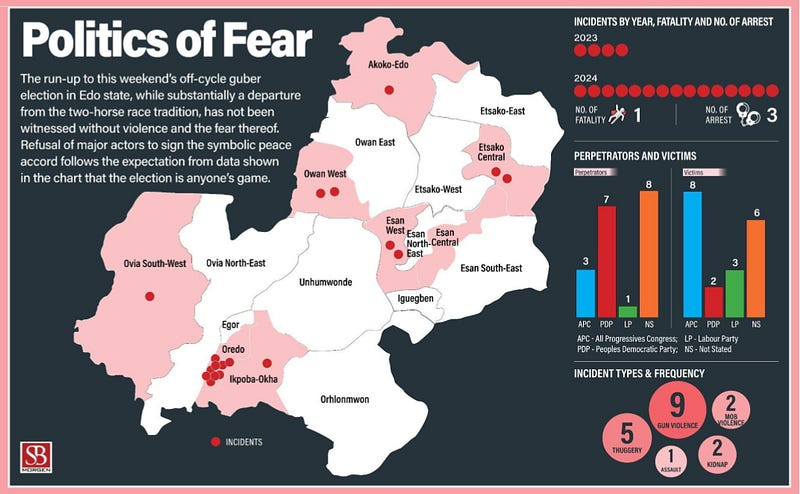
The recent gubernatorial election in Edo State has sparked discussions about the health of Nigeria’s democratic institutions. The APC candidate, Monday Okpebholo, emerged victorious, but the circumstances surrounding the election have prompted some to question the integrity of the process. Observers noted Mr Okpebholo’s limited public engagement during the campaign; he was absent from extensive campaigning and televised interviews. This strategy has left some voters questioning the basis for his electoral success. At the start of Saturday’s elections, it became clear that the umpire was not enthusiastic about change. Electoral officers arrived late at several locations, and voting materials reached polling units later than scheduled. Much of the blame for this lack of punctuality has been attributed to adverse weather, which should have been considered from the outset. From a security perspective, the election proceeded better than in previous years, alleviating fears over the political parties’ failure to sign the symbolic pre-election peace accord. This relative success can be attributed to the police’s preemptive arrests of potential troublemakers in the Akoko-Edo and Oredo Local Government Areas (LGAs). However, what many voters who are not aligned with the APC will remember about this election is the credibility of its results. The PDP candidate, who finished second, has alleged result manipulation in the APC candidate’s favour. The situation in Edo State raises important questions about voter engagement, electoral transparency, and the role of institutions like INEC in safeguarding democracy. According to the Centre for Democracy and Development report, blurry results were uploaded to the result viewing portal, and some included results from Ozolua Primary School II, Abumwenre, Okokhua ward/RA 09, Ovia North-East LGA. Additionally, results from various polling units in Etsako East were noted for overvoting. In the Weppa Registration Area, at the polling unit in Osholo Primary School, INEC also uploaded a result where the votes recorded for the APC exceeded the number of accredited voters, reporting 352 votes for the APC and 52 for the PDP, despite only 213 accredited voters. These troubling issues further undermine INEC’s already declining credibility, leading some to question whether an audit of the electoral umpire’s performance is necessary to justify its operating budget. As Nigeria continues to develop its democratic processes, events like these provide opportunities for reflection and potential reform. Ensuring that future elections are not only free and fair but are also perceived as such by the electorate is vital for maintaining public trust in the democratic system.