
Against the grain
Olam Agri has suspended offtaking maize and sorghum in Nigeria owing to the ongoing food security challenges in the country. Premier Feed…

Olam Agri has suspended offtaking maize and sorghum in Nigeria owing to the ongoing food security challenges in the country. Premier Feed Mills also made a similar announcement, saying the food security crisis has led to keeping the price of the commodities artificially high. As a major buyer and processor of food staples, Premier Feed Mills also shares concerns about the high prices and supply chain disruptions affecting the availability of essential grains. It said in the interim, it will continue its commitment to local content development, finding innovative ways of serving its customers’ needs with the products they love.
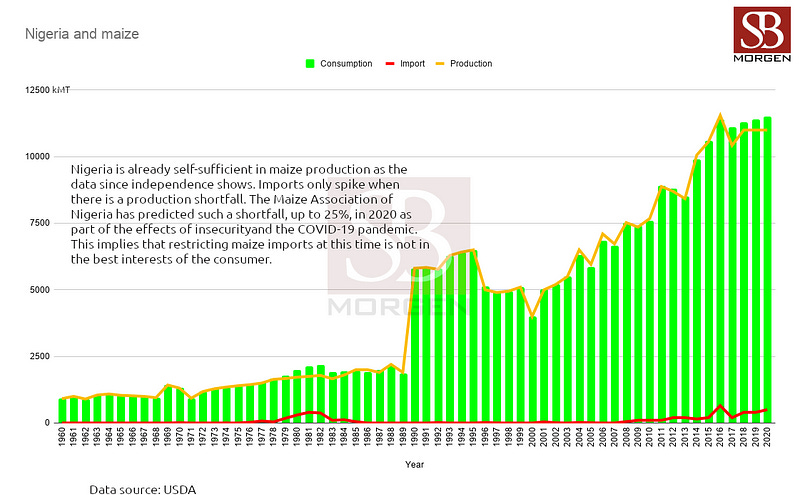
Among Nigeria’s agri-businesses, Olam is the largest buyer and processor of food staples across the country. Premier Feeds is also a major buyer. Their impact on the stability of the country’s agro-value chain is pivotal. When large companies decide to stop off-taking, the farmers relying on them as a guaranteed income are left with no way to sell their produce. This ripple effect can cause the entire value chain to collapse, affecting not only the farmers but also the banks and other financial institutions that finance their operations. This is not the first time these concerns have been raised, but now that companies are taking action, the situation is becoming increasingly dire. The Nigerian government has failed to ensure the security of the main farming areas in the country, and with such insecurity, uncertainty about planting and harvesting is rife. For more than a decade, farmer-herder clashes in many parts of Nigeria, particularly the Middle Belt, were unchecked due to a lack of political will by successive administrations. Today, Nigeria’s capacity to grow enough food to feed its huge population is challenged. The recent currency devaluation also means that imported food is more expensive than a year ago for a country with more than two-thirds of its population either underemployed or unemployed and poor. Recently, the CEO of Nigerian Breweries stated that “our company saw a significant decline in the mainstream lager market as a result of Nigerian consumers no longer being able to afford a Goldberg after a hard day’s work.” This type of uncertainty about planting and harvesting does not fit into the operations of firms like Olam and Premier, who depend on predictable and stable supply to achieve their scale. Given the combination of rising costs and the threat of insecurity, it was only a matter of time before these companies decided to suspend off-taking. Now, they will either reduce their operations or turn to importing inputs to meet their needs. Either option will put further pressure on the exchange rate and lead to higher inflation, adding to the country’s economic challenges. Urgent actions are imperative to avert more crises and foster resilience. Short-term solutions encompass providing farmers with subsidised loans and essential inputs, investing in storage and logistics for efficient distribution, and offering temporary price support with targeted subsidies. Long-term strategies involve funding research for high-yielding, drought-resistant crops, promoting crop diversification, and addressing underlying issues like insecurity and land tenure challenges. Mechanisation, though not a panacea, holds promise. While a 1000% increase in agricultural output through widespread mechanisation in five years is unrealistic, strategic mechanisation within a broader development plan can significantly enhance food security, affordability and economic health. Achievable benefits include increased productivity, reduced labour costs, improved market access and economic diversification. Sustainable mechanisation requires infrastructure development, affordability, access for smallholder farmers, consistent policy and market stability, and environmental considerations to mitigate negative impacts. By adopting a comprehensive strategy that addresses immediate needs and long-term challenges, Nigeria can harness its agricultural potential, ensuring food security, affordability and economic growth for its citizens.