
Ailing economies
Nigeria’s inflation rose to 24.08 percent in July 2023, representing the sixth consecutive increase in the headline index this year…

Nigeria’s inflation rose to 24.08 percent in July 2023, representing the sixth consecutive increase in the headline index this year, according to the Consumer Price Index (CPI) report by the National Bureau of Statistics (NBS). On a month-on-month basis, the headline inflation rate stood at 2.89 percent in July, 0.76 percent higher than in June. Meanwhile, Ghana’s inflation rate increased to 43.1% in July, reaching the highest level in four months due to rising food costs, which puts pressure on the central bank to continue raising interest rates in the coming month.
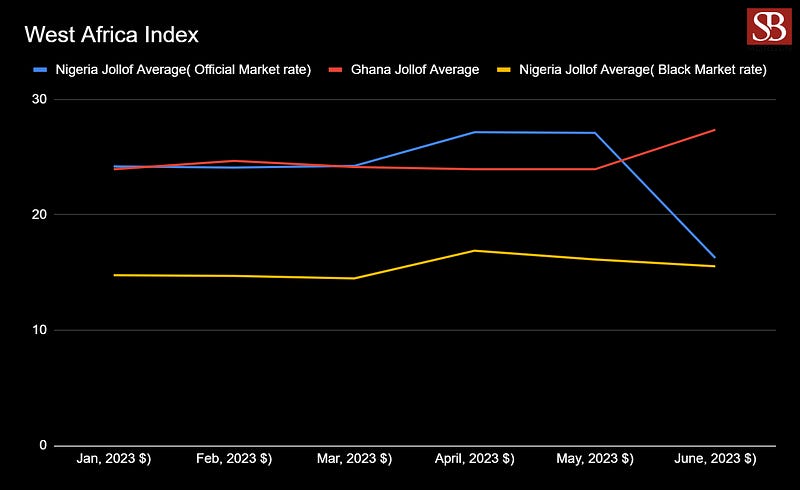
West Africa’s two largest economies are facing challenging economic conditions. Notably, Ghana, which boasted single-digit inflation as recently as 2019, now grapples with double-digit inflation. This inflationary pattern alternates between four months of decline and three months of increase. Despite expectations of decreased price levels after a peak in December 2022, inflation has resumed an upward trajectory due to supply constraints and elevated production costs. The recent surge in inflation in July, reported by the Ghana Statistical Service, was driven significantly by the food and non-alcoholic beverages category, accounting for over 54% of the overall increase. Housing and utilities were also prominent contributors, contributing 11.3% to the inflationary pressure. Unfortunately, Ghana has experienced a six-fold increase in food inflation over the past decade, even after obtaining funding from the International Monetary Fund (IMF). This unfortunate reality has reduced consumer purchasing power and led to mounting production challenges for manufacturers. The efficacy of the measures implemented seems poor due to the lingering issue of soaring food prices. Despite flagship programmes, the government’s annual expenditure of around $70 million has failed to curb worsening food inflation. Over nearly six years, food inflation has risen from 7.2% in April 2017 to a staggering 55%, almost eightfold. The Ghanaian cedi’s relative stability against the US dollar has yet to mitigate inflation due to previous periods of depreciation that raised import costs. Ghana’s Finance Minister highlighted that annual import spending exceeds $10 billion, covering items like sugar, rice, fish and pharmaceuticals. Seasonal fluctuations contribute to the scarcity of staples, resulting in price surges. Moreover, ongoing regional conflicts and political instability further strain the situation. Correspondingly, Nigeria’s high inflation is imposing stress on household budgets and businesses. As Nigeria’s inflation continues its long march, it is important to recall how this current trend started. In August 2019, the Buhari administration shut Nigeria’s land borders to stem the smuggling of food produce, refined petroleum products and other banned goods. The move was largely unsuccessful, leading to price increases and widespread poverty. Since then, the country has been facing stagflation: an economic event in which the inflation rate is high, the economic growth rate slows and unemployment skyrockets. Fast-forward to the present, and upon inauguration, the Tinubu administration acted swiftly to terminate wasteful petrol subsidies and devalue the naira but failed to increase workers’ wages. Thus, the economic hardship has gone through the roof. The government’s measures to bring inflation under control (which include raising interest rates, reducing the budget deficit, and devaluing the naira) must be shaped to boost consumer spending, economic growth and investment. The government should focus on investments that will fuel economic growth and productivity, such as infrastructure, education and healthcare, and work on making the 36 states much more productive, export-oriented and business-friendly. These investments will create jobs and boost incomes, which will help to offset the impact of inflation. A lot of Nigeria’s inflation comes from limited output and high foreign exchange rates arising from low export quantity levels. So, boosting production and exports will create supply situations that help. Across Africa, finding the solution to feeding the people affordably is increasingly the most important priority problem that needs to be solved. In Nigeria, as in Ghana, food inflation is driving record inflation levels. And food is such a large component of household spending in both countries, with Ghana having families spending 40% of their income on food on average (low-income households spend at high as 78%). In comparison, it is even higher at 60% in Nigeria, with some low-income households spending nearly all their income on food alone. The government(s) must improve transparency and accountability in its spending and investment processes, create a favourable business environment by reducing red tape, improve the regulatory framework and provide access to credit; this will attract foreign investment and encourage businesses to invest in Nigeria and Ghana, given Ghana’s dependence on imports, including essential goods like food, currency fluctuations significantly impact prices, burdening consumers. Therefore, transitioning from imported to local products is a potential solution to mitigate economic challenges. The government(s) could also provide tax breaks to businesses that invest in productive sectors. These measures would help mitigate inflation’s negative impact on the poorest and most vulnerable segments of both populations.