
Ally to adversary
Ex-Kaduna Gov. El-Rufai accuses successor of betrayal, denies mismanagement claims.

Former Kaduna Governor Nasir El-Rufai has severed ties with his successor, Uba Sani, accusing him of betrayal and colluding with NSA Nuhu Ribadu to tarnish his image. In an Arise TV interview, El-Rufai denied allegations of misappropriating ₦400 billion, citing EFCC and ICPC investigations clearing him. Ribadu dismissed the claims, focusing on national duties and denying any 2031 presidential ambition. El-Rufai hinted at leaving the APC and revealed that President Tinubu withdrew his cabinet nomination. The Kaduna Assembly maintains allegations of financial mismanagement against his administration, but El-Rufai insists he is innocent.
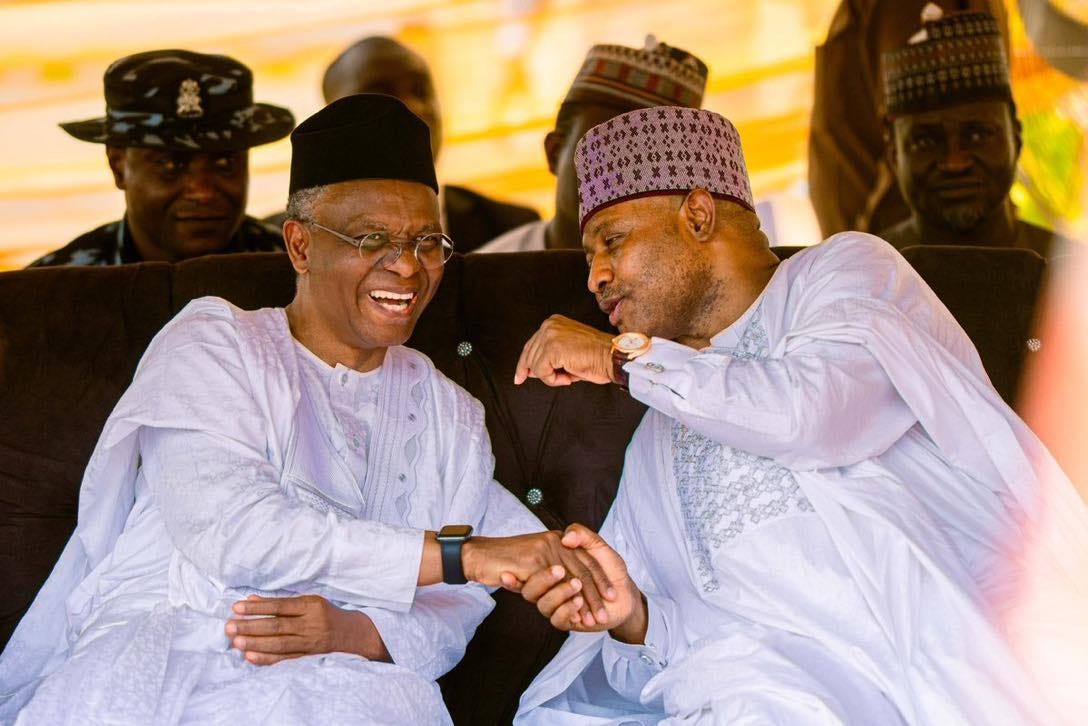
This development highlights the deepening rift between former Kaduna State Governor Nasir El-Rufai and his successor, Uba Sani. Given Mr El-Rufai’s pivotal role in Sani’s political rise, their fallout underscores the often-unstable nature of political alliances in Nigeria. The accusations of betrayal suggest an internal power struggle within the Kaduna chapter of the All Progressives Congress (APC), with potential repercussions for state politics. El-Rufai’s claim that National Security Adviser Nuhu Ribadu is using Sani to tarnish his reputation points to a broader power play at the federal level. However, Ribadu’s dismissal of these claims and his focus on national security indicate an attempt to avoid being drawn into political infighting.
President Bola Tinubu’s withdrawal of El-Rufai's ministerial nomination and his suggestion that he might leave the APC raise questions about his standing within the ruling party. The allegations of financial mismanagement, with the Kaduna State House of Assembly claiming that ₦400 billion was misappropriated during his governorship, add to the controversy. While he insists on his innocence, citing past investigations by the Economic and Financial Crimes Commission (EFCC) and the Independent Corrupt Practices and Other Related Offences Commission (ICPC), Nigeria’s history of corruption allegations against political figures means that any further inquiries will shape public perception. This situation could have lasting consequences for Kaduna State politics, the APC’s cohesion, and El-Rufai’s political future.
If El-Rufai does leave the APC, it could trigger a realignment of political forces ahead of the 2027 general elections. Notably, El-Rufai reserved his harshest criticisms for Uba Sani, his former protégé, and Ribadu, his erstwhile ally, while keeping the door open for reconciliation with President Tinubu. His recent engagements with opposition figures like Atiku Abubakar and Bukola Saraki suggest that a new political force may soon emerge. However, this is unlikely to be the People’s Democratic Party (PDP), given the party’s internal instability, exacerbated by the disruptive influence of Nyesom Wike.
As projected in our annual forecast, elements from the APC, PDP, and other sidelined politicians under Tinubu’s administration will likely coalesce into a new political party that will mount a challenge in 2027. However, we do not foresee El-Rufai leading that ticket—at most, he may position himself as a deputy. Such a move would imply a Southern presidency, a prospect that Northern political strategists may resist, given that it could extend Southern rule to 12 consecutive years. As a result, we anticipate that any 2027 challenge to Tinubu’s presidency, if led by a Southerner, will be largely symbolic. The real contest for power will likely take place in the 2031 elections.