
Ankara calling

Somalia and Ethiopia have agreed to resolve a dispute over Ethiopia’s plan to build a port in Somaliland, aiming for commercial arrangements to secure Ethiopia’s sea access. Talks, mediated by Turkish President Tayyip Erdogan, will begin by February 2025 and conclude within four months. Meanwhile, clashes erupted between Somalia’s federal forces and Jubaland’s regional forces in Ras Kamboni. Jubaland accused federal troops of drone attacks, while Somalia’s Defence Minister claimed Jubaland initiated the conflict. Jubaland forces reportedly captured Ras Kamboni, with federal troops retreating to the Kenyan border. At least ten people were killed in the violence.
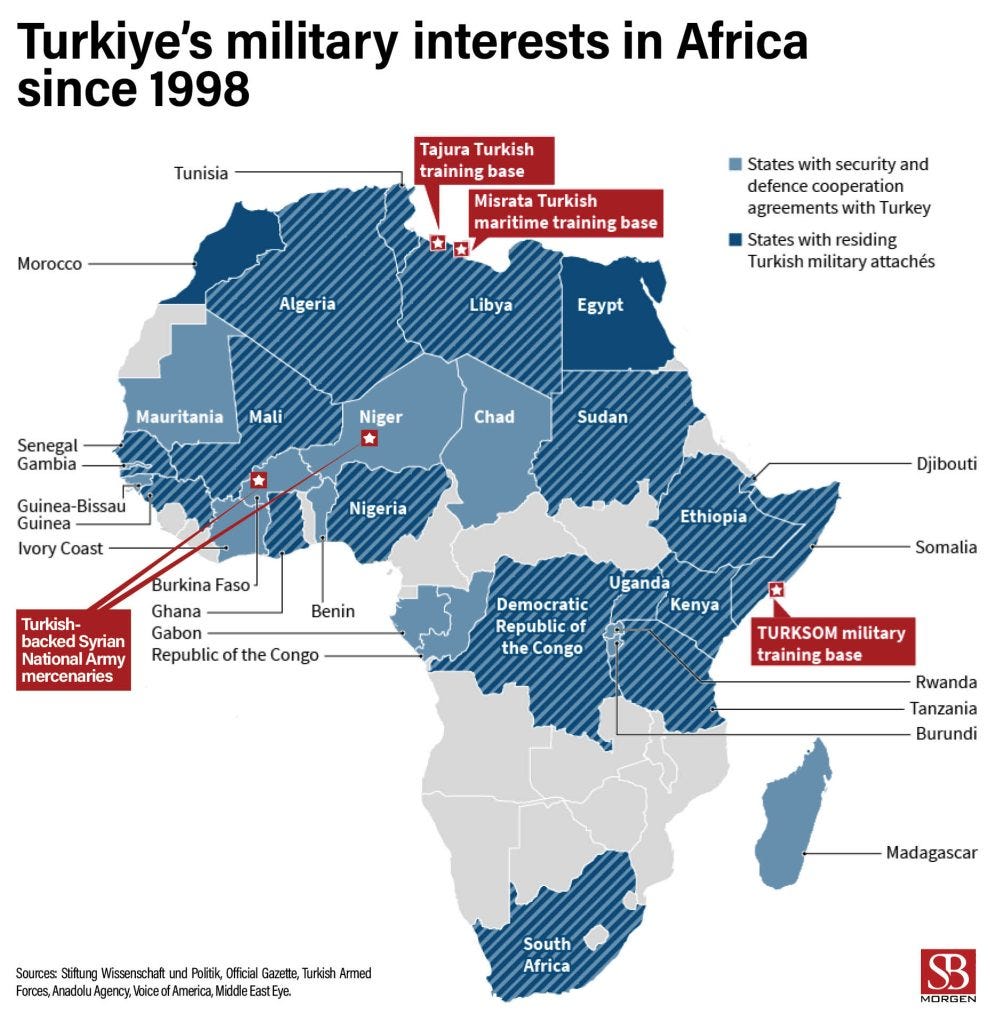
This development adds another milestone to Turkiye’s President Recep Tayyip Erdogan’s and, by extension, Turkiye’s rising profile as a regional power broker even beyond the Middle East and the Mediterranean basin. The country has been increasingly making its mark in several conflicts that span Africa, the Middle East and the Caucasus through its neo-Ottoman foreign policy.
In a way, this development signifies a breakthrough in the standoff between Ethiopia and Somalia since the January deal that saw Addis Ababa promise international recognition to Somaliland in the long term and increased stakes in the state-owned Ethiopian Airlines in the short term in exchange for the latter’s grant of a port in Berbera by which Ethiopia can conduct international trade independent of the shocks that come with using Djibouti’s port. The deal angered Mogadishu as a slap on its sovereignty, which it demonstrated by allying with a coterie of Ethiopia’s rivals, including Turkiye, which has successfully managed to present itself as an impartial arbiter while offering a range of security assistance to Somalia.
According to Erdogan in the Ankara Declaration that aims to reduce tensions between Mogadishu and Addis Ababa, the deal aims “to leave behind differences of opinion and contentious issues.” The agreement would grant Ethiopia “reliable, safe and sustainable” sea access under Somali sovereignty, implicitly signalling that Addis Ababa will rescind its recognition of the de facto state of Somaliland. This means that Ethiopia must now commit to directly negotiating with Somalia instead of Somaliland, which Somalia regards as its province.
Apart from how this breakthrough by Ankara undercuts Egyptian influence in the region, one other thing that stands out is how willing Ethiopia is to commit to the declaration. We have noted in a previous editorial that the incoming Trump administration in the US may change the geopolitical calculus in the politics of the Horn of Africa following growing calls by Trump’s foreign policy associates to recognise Somaliland as a bulwark and counter to Chinese influence in the region. Suppose the administration, due to take office in late January, shows any early sign of inching in that direction in light of its policy of maximum pressure on China. In that case, chances are that Ethiopia may hedge its bets and stonewall the process for as long as it can. All these developments indicate that Mogadishu’s failure to hold all of its territories de-jure is coming home to roost.
Meanwhile, the situation in Jubaland is a key example of the deeply fractured nature of Somalia’s federalism. The escalation of violence followed Jubaland's unilateral election, granting Ahmed Mohamed Islam Madobe a third consecutive term without Mogadishu's approval. This defiance led to Mogadishu issuing an arrest warrant for Madobe, prompting a reciprocal warrant from Jubaland targeting President Hassan Sheikh Mohamud. The conflict unfolds in a strategically vital area. Jubaland, one of Somalia's five semi-autonomous regions, borders Kenya and Ethiopia. It serves as Somalia's primary agricultural region, its coastline marks a disputed maritime boundary with Kenya, potentially rich in oil and gas reserves, and Kismayo is a crucial port city. Kenya’s decision to send back more than 600 Somalian troops who surrendered and fled to the Kenyan part of the border could have led to a regional escalation, but this has been temporarily forestalled by the pulling back of more federal troops by the government in Mogadishu over what it says would be a focus on the threat of Islamist insurgency. With relations between the central government and Jubaland frozen and the former all but accepting defeat, the Somalian state's geopolitical calculus and survival remain in doubt.