
Assessing the PVC game
The Independent National Electoral Commission (INEC) has extended the deadline for the collection of Permanent Voters Cards (PVCs) until 29…

The Independent National Electoral Commission (INEC) has extended the deadline for the collection of Permanent Voters Cards (PVCs) until 29 January 2023. The eight-day extension was to ensure that registered voters have ample opportunity to collect their PVCs ahead of the forthcoming election. This comes as Nigerian printers under the Chartered Institute of Professional Printers of Nigeria have threatened to sue INEC for allegedly printing a large chunk of its electoral materials overseas. CIPPON President Olugbemi Malomo told the Punch that INEC’s outsourcing of contracting printing contracts to foreign firms was a violation of the CIPPON Act 24 of 2007.
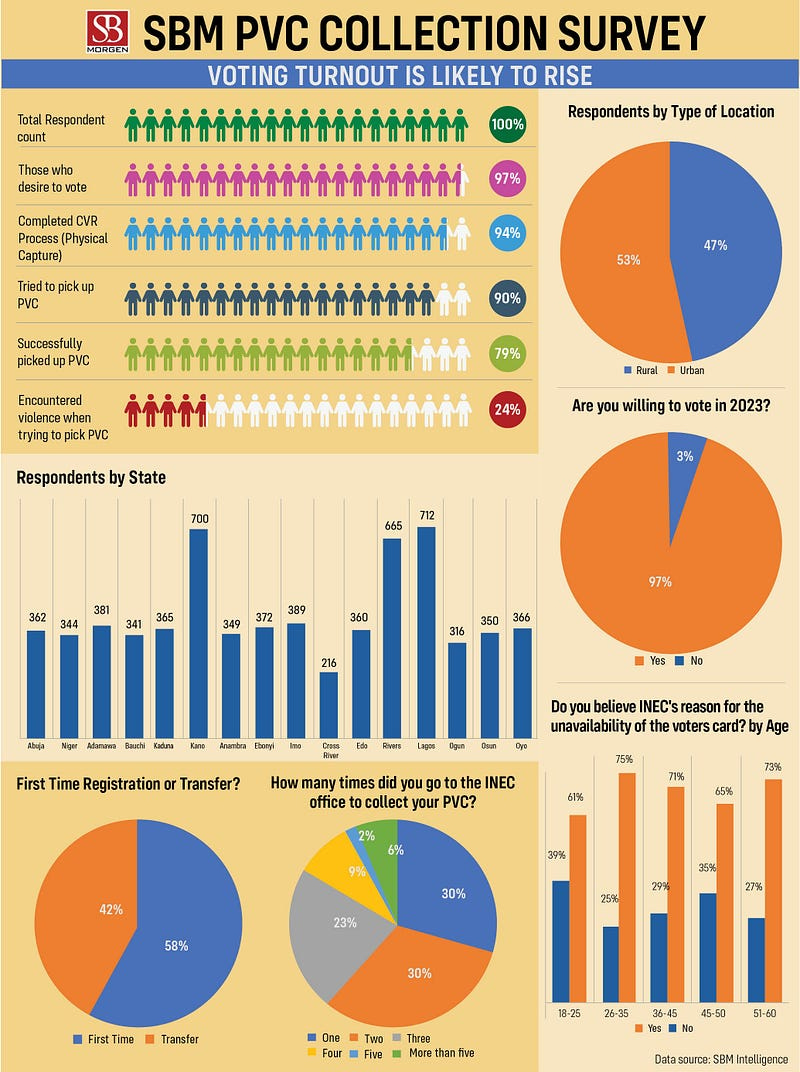
It is worth looking into PVC collections in order to properly understand where INEC, and by extension, Nigeria is in terms of its preparedness for February and March’s exercises. By the agency’s own count, it has printed 13,868,441 PVCs for “all new valid registrants as well as applicants for transfer or replacement.” These PVCs were from the Continuous Voter Registration conducted between June 2021 and July 2022. There are still uncollected PVCs from the 2015 and 2019 General Elections as well. Furthermore, it initially scheduled six weeks (from 12 December 2022 to 22 January 2023) for the collection of these cards, an ambitious target which has now proven herculean. The end result: only 79% of registered voters had picked up their cards according to an SBM study, with only a third getting theirs at the first time of trying. INEC’s extension of the deadline for PVC collection lends credence to the belief in many quarters that INEC still has some way to go in fixing its logistical issues and making adequate preparations for the elections. Complaints of missing cards, particularly for voters seeking to transfer between polling units, and the relative paucity of information on where to collect cards in some localities remain uncomfortably common. Others centre on many voters being told that their cards are ready by INEC, but when they make attempts to pick them up, they are told that these cards are not available. If these challenges remain unsorted, a lot of Nigerian voters will be disenfranchised from voting for no fault of theirs. INEC needs to make it a priority that all outstanding cards are printed, sorted and made available for voters for pick up. It also needs to ignore distractions such as those from CIPPON at this crucial time. While there is always a valid argument to be made for patronising the local printing industry, it should not be at the expense of quality and project delivery time. CIPPON’s attempt to sue INEC also highlights a trend with such bodies where they try to close entry into sectors in order to prevent competition. Specifically, Section 23b of the CIPPON Act is not one that should be allowed to stand because it is aimed at making CIPPON a monopoly whereas the decision to be a part of it should be at the discretion of printers. In the end, INEC may be compelled by fundamentals or legal actions from organisations like Socio-Economic Rights and Accountability Project (SERAP) to continue PVC collections till a few days before the elections.