
Back in the flow
Niger has resumed crude oil exports via Benin after a dispute between the countries halted the flow of oil through a new Chinese-funded…

Niger has resumed crude oil exports via Benin after a dispute between the countries halted the flow of oil through a new Chinese-funded pipeline to the West African coast, according to a pipeline company agent and ship tracking data on Wednesday. Reuters reported that the Aura M, a Liberian-flagged crude oil tanker, had loaded around one million barrels of oil from Niger at the Benin port on Tuesday. Ship tracking data from MarineTraffic showed the vessel was loaded and departed the Benin port on Tuesday afternoon. It was China-bound and was last spotted on Tuesday in the Gulf of Guinea.
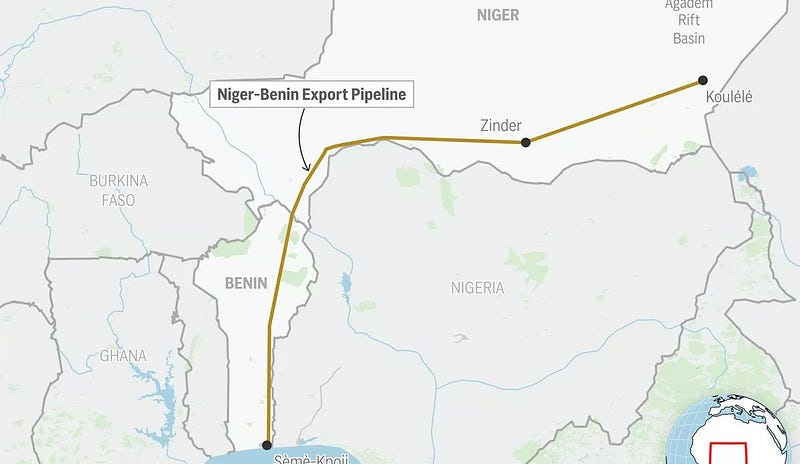
Benin halted oil exports as mandated by ECOWAS sanctions following the July 2023 coup that toppled the democratically elected government in Niamey. Since ECOWAS lifted the sanctions, the pipeline has encountered several problems. The lucrative $400 million deal between Niger and China, aimed at boosting oil production, hit a snag in June due to a diplomatic spat with Benin and a rebel attack that threatened to derail the project. The 1,930-kilometre pipeline, designed to transport oil from Niger’s Agadem field to the port of Cotonou, has been shut down amid tensions between the two nations. Adding fuel to the fire, the Patriotic Liberation Front rebel group launched an attack on the pipeline, claiming to have disabled a section and vowing further action unless the deal with China is scrapped. As tensions escalated, Niger’s junta explored alternative routes through Chad and Cameroon — options initially considered at the project’s outset — raising questions about the viability of the original plan and the implications for regional cooperation. Currently, the driver for the export resumption is economic. While Benin’s earnings from the pipeline deal with Niger and China are not explicitly stated, Niger will hold a 15% share in the pipeline, with the remaining 85% likely held by China. Benin’s role is primarily as a transit country, with the pipeline ending in the Gulf of Guinea near Cotonou. The financial arrangements between Benin and the other parties involved are not publicly disclosed. One major concern is how the stalled pipeline operation could impact Niger’s overall economic growth. The World Bank had projected that Niger’s economy would rebound and grow the fastest in Africa this year at a rate of 6.9%, with oil exports serving as a key boost. However, the ongoing tensions may have affected these projections. The swift resolution of the dispute signals stability for regional oil exports, but underlying tensions could resurface. The resumption is expected to stabilise oil prices, particularly in markets dependent on West African crude. However, China’s deepening role in the region’s energy sector may lead to shifts in geopolitical dynamics. The situation also raises questions about the long-term sustainability of such investments in the politically unstable region. As oil flows resume, stakeholders will closely monitor the impact on global energy markets and regional stability in West Africa. The success of this venture will depend on smooth pipeline operations and effective diplomatic and economic strategies from all parties involved.