
Bad leaf
MTN, Africa’s largest wireless carrier, said it received a $773 million back-tax bill, including penalties and interest charges, in Ghana…

MTN, Africa’s largest wireless carrier, said it received a $773 million back-tax bill, including penalties and interest charges, in Ghana that it plans to fight. The bill is for the period between 2014 and 2018 and implies that MTN under-declared its revenue in the country by 30%, the company said on Friday. MTN said it strongly disputes the accuracy and basis of the assessment, saying Ghana Revenue Authority (GRA) used a third-party consultant and a new methodology in consulting the audit. MTN said the GRA had started looking into the “reliability and completeness” of the revenue it declared during the five-year period.
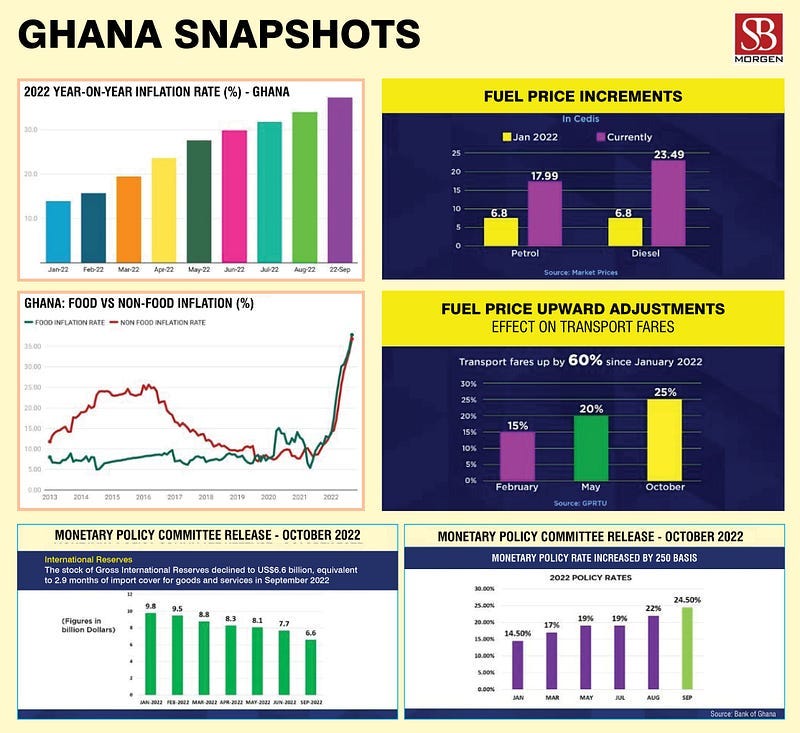
Ghana’s latest move to assess its revenue crunch smacks of the kind of creativity and desperation that underlie the scale of the country’s dire fiscal traits. According to media reports, MTN plans to start a dispute resolution process if talks with Ghanaian authorities over a surprise $773 million back-tax bill it received last week fail. At the heart of the company’s contention is that the GRA switched to a new methodology to track call data records based on the advice of a third-party consultant. The methodology was applied retroactively between 2014 and 2018, implying that MTN under-declared revenue by 30%. MTN Ghana is a beast. It currently commands about 75% of the 4G market in the country, for example. Within the period under review (2014–2018), MTN Ghana’s cumulative profit before tax stood at around 3.9 billion cedis with about 2.8 billion cedis in profit after tax. Some market watchers consider this as part of Accra’s wider suite of initiatives to raise much-needed revenues in the face of a current financial crisis that has seen the country default on its Eurobonds interest payments. In this narrow sense, it has decided to borrow a bad leaf from its neighbours, particularly Nigeria. Nigerian authorities fined MTN $5.2 billion in 2015 for failing to disconnect unregistered phone lines, although the parties later settled for less than the initial bill. In 2020, the operator successfully challenged a separate $2 billion claim for unpaid taxes. It also faced down authorities in Benin and Cameroon over the terms of its licences. Back in Ghana, if the $773 million back tax is accepted, it may have a significant impact on the company’s future costs. Already, MTN’s service revenue in the country for the first nine months of 2022 increased to 7.1 billion cedis ($37.9 million) but took a hit from a controversial electronic levy introduced in the first quarter of 2022. A 1.75% levy on mobile money (MoMo) and other electronic transactions compelled the firm to reduce its service tax on MoMo from 1% to 0.75%. MTN Ghana’s revenue from peer-to-peer (P2P) transactions declined by 13.3% year-on-year in the three quarters to the end of September 2022, with the contribution of MoMo to service revenue falling to 19.1% from 22.8%. This huge back tax will be a heavy blow to Ghana’s biggest telco and may have repercussions on its cost curve which may force the company into taking cost-cutting measures including laying off workers. This is in an economy with rising unemployment, inflation north of 50% and retail borrowing costs approaching 40%. Consumers were forced to accept an increase in data tariffs at the tail end of last year. Panning out, while a big company like MTN presents a big and, therefore, easy target, the longer-term impact of what appears to be an open attempt to extract from one of its biggest taxpayers will be similar to what Nigeria experienced — an overall drop in investor confidence and a flight of capital to less risky places. With interest rates in the West at significantly elevated levels, these alternatives will be more attractive to investors than risky bets in developing African economies. And Africa desperately needs foreign capital to drive growth, in a year the World Bank has warned of an impending global recession. The retroactive application of a new regulatory initiative is neither a good move nor one that communicates stability or certainty. Accra has a lot of lessons to glean from its current economic travails. It just added another course module to its bank.