
Basket of terror
At least 19 killed in attacks by armed herders in Nigeria's Benue State, prompting calls for increased military deployment.

At least 19 people have been killed in renewed attacks by armed herders in Kwande LGA, Benue State. On the evening of Saturday, 15 February, 16 farmers returning to Mbandwe Ward were ambushed and killed along Kashimbila road; their bodies were dumped in the Katsina-Ala River. On Monday afternoon, three more people were killed in Boguwa, Kumakua Council Ward, and homes and food barns were burnt. The President-General of Mzough U Tiv confirmed the attacks, stating that all six council wards in Turan have been deserted as residents fled to Jato Aka and other areas. He appealed to President Tinubu for increased troop deployment to the area.
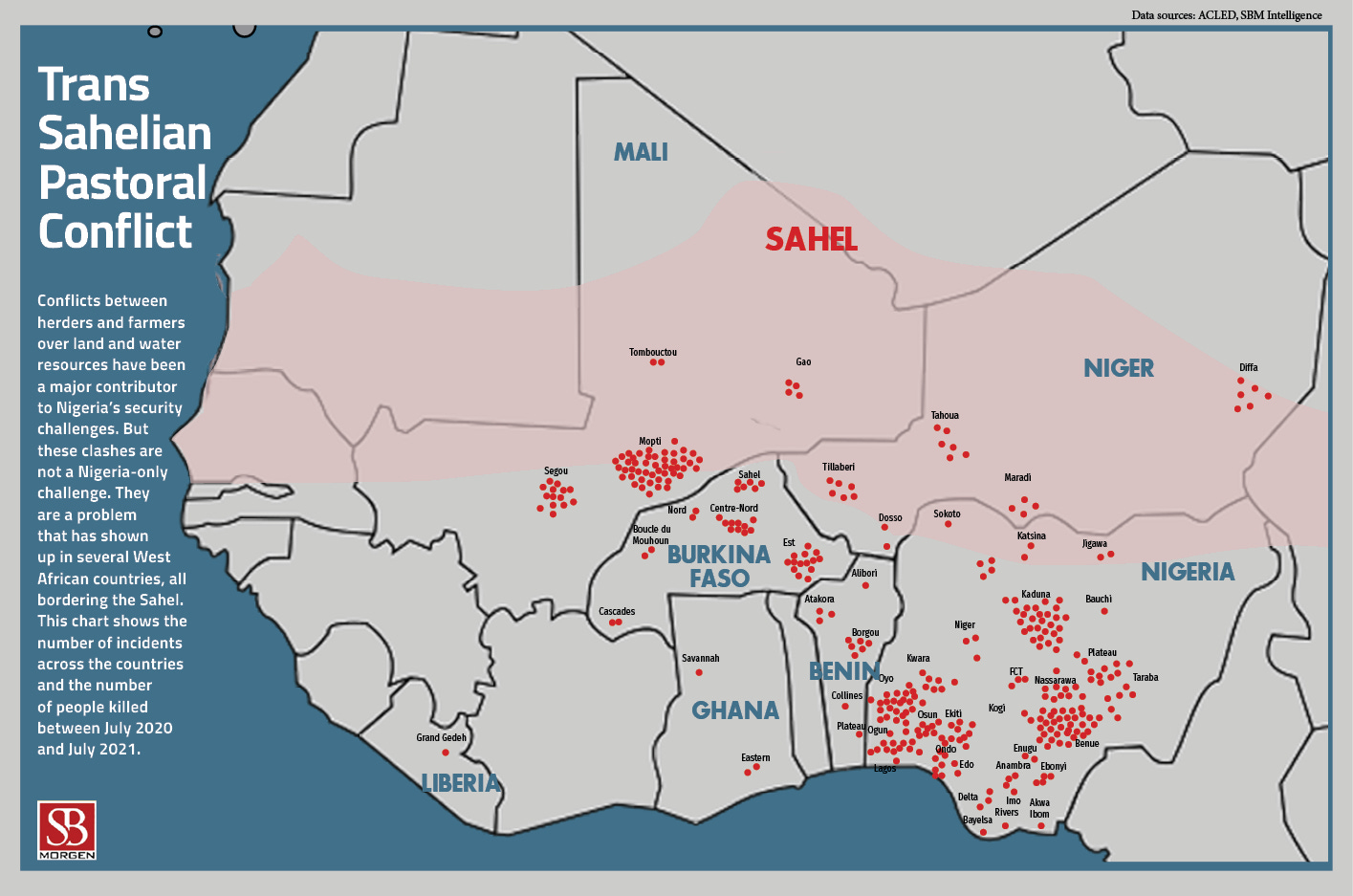
The pastoral conflict in Benue, while part of a broader phenomenon affecting Nigeria's Middle Belt (with increasing clashes in southern Adamawa, for example), has a unique intensity, scale of destruction, and rising death toll, suggesting ethnic cleansing against the Tiv population. Renewed attacks in Kwande LGA highlight Nigeria's persistent rural insecurity, marked by insurgent-style ambushes and forced displacement. The targeted killings, property destruction, and mass displacement indicate a coordinated strategy for territorial control, common in ethno-religious and agro-pastoral conflicts.
Benue has long been a hotspot for farmer-herder violence, driven by land competition, population pressures, and climate change-induced migration. Previous massacres, like the 2016 Agatu Massacres and the 2018 Guma and Logo attacks, demonstrate the recurring nature of the violence. The targeting of communities points to armed non-state actors operating with impunity, exploiting weaknesses in rural security. The slow security response highlights Nigeria's challenges in intelligence gathering and rapid deployment. These attacks risk escalating into retaliatory violence. Swift federal intervention is crucial to prevent further loss of life and stabilise the region.
This crisis is exacerbated by the typical seasonal pattern of farmer-herder conflict, which usually intensifies between November and April (the dry season) when nomadic migration brings herders into the Middle Belt's agricultural areas. However, in Benue, the killings by Fulani herders are year-round, even disrupting mourning rituals. As a key food producer, Benue is experiencing significant displacement. Herders occupying displaced communities often do not cultivate the land, instead employing scorched-earth tactics.
Successive federal governments have been criticised for their handling of the crisis. The National Livestock Transformation Plan, later corrupted into the RUGA settlement scheme, is seen as a failed attempt at intervention. State-level efforts, including the Benue Livestock Guards, have been insufficient, hampered by factors ranging from policy failures to federal disinterest.
The crisis has wider consequences. Increased unemployment has led to rising social crime in Makurdi, with displaced youths forming criminal gangs. Due to agricultural disruption, food inflation is soaring. Despite this, the government's response is seen as inadequate. Without decisive action, the Benue crisis risks deepening Nigeria's food insecurity and entrenching cycles of violence and displacement, turning the Middle Belt into a permanent conflict zone.