
Belt-tightening
The Central Bank of Nigeria (CBN) has issued a new directive to all Deposit Money Banks (DMBs) introducing a reduction in the…

The Central Bank of Nigeria (CBN) has issued a new directive to all Deposit Money Banks (DMBs) introducing a reduction in the loan-to-deposit ratio (LDR) to 50%, marking a 15%-point decrease from the previous rate. The change aligns with the CBN’s recent shift towards a more contractionary monetary approach, which is in sync with heightened Cash Reserve Ratio (CRR) requirements. It underlines the CBN’s ongoing commitment to refining its regulatory framework in response to evolving economic conditions. With this reduction, all deposit money banks are restricted in the amount of credits and loans they can offer to businesses and individuals.
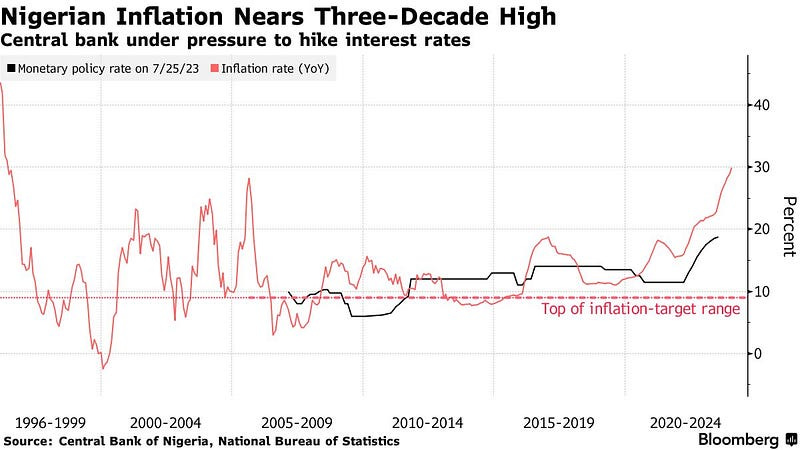
There are several tools that the Central Bank uses to fight inflation: interest rate hikes, Open Market Operations (OMO) operations, increasing the cash reserve ratio of commercial banks and adjusting the asymmetric corridor. There is also the aspect of altering the loan-to-deposit ratio. As inflation continued to climb, reaching 33.2% in March 2023 from 31.7% in the previous month, the Central Bank of Nigeria has doubled down on attempting to use monetary policy tools to tackle the problem. Recently, the CBN has hiked interest rates, increased the cash reserve requirements for banks, and reduced the percentage of deposits that can be given out as loans. These steps basically reduce the amount of money within the system. The logic behind these is to reduce borrowing and demand (due to less money in circulation). Reduced demand will cause prices to fall and inflation to slow down. However, in an economy like Nigeria, where consumer credit is not popular, and the biggest borrowers are manufacturers, high interest rates inhibit borrowing and the ability to expand operations. Considering the high food inflation rate, currently above 40%, and the widening gap between core and food inflation, it is clear that factors other than monetary policy are the primary drivers of inflation. The CBN directive on LDR is in line with reality. With CRR now at 45%, banks only have access to 55% of their balance sheet for lending and other activities. Thus, it is reasonable for the CBN to lower the LDR to 50%. Unfortunately, this is not good for the real economy as banks will likely cut down on loans to the private sector. Recall that in 2017, CBN raised the LDR of banks to 65% to ensure increased credit to the private sector and drive economic growth. Now, it has become clear that the CBN is focused on tackling inflation and exchange rate volatility but at the expense of economic growth in the short term. And it will achieve the impact of reducing liquidity and constricting lending, making it more expensive. Already, banks have raised lending rates on some loans by nearly 100% in response. In all, Nigeria will only be on the path of economic recovery if these policies are combined with commensurate efforts to reduce government spending, increase productivity, and invest in infrastructure.