
Betrayed by the purse
The US plans to cut $555 million from the ADF, impacting AfDB funding threatening low-income African countries.

The Trump administration plans to cut $555 million in funding to the African Development Fund (ADF), the African Development Bank’s (AfDB) key facility for low-income countries, as part of broader foreign aid reductions. A proposal to Congress indicates the U.S. will cease contributions from next year, citing misalignment with current priorities. This move jeopardises the AfDB’s operations and plans, with its current $8.9 billion funding cycle ending this year. African nations had advocated for a $25 billion replenishment last October. As the AfDB’s second-largest shareholder since 1976, the U.S. exit marks the most severe donor cut to date.
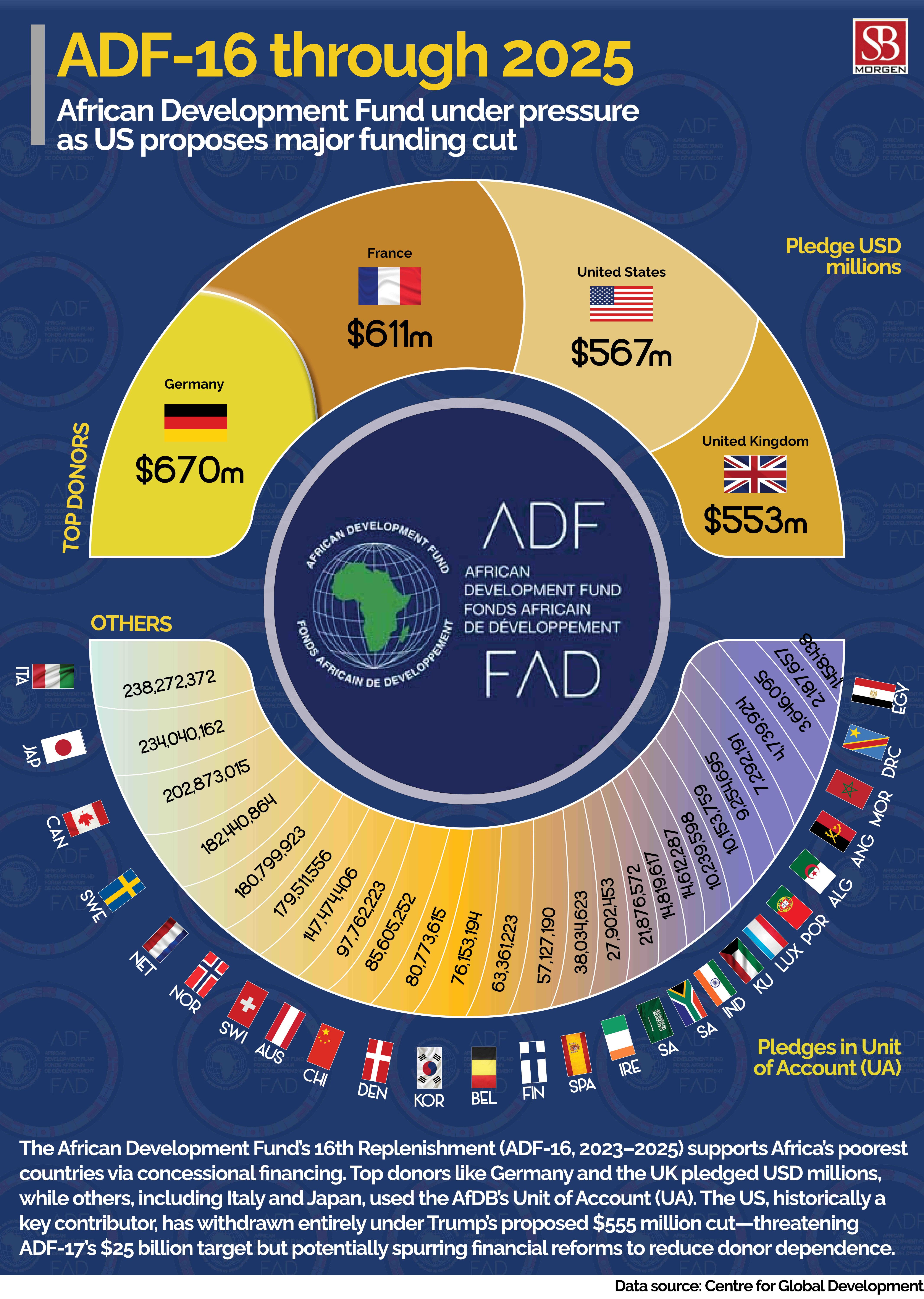
The Trump administration's decision to cut $555 million in funding for the African Development Fund represents a watershed moment in U.S.-Africa relations - one that reveals a fundamental shift in America's approach to global development. This move, coming as African countries seek to replenish the Fund with $25 billion, doesn't merely represent a budget reduction but signals a retreat from decades of strategic engagement with the continent.
Since 1976, U.S. support for the ADF has served as both a financial lifeline and a political statement. As the Fund's second-largest donor, America's contributions have done more than fund roads and clinics - they've anchored the entire multilateral development system in Africa. The proposed 60% cut would rip a half-billion-dollar hole in the ADF's budget, equivalent to its entire annual spending on education and healthcare combined. In practical terms, this means delayed power projects in Ethiopia, abandoned irrigation schemes in Niger, and scaled-back vaccination programs across the Sahel.
The administration's justification - that the Fund no longer aligns with U.S. priorities - betrays a profound misunderstanding of how development finance actually works. Unlike bilateral aid, every dollar America contributes to the ADF leverages four more from other donors. Nearly 80% of its projects target fragile states where instability breeds extremism. And contrary to the rhetoric of wasted money, 42% of ADF procurement contracts flow back to American firms. This isn't charity - it's strategic investment with measurable returns.
The timing couldn't be more counterproductive. As the U.S. steps back, China is committing more money through its Belt and Road Initiative, not to mention Russia's growing security partnerships across the Sahel. While these competitors focus on visible infrastructure, the ADF specialises in the unglamorous but vital work of building governance systems, climate resilience and health infrastructure - precisely the areas where American expertise has set global standards.
The ripple effects will extend far beyond missed project deadlines. The AfDB's coveted AAA credit rating, which keeps borrowing costs low for all African countries, depends on robust donor support. A U.S. withdrawal could increase the Bank's financing costs by 1.5-2%, making building every future road and power plant more expensive. More fundamentally, it undermines the rules-based international system America helped create, at the very moment when democratic governance is under siege worldwide.
What makes this decision so perplexing is its self-defeating nature. The African continent will account for one in four global workers by 2050, with consumer markets rivalling China's. The "America First" logic driving these cuts may ultimately leave America last in the world's next great economic transformation, watching from the sidelines as other powers shape Africa's future. The real cost won't be measured in delayed projects, but in the gradual erosion of U.S. influence across the Global South.