
Between cocoa and a wet place
Côte d'Ivoire floods kill about 20 people as persistent rains damage cocoa crops and push prices higher

ôte d’Ivoire is battling severe flooding after torrential rains killed about 20 people and displaced residents across Abidjan and other regions, prompting the government to strengthen emergency response measures and enforce evacuations from high-risk areas. Authorities said blocked drainage systems and unusually heavy rainfall worsened the disaster. Meanwhile, persistent rains are also threatening the country’s cocoa sector, with excessive moisture disrupting bean drying, damaging crops through black pod disease and delaying deliveries. The adverse weather has fuelled a more than 20 percent rise in global cocoa prices, while expectations of a smaller 2026/27 harvest have raised concerns over future supply.
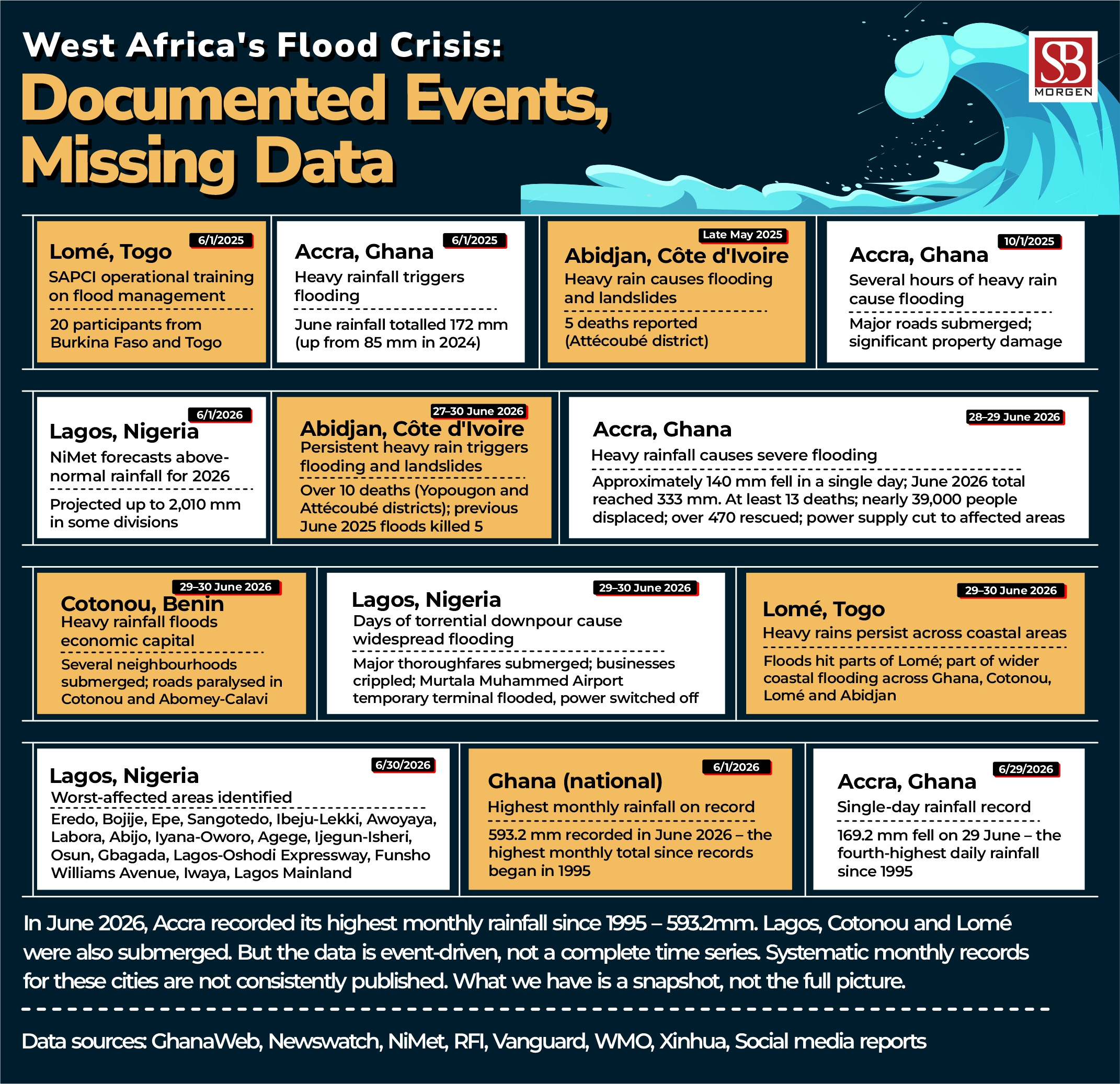
Abidjan floods the same way every year, and the death toll tells you why. Fifty-nine dead so far, concentrated in Attécoubé and Yopougon, where residents evicted from flood-prone sites years ago simply moved back in. Blocked drains get the blame in the press briefings, but the real story is a housing shortage that keeps pushing poor families onto land the government has already condemned twice. Clear a slum, and it refills within a season. Until Abidjan pairs demolition with somewhere for people to actually go, this is a body count that resets every June.
The cocoa angle is where the money is. Farmers in both Ghana and Côte d’Ivoire say they haven’t seen rain this heavy in over a decade, and it’s hitting at the worst possible moment, right as flowers are trying to set into pods. Knock the flowers off now, and you don’t just lose a few weeks; you lose the 2026/27 crop before it exists. Black pod is already spreading behind the moisture, and COCOBOD’s 650,000-tonne win for this season means nothing if next season craters the way 2024 did.
Here’s the twist: Accra and Abidjan just tried to fix the wrong problem. On June 16, Mahama and Ouattara signed a deal to align farmgate prices in dollars and run a single crop calendar from September, finally killing the smuggling that price gaps between the two countries have fed for years. Fine as far as it goes, but it’s a rerun of the old COPEC dream, and cocoa isn’t oil. Trees take years to mature; farmers can’t cut a valve to defend a price floor, and every wet season that torches a West African harvest is a gift to Ecuador, which just shipped over 623,000 tonnes and is on track to overtake Ghana outright this year. Ecuadorian farmers pocket 90 percent of the world price against 60-70 percent for their West African counterparts, and their yields are nearly double. West Africa isn’t just losing tonnage to the weather; it’s permanently losing market share to a rival with better economics.
None of this had to happen this way. A real ECOWAS, not one bleeding members after Mali, Burkina Faso and Niger walked out, would have locked Nigeria and Cameroon into a bloc controlling 75-80 percent of global supply instead of leaving Ghana and Côte d’Ivoire to negotiate alone at 60 percent. Instead, the region manages floods, disease and price wars country by country, while Quito builds the leverage West Africa should have owned decades ago.