
Big budget for fish while fixing cocoa jams
Ivory Coast boosts its fisheries and livestock budget by 24% to reduce massive fish imports, while also reforming cocoa transport to stabilise farmer prices.

Côte d’Ivoire has increased its 2026 budget for animal and fisheries resources to 26.7 billion CFA francs, a 24 percent rise aimed at boosting livestock, aquaculture and fisheries. The fisheries segment will receive the largest share as the government tries to close a wide production gap. Local output stood at 92,700 tons in 2024, far below the 280,000-ton target under the PONADEPA policy, forcing imports of more than 732,000 tons of fish. Authorities say the higher allocation will expand domestic capacity and reduce dependence on foreign supply. At the same time, the country’s cocoa regulator has tightened transport permits for beans heading to Abidjan and San Pedro to ease congestion and protect farmers’ incomes. The new system links permits to each factory’s unloading capacity, helping stabilise prices after concerns of oversupply pushed buying rates below the guaranteed farmgate price. Production is expected to reach 1.3 million tons this season, although output remains well below levels from three years ago.
The Ivory Coast is executing a strategic effort to bolster economic resilience, enhance food security, and optimise its primary export revenue source. These interventions are particularly significant given the current political climate; President Alassane Ouattara is navigating what is likely his final term under a fragile atmosphere following a disputed election just over a month ago. Despite these political tensions, Abidjan is regaining stability, anchored by its strong economy and disciplined financial management.
The foundation of this stability remains the cocoa sector, where the country maintains its status as the world’s largest producer. Consistently recording output above 1.5 million metric tonnes in recent years, la Côte d’Ivoire has widened the performance gap with neighbouring Ghana. Accra has struggled with disease outbreaks, farmer migration, and pricing pressures, resulting in its average production falling to approximately 500,000 metric tonnes over the last four years.
Despite this competitive advantage, Ivorian authorities recognise the structural risks inherent in the trade. Seasonal fluctuations have recently reduced output to around 1.3 million tons, below the levels seen three years ago. In response, regulators have tightened the permit system for transporting beans to the ports of Abidjan and San Pedro. By linking transport permits to the unloading capacity of specific factories, the government aims to prevent port congestion, reduce stockpiles and ensure buying prices remain above the guaranteed farmgate rate. Stabilising these prices is critical for sustaining farmer incomes, preventing rural unrest and ensuring cocoa remains a reliable economic anchor.
Simultaneously, the administration is pursuing a deliberate diversification strategy to reduce the economy’s vulnerability to global price cycles and climatic fluctuations. A central pillar of this approach is a 24 per cent increase in the 2026 budget for animal and fisheries resources, bringing the allocation to 26.7 billion CFA francs. This investment targets a significant structural weakness: the country currently produces only 92,700 tons of fish, well below the national target of 280,000 tons set under the PONADEPA policy. This shortfall necessitates the importation of over 732,000 tons annually. By channelling funds into aquaculture and fisheries, the government intends to close this gap, conserve foreign exchange, improve the trade balance and generate employment outside the traditional cocoa belt.
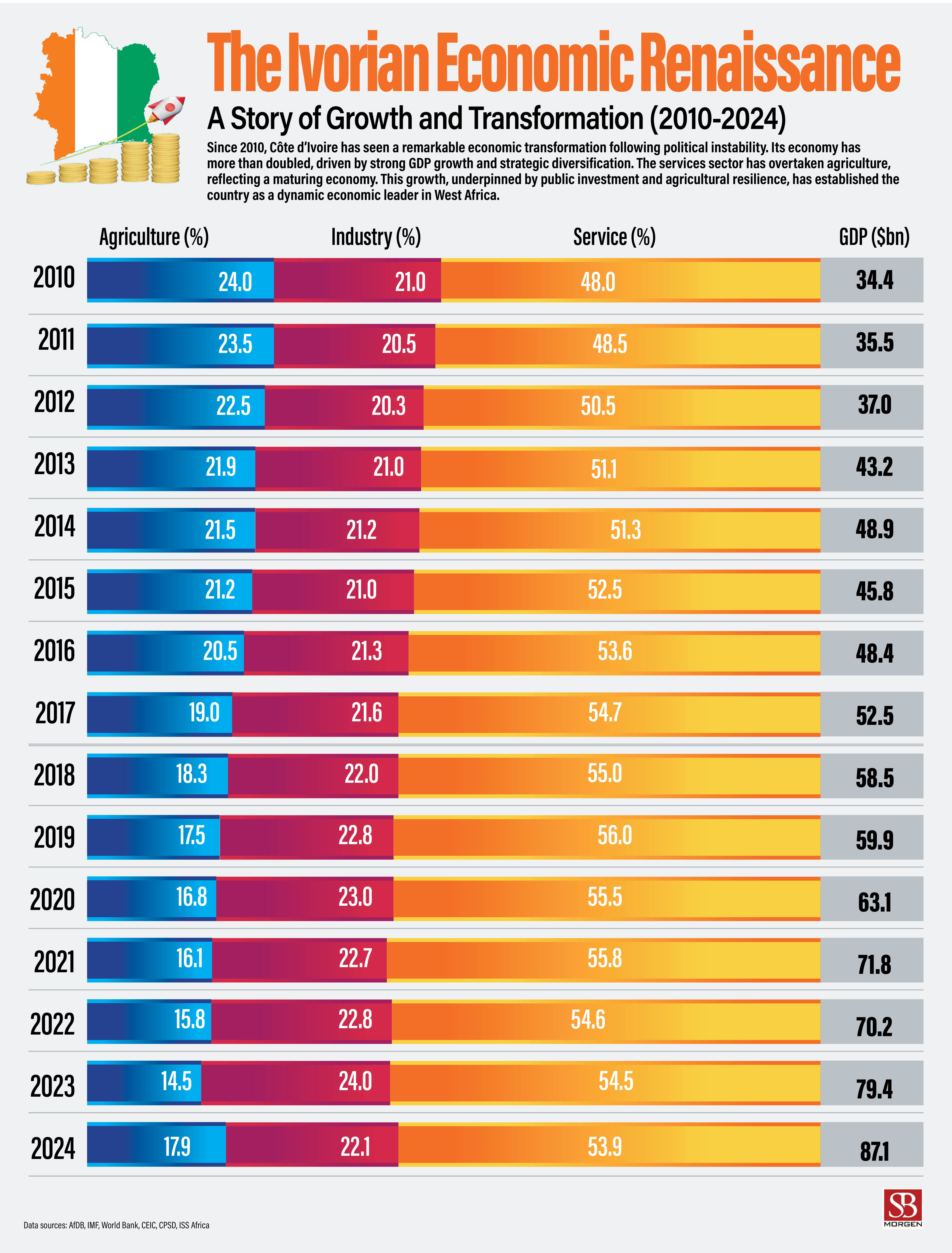
Together, these policies represent a dual strategy. The government is leveraging revenue from the dominant cocoa sector to build domestic food production capacity while enforcing supply management to protect the cocoa value chain from shocks. This approach has underpinned Côte d’Ivoire’s rise as West Africa’s second-largest economy, having overtaken Ghana, and supports projections for a 6.4 percent expansion next year.
Ultimately, Mr Ouattara’s administration appears intent on securing political legitimacy through economic performance. Agriculture serves as both a stabilising force and a tool for competitiveness, with cocoa continuing to attract foreign investment and fisheries offering new avenues for local value addition. The immediate challenge will be ensuring these reforms translate into higher rural incomes and sufficient food security to shield the populace from external shocks. If successful, this balancing act could provide a template for resilience in a region where many economies remain exposed to commodity risk and political fragility.