
Billion-dollar bailout
The World Bank has approved a $2.25 billion loan for Nigeria to support economic reforms and mitigate the impact of the cost-of-living…

The World Bank has approved a $2.25 billion loan for Nigeria to support economic reforms and mitigate the impact of the cost-of-living crisis. $1.5 billion will help protect millions who have faced growing poverty since a year ago due to President Tinubu’s economic policies, while $750 million will support tax reforms and safeguard oil revenues. Additionally, the trade and investment minister, Doris Uzoka-Anite, has announced a $3.5 billion agreement with Afreximbank to boost the textile industry and promote Compressed Natural Gas (CNG) vehicles.
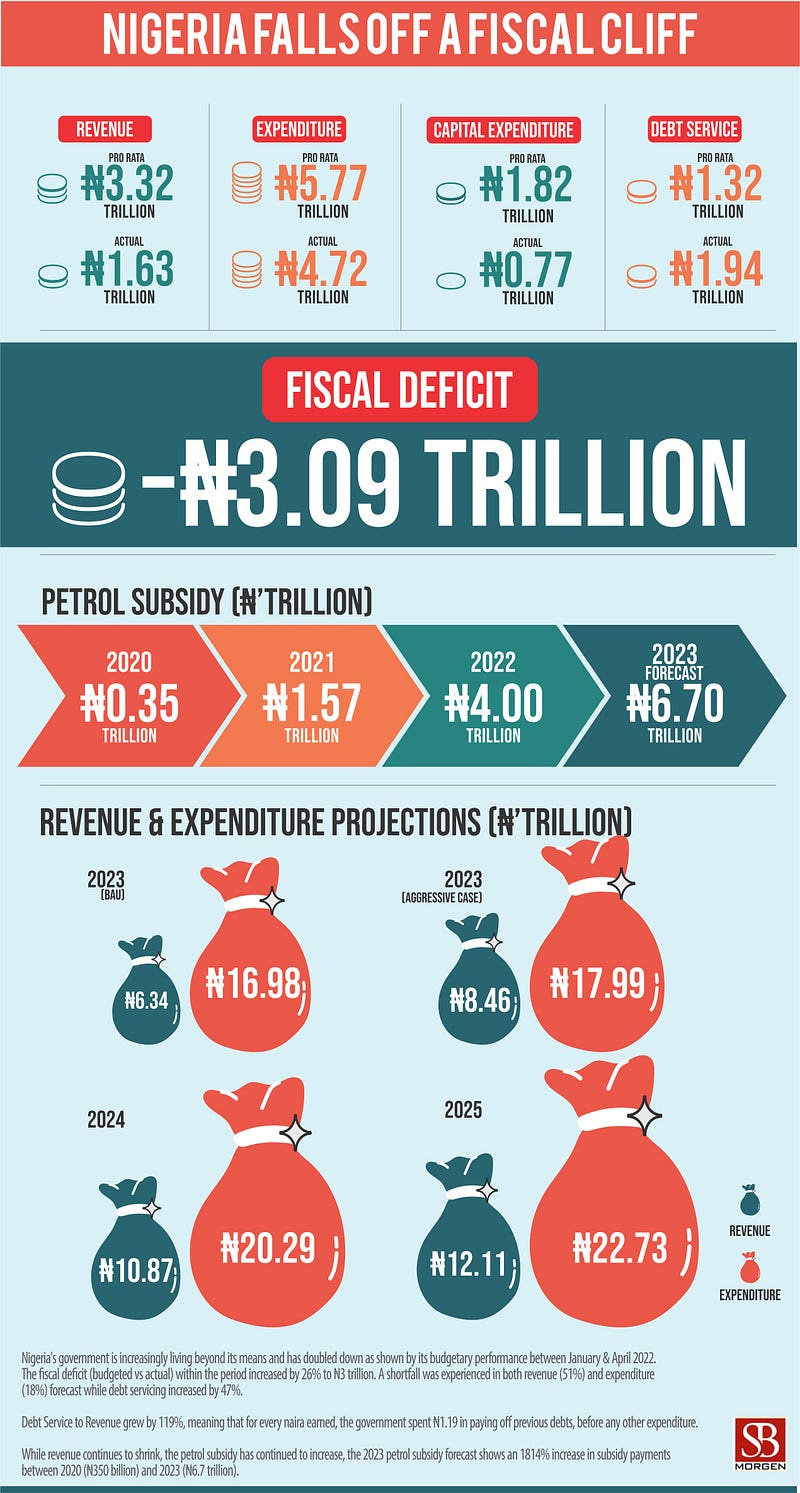
The World Bank inflow, in the form of a concessionary loan, offers better terms than commercial loans. Nigeria is in a quandary as it is already heavily burdened with debt. The Buhari administration was notorious for borrowing. Between 2015, when President Buhari was sworn in and 2023, when he exited, Nigeria’s public debt rose from ₦12.6 trillion to ₦97.3 trillion, an eye-popping 673 percent growth in just eight years. During that time, Nigeria faced its worst debt sustainability crisis, with the debt-to-revenue ratio surpassing 90% at one point. The Tinubu administration was forced to undertake some drastic measures, including devaluing the Naira and reducing subsidy payments on petrol. Theoretically, the reforms are in order. For example, in its 2024 Article IV Consultation with Nigeria, the IMF underscored that mobilising revenue and reprioritising expenditure, including phasing out costly and regressive energy subsidies, are critical to creating fiscal space for development spending and strengthening social protection while maintaining debt sustainability. However, the World Bank admits the subsidy removal move increased the population of Nigeria’s poor by eight million (if intervention programmes are not implemented). Already, the World Bank estimates that about 49 percent of Nigerians — 109 million people — are poor, and an additional 47 million people are at high risk of falling into poverty. This figure exceeds the populations of Benin, Cameroon, Chad, Gambia, Ghana, Niger, Senegal and Togo combined. Whilst the Tinubu administration’s measures initially resulted in some positives for the foreign exchange reserves, much of the gains seem to have been reversed as subsidy payments have returned and the cost of living has escalated. Nigeria’s economy requires major surgery rather than band-aids to put it on the path to recovery. According to the World Bank’s admission, this loan facility provides fiscal space for the federal government as the bulk of the loan ($1.5 billion) will form part of Nigeria’s foreign reserves, and the Naira equivalent will be used to fund budgeted expenditures. About $10 million of the loan amount has been earmarked for the Federal Inland Revenue Service and the Nigeria Customs Service for digitisation of revenue collection. However, this comes with a cost since the World Bank has classified the loan as a high-risk loan due to macroeconomic, political and social reasons. According to the loan document, the Tinubu administration has committed to a forensic audit of the NNPC and submitted a draft bill to the National Assembly to progressively increase the VAT rate to at least 12.5 percent by 2026. It also plans to introduce a capital gains tax on digital assets (including the outlawed cryptocurrency) and a new excise duty on online betting and telecommunication services. Government parastatals are also mandated to submit detailed monthly balances to the Office of the Accountant General (OAGF), showing their revenues and expenditures corresponding to each source of funds. Despite all these measures, the loan is not tied to any specific projects and fits right into the narrative that Nigeria borrows for consumption. Furthermore, we should consider the government’s spending plan, which gives the impression that Nigeria is borrowing to fund expenses as if it has a lot of money. Undoubtedly, funding is only one-half of the problem. The bigger half, which remains unsolved, is the spending part. And nothing in how the Tinubu government is running indicates that it is giving any real thought to this spending problem.