
Binance’s curtain call
Amid regulatory challenges in Nigeria, Binance, the world’s largest cryptocurrency exchange, announced the cessation of its Naira services…

Amid regulatory challenges in Nigeria, Binance, the world’s largest cryptocurrency exchange, announced the cessation of its Naira services effective 8 March 2024. Naira deposits will cease on 5 March, with withdrawals ending on 8 March. The remaining NGN balances will be converted to USDT automatically. All NGN spot trading pairs will be delisted on 7 March, and the naira will no longer be supported on Binance Pay. The decision follows the arrest of two Binance executives by the Office of the National Security Adviser (NSA), with authorities alleging the company’s involvement in “illegal transactions” and imposing a $10 billion fine.
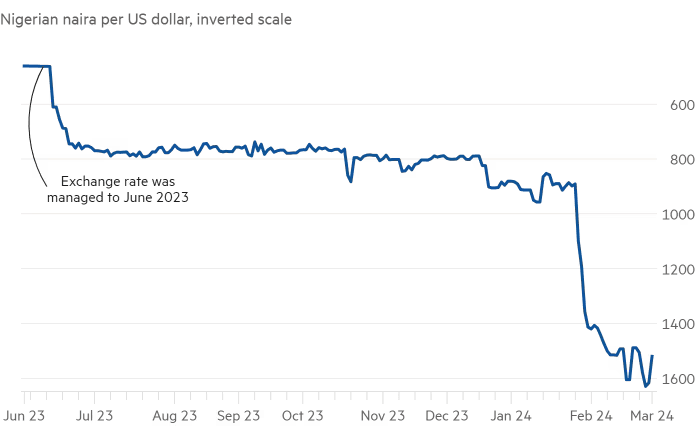
The exit of Binance from the Nigerian crypto trading market on 8 March 2024 will have significant implications. Crypto enthusiasts in Nigeria will lose access to the world’s largest exchange, impacting liquidity, variety of trading pairs and convenience. With the discontinuation of Naira services, users face hurdles in depositing and withdrawing funds. The automatic conversion of remaining NGN balances to USDT may expose users to potential volatility, affecting their overall portfolio stability. Additionally, the delisting of NGN spot trading pairs limits the trading options available to users. Binance Pay’s removal of Naira as a supported payment option further restricts the ease of transactions. In response to Binance’s departure, crypto enthusiasts in Nigeria may turn to alternative exchanges, both local and international, though none may fully replace the comprehensive services offered by Binance. Peer-to-peer trading platforms might gain popularity, allowing users to buy and sell cryptocurrencies directly. The regulatory challenges faced by Binance in Nigeria highlight the need for users to prioritise exchanges with clear compliance measures. Local crypto initiatives and decentralised finance (DeFi) platforms may witness increased attention as users seek alternatives that align with regulatory standards. As we have said, for global companies like Binance, Nigeria does not represent a market strategic enough for them to be willing to take on the kind of country risk that behaviours like the arbitrary arrest of its executives portend. Nigeria does not have the size or influence of larger economies like China, India, or the Gulf States. If the risk of doing business in Nigeria becomes too high, global companies will simply leave the market. Years of progress towards greater global integration could be lost. It is worth repeating that Nigeria is not a large market and does not have a strategic geopolitical position. Therefore, heightened risk will lead to companies leaving the country, even in the oil and gas sector. When X formerly Twitter decided to set up its African office in Ghana some years ago, the government of the day tried to make excuses for it. A few years down the line, Nigeria detained executives of one of the world’s largest cryptocurrency companies, demanding sensitive information. Unable to reach an agreement, the company has decided to halt operations in Nigeria. The behaviour of successive Nigerian governments shows that building a decent regulatory environment is not a priority. And the truth is not every company will choose to tolerate Nigeria and its many challenges. Despite the much-touted Nigerian contribution to tourism in the UAE, a visa ban was placed on Nigerians and the country’s state-owned airlines stopped operating in Nigeria. So in the government’s drive to attract foreign investments, the government should keep in mind that money will go where it is treated right.