
Blackouts
Some parts of Ghana, Benin and Togo are experiencing blackouts due to a gas supply disruption from Nigeria. The West African Gas Pipeline…

Some parts of Ghana, Benin and Togo are experiencing blackouts due to a gas supply disruption from Nigeria. The West African Gas Pipeline Company Limited in Accra, Ghana, announced a drop in gas volumes for transportation due to a three-week maintenance shutdown by a Nigerian gas producer. Meanwhile, Ghana’s GDP surged to 4.7% in Q1 2024, up from 1.2% in the previous quarter. The growth was driven by the Mining and ICT sectors, which grew by 12.9% and 17.9%, respectively. According to the Ghana Statistical Service, the Services sector remains the largest, accounting for 45.6% of GDP.
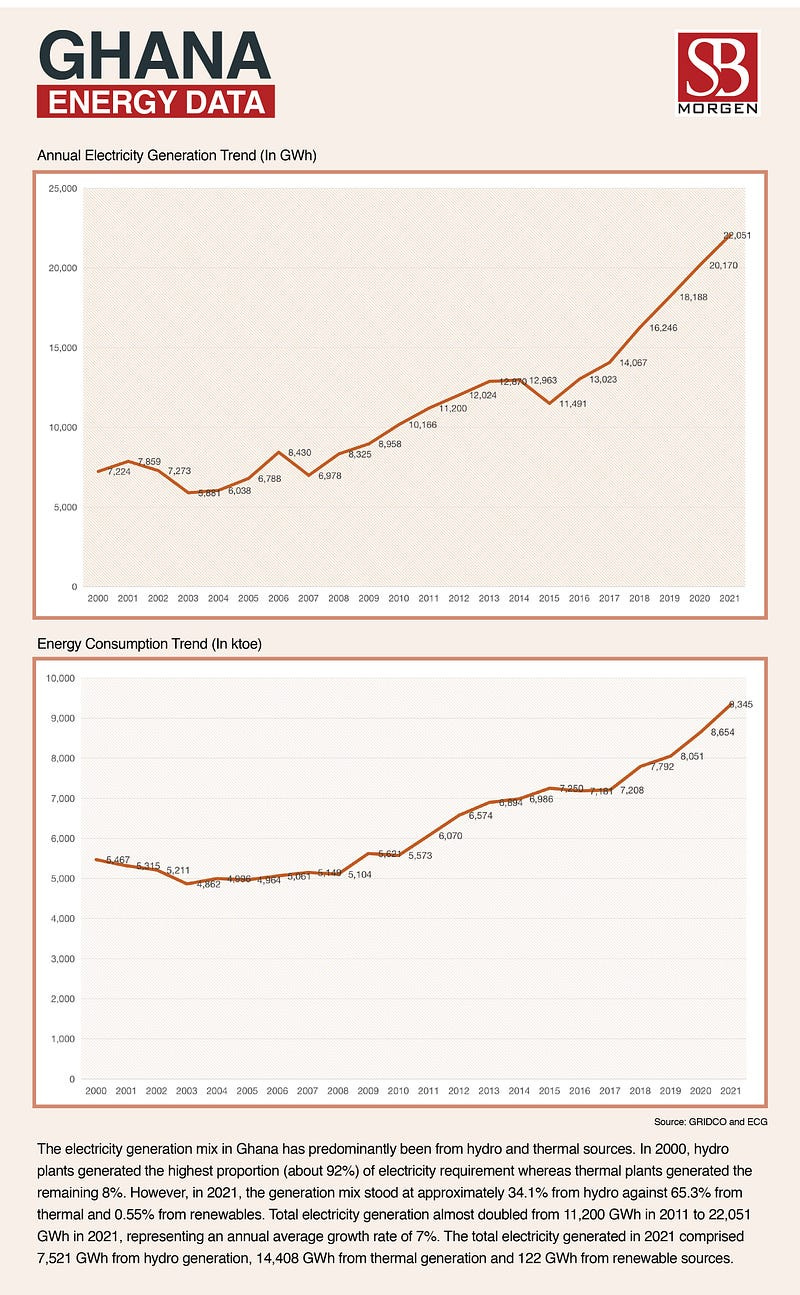
In West African countries such as Ghana, Togo, and Benin, gas supply restrictions can trigger prolonged power crises due to the heavy reliance on thermal energy for electricity generation. In Ghana, about 70% of the dependable electricity capacity comes from thermal energy, which largely depends on gas supply. Last year, thermal plants contributed approximately 71.2% of the dependable capacity to meet the country’s peak demand. This year, the Ghana Energy Commission insists that natural gas will continue to be the dominant fuel for thermal electricity generation, expected to come from indigenous gas fields (Jubilee, TEN, and ENI Sankofa) and imports through the West African Gas Pipeline (WAGP), part of which is currently inoperable due to maintenance issues. Ghana, which supplies power to Togo, experienced prolonged power cuts long before the recent gas supply challenges announced by the West African Gas Pipeline Company (WAPCo). Available data, representing total system power generation at peak periods (10 pm), shows that Ghana has been experiencing power generation deficits throughout this year. This was evident even before WAPCo’s announcement, which is expected to increase the generation deficits further, resulting in more blackouts and fluctuating power supply (more DUMSOR). Although WAPCo’s announcement has worsened Ghana’s power crisis, the nation has long been battling financial issues for its energy sector debt, estimated at $1.6 billion by the IMF. This year, Ghana has struggled to find funds to purchase fuel to supply its thermal plants. The Ghana Energy Commission expects the Weighted Average Cost of Gas (WACOG) to remain at US$8.12/MMBtu, necessitating about US$1.12 billion for gas procurement this year. This translates to a monthly average of US$93.04 million, which Ghana’s government struggles to finance. With the successful completion of the interconnection project, WAPCo now has reverse flow capability, transporting gas from the Western Region of Ghana while maintaining its original gas transportation from Nigeria. This has increased the volume available for its gas off-takers. However, the current maintenance announcement means more than 1,000 MW of Ghana’s less than 5,000 MW dependable capacity will be at risk due to their reliance on the reverse flow function of the WAGP, which feeds most of the country’s thermal plants. Although Ghana’s energy sector crisis has persisted for over a year, its economy expanded by 4.7% in the first quarter of 2024, surpassing earlier projections. However, the electricity subsector lagged behind, expanding by only 1.9% in the first quarter of this year compared to a 2.5% expansion in the same period in 2023. This reflects the current challenges the sector is facing with the power crisis. The year-on-year drop of 7.5% mimics the slow pace at which installed capacity is converted into generation capacity. While there is more installed power, fuel supply restrictions coupled with the energy sector debt have crippled growth in the electricity subsector.