
Bloodbath
At least 40 people have been killed in Yobe State after suspected Boko Haram militants shot at villagers and set off a landmine in the…

At least 40 people have been killed in Yobe State after suspected Boko Haram militants shot at villagers and set off a landmine in the first major attack on the state in 18 months. The attack happened at Gurokayeya village, Gaidam Local Government Area, police spokesperson Abdulkarim Dungus said. In Borno, at least 15 rice farmers were killed, and several others feared abducted after suspected Boko Haram insurgents attacked three villages, including Koshebe, Karkut and Bulabulin in Mafa LGA, Reuters reported. In Katsina, the police confirmed that bandits went on a rampage in Sayaya village, Matazu LGA, killing five and abducting another five.
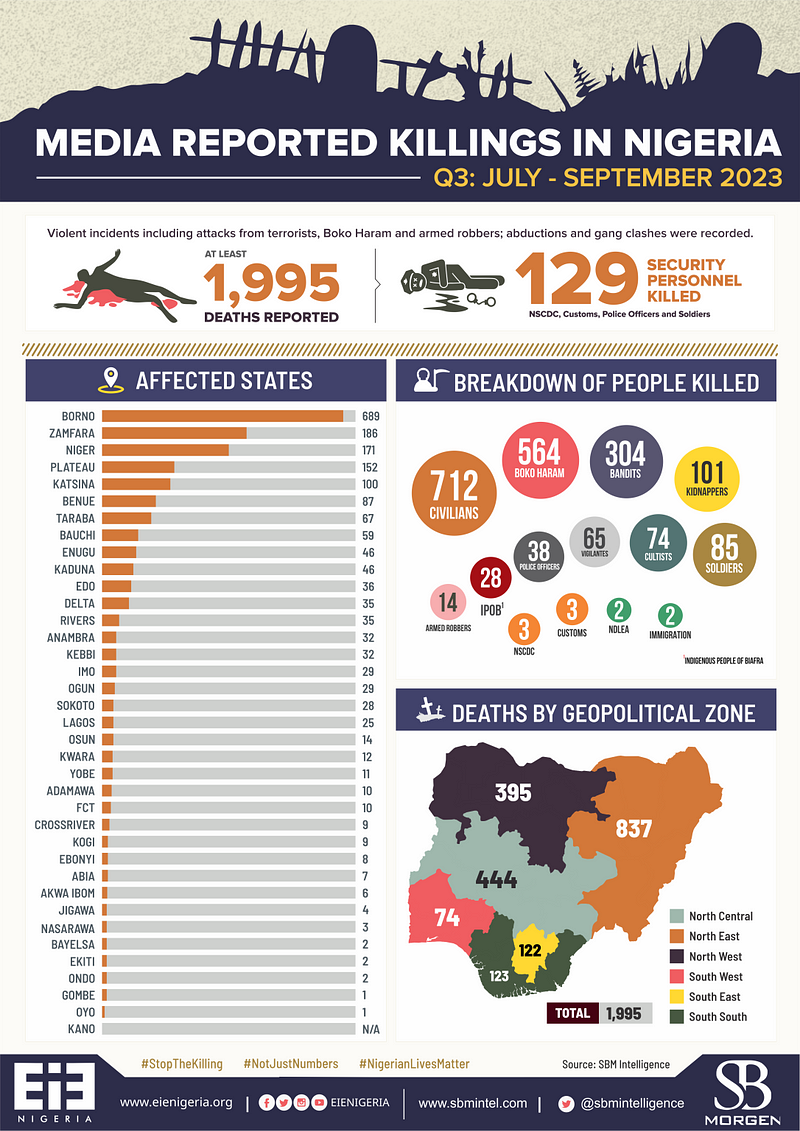
A most forgotten area of the less-talked-about Boko Haram insurgency in North East Nigeria is Geidam, where ISWAP have made a home. Geidam’s location is strategic as it sits between Borno and Yobe and has been used for cross-boundary operations by the armed group for the past year — a development the military has not countered. That absence of answers has led to something progressive for the caliphate: the institution of taxation in several forms, mainly levies and protection racketeering. ISWAP instituted the protection racket to protect residents of the LGA from excesses committed by the Jama’atu Ahlis Sunna Lidda’adati wal-Jihad (JAS) faction as well as from Islamic State West Africa Province (ISWAP) itself. Last week’s massacre in Gurokayeya was a reprisal by the caliphate for residents’ failure to pay levies and for providing intelligence to the military, which led to the deaths of militants the week before. Since 2020, at least ₦138 million has been paid to armed groups across Northern Nigeria, with the bulk of such payments happening in Katsina, Sokoto and Zamfara. This evidence points to the overarching problem of a state withdrawing from its responsibilities, leaving ungoverned spaces that armed groups exploit. Despite the government’s attempts to intervene in the agricultural sector, these efforts have often backfired, with farmers bearing the brunt of policy failures. The 2020 Zabarmari Massacre, in which 40 farmers were killed, is a prime example. With the state losing more territory than it controls, its policies are ineffective and drain the country’s resources rather than solving the problem. This situation is reversing the government’s stated goal of achieving agricultural progress. The news of deaths has become numbingly commonplace, a symptom of the crisis’s depth and duration. Beyond the human cost, terrorism and insecurity have caused widespread property damage, disrupted economic development and discouraged investment, leading to job losses and stunted economic growth. The agricultural sector has also suffered, as farmers face constant threats of violence or abduction, hindering productivity and compromising food security. The government’s repeated failures to effectively combat terrorism have eroded public trust, leaving citizens feeling abandoned and unprotected. This disillusionment has fuelled apathy and weakened democratic institutions, making it harder to address the root causes of insecurity. Violence has also led to the mass displacement of people seeking safety, intensifying social and economic tensions in host communities. Displaced people are also vulnerable to exploitation and further displacement. The constant threat of violence has also had a profound impact on the mental health of communities and individuals. The enduring impact of sustained terrorism and insecurity in Nigeria extends far beyond immediate losses. The economic disruption, erosion of governance trust, regional destabilisation and widespread displacement require long-term solutions, and the psychological scars demand sustained healing efforts.