
BoG cuts rates as everything else spikes
Ghana slashes its interest rate to 18% to spur growth, while simultaneously approving sharp increases in health insurance, electricity, and water tariffs.

Ghana continued its aggressive monetary easing with a surprise 350-basis-point cut that pushed the benchmark rate to 18 percent, its lowest level in years. The Bank of Ghana said inflation had dropped sharply to 8 percent and was expected to stay within target through mid-2026. The move brings cumulative cuts in 2025 to 1,000 basis points as policymakers shift towards supporting growth. While monetary conditions ease, the government is implementing major price adjustments across social services. Health Minister Kwabena Mintah Akandoh announced a 120 percent rise in National Health Insurance Scheme tariffs, one of the largest increases in the programme’s history, aimed at stabilising hospitals and improving access to medicines. The Public Utilities Regulatory Commission also approved new electricity and water tariffs for 2026 to 2030, increasing power rates by 9.86 percent and water charges by 15.92 percent to meet investment needs and manage operating costs for utilities.
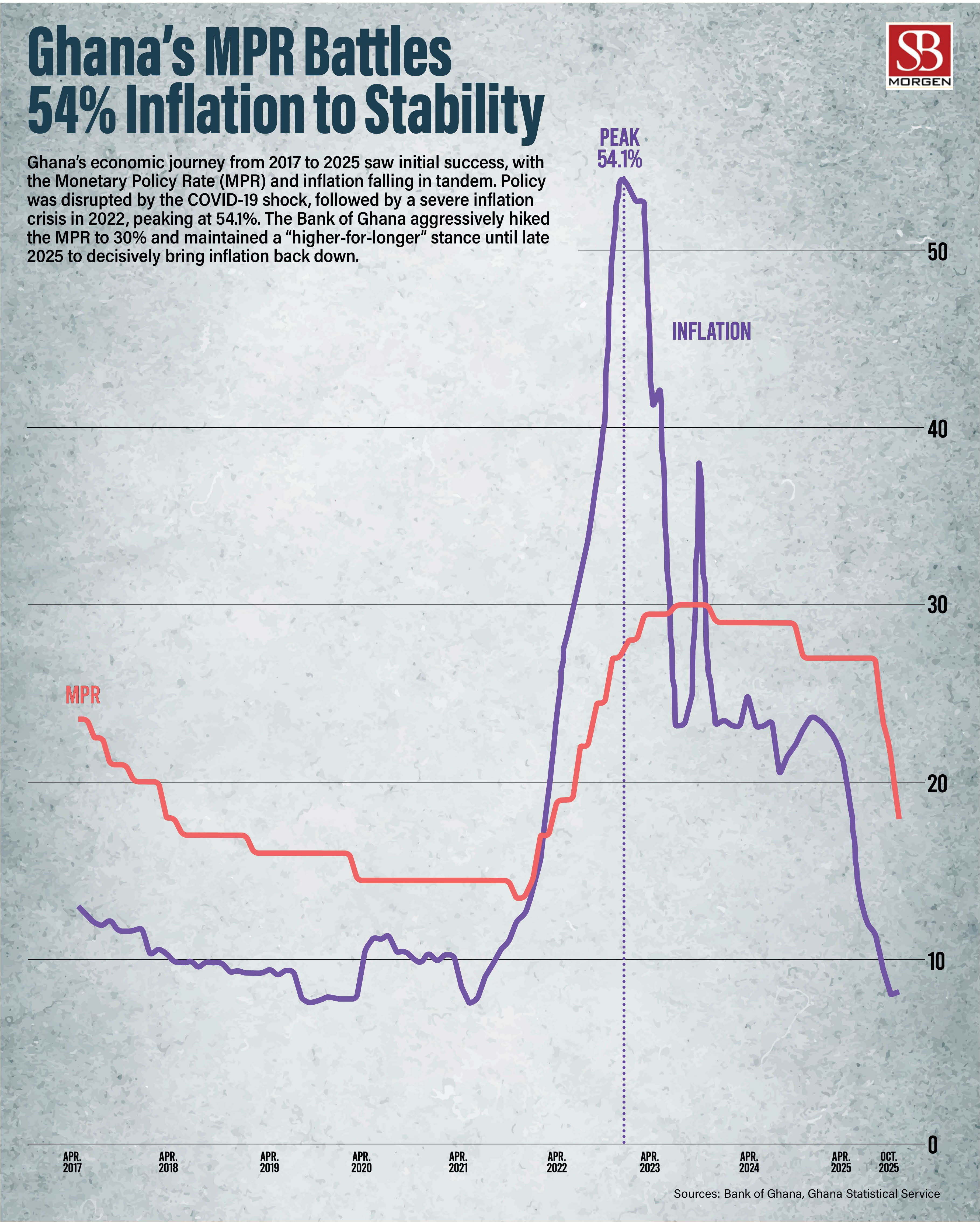
Ghana’s central bank continues to pursue a proactive strategy to stabilise the economy, evidenced by a surprise reduction of 350 basis points that brings the benchmark rate to 18 percent. This aggressive easing marks the lowest rate in years and contributes to a cumulative 1,000-basis-point reduction throughout 2025. This distinct pivot towards supporting growth is underpinned by encouraging macroeconomic data, specifically the sharp decline in inflation to 6.3 percent as reported by the Ghana Statistical Service.
The combination of falling inflation and lower interest rates creates a vital opportunity for businesses to access cheaper credit, thereby fostering investment and broader economic expansion. Credit is due to the Ghanaian authorities for the disciplined and measured approach adopted following the 2022 eurobond default, an event that laid bare structural vulnerabilities within the nation’s fiscal and financial architecture.
Alongside these monetary developments, the government has adjusted social service pricing to address the limits of unsustainable subsidies. This includes a 120 percent increase in National Health Insurance Scheme tariffs, as well as higher charges for electricity and water. Although politically sensitive, these measures are economically rational; they aim to stabilise service delivery, improve access to essential medicines, and ensure utilities can cover operating costs while funding necessary investments. Furthermore, these adjustments signal a commitment to creating an environment where competition and innovation can thrive, eventually leading to price efficiency and allowing consumers to make informed choices.
The immediate challenge for Ghana is sustaining this disciplined policy stance. Monetary easing can only prove effective if it is paired with strict fiscal prudence and systemic efficiency. Any tolerance for fiscal inefficiencies risks undermining the gains achieved through structural reforms and accommodative monetary policy. Consequently, the government must remain vigilant in managing expenditure to ensure policy signals remain credible and economic stability is maintained. If these efforts are sustained, Ghana stands a strong chance of consolidating its macroeconomic gains, fostering private-sector-led growth, and building resilience against future shocks.