
Boom and buffering
Nigerian internet data usage fell by 17,647TB (Jan-Apr 2025) due to tariff hikes. Despite this, CBN's May survey showed rising business optimism.

Nigeria's internet data usage declined by 17,647 terabytes between January and April 2025, dropping from 1 million TB to 983,283 TB—largely due to a 50% tariff hike approved by the NCC in February. The steepest decline (10.8%) occurred in February, with a brief March rebound before another dip in April. Subscriptions also fell by 176,202. Meanwhile, a CBN survey in May showed rising business optimism, led by the agriculture and construction sectors. Firms projected growth despite challenges like insecurity, high interest rates, and taxes. Capacity utilisation rose to 58.7%, while confidence was highest in the North East and lowest in the South East.
The Tinubu administration's economic reforms, though widely deemed necessary, have proven tough on Nigerians. Two years on, while initial turbulence subsides, unemployment, low productivity, and stagnant wages remain critical concerns.
Paradoxically, agriculture holds immense potential despite being hampered by persistent insecurity, limited financing, and foreign exchange constraints. With a vast population to feed domestically and regionally, a well-functioning agricultural sector could be transformative if effectively managed.
Many Nigerians are now forced to cut back on discretionary spending to cope with rising costs. This is evident in declining consumption across sectors like mobile data, satellite TV, luxury goods, and even food choices. A recent dip in internet data consumption offers a sobering signal, highlighting the delicate balance between affordability and access in a digital economy battling inflation.
The 17,647 terabyte decline in internet data usage between January and April 2025, largely catalysed by a 50% tariff hike in February, underscores how pricing shifts rapidly alter consumer behaviour. The sharp 10.8% crash in February immediately after the hike confirms the high elasticity of demand in Nigeria's price-sensitive market. Whilst March saw a brief rebound, another dip in April suggests sustained discomfort. This is not merely about data; it illustrates the constraints on digital inclusion, as active subscriptions also fell by over 176,202, implying that low-income users are reducing usage or exiting entirely due to cost.
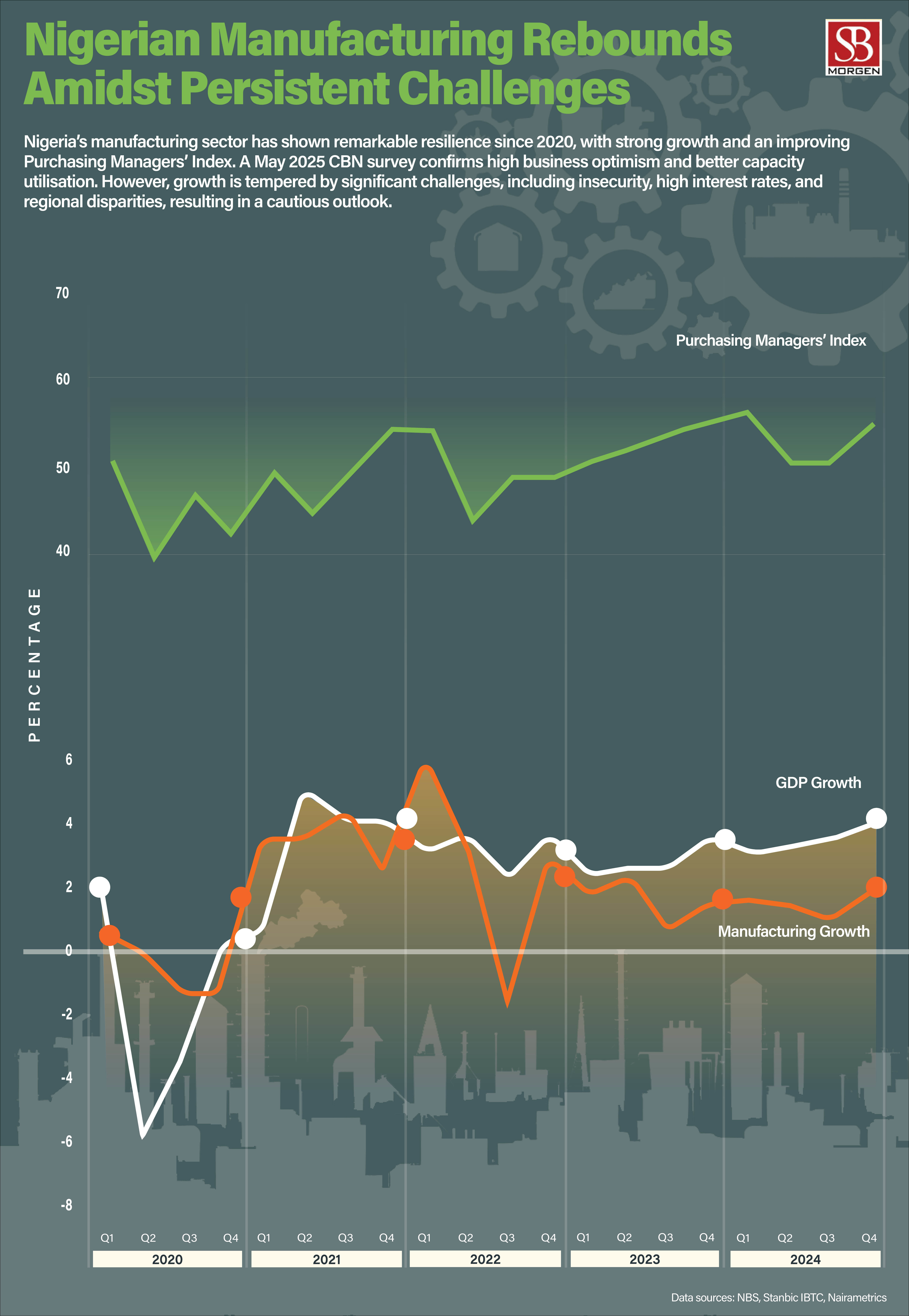
Conversely, broader business sentiment is buoyant. The Central Bank of Nigeria’s (CBN) May 2025 survey reveals rising confidence among firms, particularly in the agriculture, mining, and electricity sectors. This creates a two-speed recovery: squeezed consumers grappling with shrinking purchasing power versus resilient firms, especially in export or resource-based sectors, buoyed by improved macroeconomic stability and policy direction. Regionally, optimism in the North-East may reflect low base effects and reconstruction efforts, whilst the South-East’s pessimism is rooted in persistent insecurity, highlighting persistent regional disparities.
Expectations of sustained business confidence over the next six months suggest belief in policy stability, improved foreign exchange access, or an increase in public sector contracts. Encouragingly, capacity utilisation is rising to 58.7%, indicating that leaner, more productive firms are emerging from recent economic shocks. However, optimism is tempered by three persistent obstacles: insecurity, high interest rates, and heavy taxation, which continue to erode competitiveness and inflate the cost of doing business. Even with hopes of a stronger naira and improved output, the contradiction remains stark: supply-side optimism does not necessarily translate into demand-side resilience.
Nigeria in the first half of 2025 is defined by this duality: digitally constrained citizens navigating cost pressures, and a resilient entrepreneurial class clinging to hope. Policymakers must tread carefully; any fiscal tightening or further deregulation without parallel social buffers risks deepening exclusion. As internet access becomes central to education, commerce, and innovation, ensuring affordability is not just an economic necessity—it is a developmental imperative.