
Booted out
The US military has completed its withdrawal of nearly 1,000 personnel from Niger, following the junta’s April order. Niger, once a key US…

The US military has completed its withdrawal of nearly 1,000 personnel from Niger, following the junta’s April order. Niger, once a key US partner in the fight against insurgents in the Sahel, has faced ongoing violence that has displaced millions. Meanwhile, the US is advocating for two permanent United Nations Security Council seats for African nations and one for small island developing states, according to US Ambassador Linda Thomas-Greenfield. This proposal is part of broader efforts to strengthen ties with African and Pacific Island nations amid growing concerns about Chinese influence and dissatisfaction with US support for Israel.
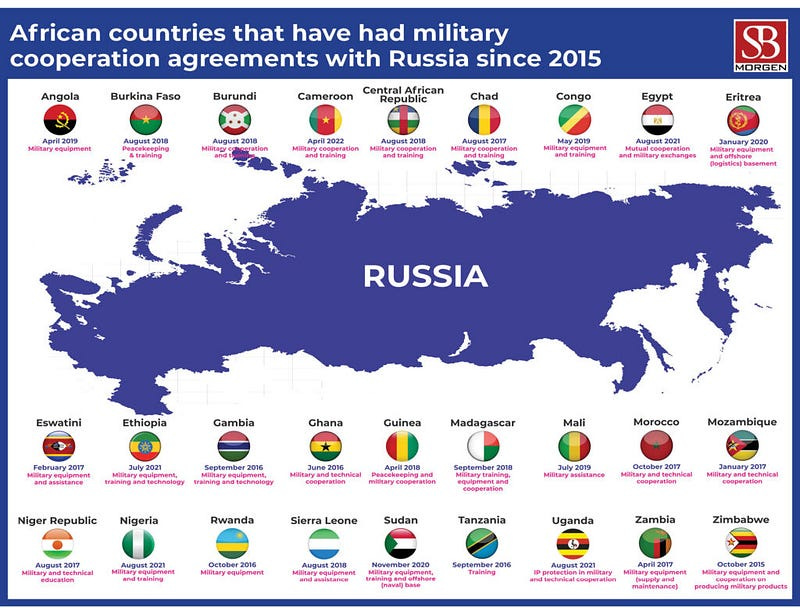
The US exit from its drone and air bases in Niger ends a saga that began over the last decade with the expansion of American military presence on the continent through Africa Command. In geopolitics, there are decades where nothing happens, and then weeks where decades happen. The military coup in Niger in July 2023 drastically altered the landscape of foreign military presence in the Sahel, for better or worse. Signs of junta hostility to Western interests were evident from the beginning, reflecting widespread national sentiment that the coupists leveraged to gain legitimacy. Initially, a backdoor deal between Washington and the new junta in Niamey allowed US forces to remain in Niger. The US seemed settled until earlier this year when concerns arose over the junta’s engagement with Iran, particularly over uranium. This escalated from quiet disapproval in Washington to a direct confrontation in Niamey, involving State Department and AFRICOM officials. Contrary to popular belief, Western influence in the Sahel is not disappearing entirely — at least not yet. Just as France and its EU partners relocated forces to Chad, the US seeks to maintain a military presence, albeit reduced, in other West African states like Ghana, Ivory Coast and Senegal. However, the power vacuum in less stable countries has been filled by rivals like Turkey, Russia and the UAE. Failing to address the deteriorating situation in the Alliance of Sahelian States will raise long-term concerns about the effectiveness of swapping one foreign partner for another, without any clear advantage. These geopolitical shifts will also impact discussions on US-backed UN Security Council reforms. Reforming the Security Council has been debated for decades. The current structure, established in 1945, includes five permanent members (China, France, Russia, the UK, and the US) and 10 non-permanent members. Proposals over the years have included expanding the Council to 24 members or creating new semi-permanent seats. In 2022, the General Assembly renewed calls for greater representation, especially for Africa, though key issues like veto power remain unresolved. While some nations, like Ghana and Iran, call for limiting or abolishing veto power, others, like Russia, are staunchly opposed. In terms of regional representation, many African countries demand permanent seats on the Council. This year’s debates have seen countries like France backing Brazil, Germany, India and Japan for permanent membership, while the African Group has reiterated its demand for two permanent and five non-permanent seats. America’s proposals may find some support among Global South-aligned members like China and Russia, but sharp disagreements will arise over demands from rising powers like India, Japan and Germany, particularly concerning veto power. Africa’s bid for a permanent seat could be jeopardised by the continent’s difficulty in uniting behind a single strategy. As Rwandan President Paul Kagame suggests, one permanent seat should be allocated to the African Union Commission, while another could rotate among the five African sub-regions, either through elections or a consensus process insulated from African Union interference.