
Borders for sale
Italian PM Meloni met Tunisian President Saied to discuss migration control and economic ties, focusing on curbing illegal crossings and boosting investment, with no new measures announced.

Italian Prime Minister Giorgia Meloni met Tunisian President Kais Saied in Tunis to advance cooperation on migration and economic development. Discussions centred on curbing irregular migration, combating human trafficking, and fostering legal migration channels. Saied urged increased European investment to address the root economic drivers of migration. The meeting followed the recent Italy-Tunisia border control and aid agreements, though no new measures were announced. Simultaneously, the United States has launched a migrant relocation programme, transferring asylum seekers to Rwanda under a bilateral deal. The policy, facing international criticism, aims to deter irregular migration. Rwanda will offer permanent residency to eligible individuals.
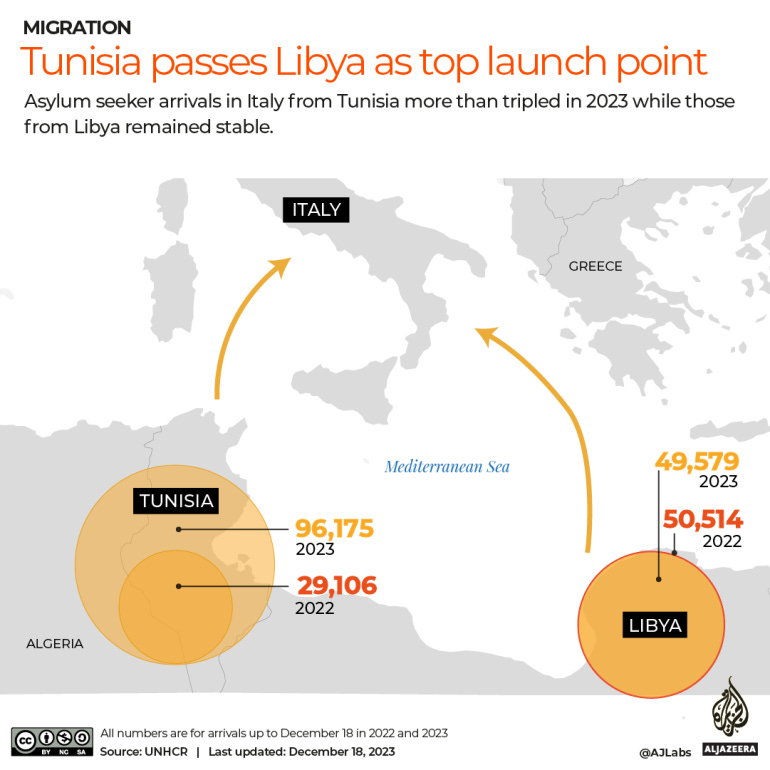
Migration continues to dominate relations between Tunisia and its European neighbours. While the EU wants to curb the flow of irregular migrants from Sub-Saharan Africa, Tunisia and other North African countries are demanding economic aid and strategic partnerships in return. Their interests are often at odds but remain deeply interconnected.
However, the reality of these arrangements reveals a profound imbalance of power. According to Tunisian officials cited in local media, irregular migration from Tunisia to Europe dropped significantly between 2023 and 2024. This isn’t a sign of reduced demand, but rather the result of heavy-handed state action. President Kais Saied's rhetoric about a supposed plot to change Tunisia’s “demographic make-up” led to a rise in xenophobia, resulting in mass evictions, violence, and the forced repatriation of Black Sub-Saharan Africans. Black Tunisian citizens, who have long faced discrimination, also experienced an increase in hostility.
This approach, largely ignored by the EU, mirrors past European policies, such as the “Fortress Europe” strategy of the 2000s, which outsourced border control to figures like Sudan’s Omar al-Bashir, with lasting negative consequences for the region. This pattern of paying African countries to police borders has now become a core part of Western migration policy. Italy’s recent engagement with Tunisia, framed as a dialogue on migration and economic cooperation, follows this exact model. Like Libya and Egypt before it, Tunisia is being positioned as a gatekeeper for Europe.
While European leaders talk of "joint solutions" and "legal pathways," the reality is a transactional deal: financial aid and investment in exchange for containment and enforcement. For Tunisia, a nation grappling with its own economic and political crises, its power in these negotiations is limited.
In a similar move, the United States has launched a controversial asylum relocation programme with Rwanda. This echoes the UK's failed Rwanda plan but differs in its strategy. The US is using a "carrot-and-stick" approach, combining financial incentives with threats of sanctions and visa restrictions. Nigeria, for example, faces diplomatic consequences for refusing to participate. However, the plan raises serious concerns about logistics, legal safeguards, and potential social tensions.
The choice of Rwanda by both the US and Europe as a destination for asylum processing highlights a broader geopolitical shift. African countries are being increasingly drawn into the domestic policy crises of wealthier states, specifically migration control, without a clear long-term strategy or safeguards. While these deals might offer short-term political gains in the West, they leave African governments to manage the humanitarian and social fallout.
More broadly, this marks a new evolution in Western diplomacy towards Africa. The cautious, development-focused language of previous decades is being replaced by a more direct approach, driven by domestic concerns over migration, competition with non-Western powers, and a breakdown of multilateral consensus. The implications for African states are significant: their role in global diplomacy is being redefined not by partnership, but by their usefulness in managing crises that originated elsewhere.