
Brain drain
Nigeria’s government has revealed that the country now has only 55,000 licensed doctors to serve its growing population of more than 200…

Nigeria’s government has revealed that the country now has only 55,000 licensed doctors to serve its growing population of more than 200 million. During an interview on Channels TV’s ‘Politics Today,’ Muhammad Pate, the country’s health minister, also said that about 16,000 doctors left the country in the last five years, and about 17,000 have been transferred. “Nigeria has about 300,000 health professionals, including doctors, nurses, midwives, pharmacists, laboratory scientists, and others. We have 85,000 to 90,000 registered Nigerian doctors but not all of them are in the country,” he said.
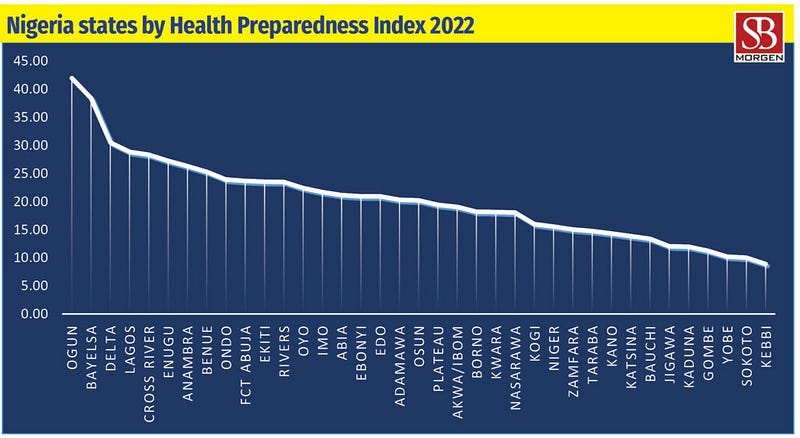
Mr Pate is not the first minister to raise these laments. Firstly, the fact that Nigeria, a country reported to have a population of about 200 million, has only ever produced 90,000 doctors is disappointing. Secondly, the rhetoric of the last administration that suggested that protesting doctors who wanted to leave the country could do so rather than address the issues raised has been a contributing factor to this mass emigration. Past leaders have consistently attributed the exodus of doctors to unpatriotic motives rather than addressing the real causes of this exodus. By deflecting responsibility and failing to address the root causes of this issue, they have only served to perpetuate the problem. By failing to address the concerns of doctors, past administrations have only exacerbated the problem. Nigerian doctors and health workers are poorly paid, work under unsavoury conditions and are consistently unable to access the best equipment. Additionally, much of their patient pool has gotten even poorer, reducing the pool of viable patrons of the industry. While Mr Pate has the qualifications to lead Nigeria’s healthcare sector, it is important to understand that the issues facing the sector go beyond simple lamentations. Years of failed policies have resulted in a crisis of infrastructure and personnel, leading to a mass exodus of doctors from the country. According to some researchers, up to 90% of doctors in Nigeria would prefer to leave the country to practise elsewhere. This is a clear indication of the dire situation facing the sector. However, the problem of medical professionals emigrating is not peculiar to Nigeria or Africa alone. Countries like India are also dealing with their fair share of the problem. This is why geopolitics matters: what happens in each country will have a ripple effect on other countries. The ageing population in developed countries like the United Kingdom (UK) and the United States of America (USA) means they need medical personnel to care for their senior citizens. The National Health Service (NHS) has an estimated shortage of 126,000 workers in the UK. And because the birth rate is falling in these countries, the working population is not being replaced as people retire. On the other hand, countries like Nigeria, Ghana, and India have huge populations that are constantly seeking better working conditions, given the poor living standards. Hence, people will naturally migrate towards places that offer them a better shot at life. The present situation in Nigeria means that the doctor-to-patient ratio is about 1:3,636, a far cry from the WHO recommendation of one doctor to 600 patients. That definitely is not an ideal situation. While it is encouraging to see that steps are being taken to increase the number of doctors in the country, it is clear that these efforts will not be enough to address the systemic problems that have plagued the healthcare sector for years. The sector’s challenges require a holistic and long-term approach rather than a short-term or piecemeal solution. Mr Pate must recognise this and take decisive action to address the root causes of the crisis. This includes investing in infrastructure, increasing the number of residency training slots, raising salaries, improving working conditions, encouraging private sector inflow into the healthcare sector and providing incentives for doctors to stay in the country. Only then will Nigeria be able to retain and attract the talent needed to improve the quality of healthcare for its citizens. It is important to state that this intervention does not mean passing draconian laws to prevent the exit of health workers.