
Breach and boom
The Auditor-General has indicted the NNPC for unauthorised deductions of $50 million from federation revenue for refinery rehabilitation.

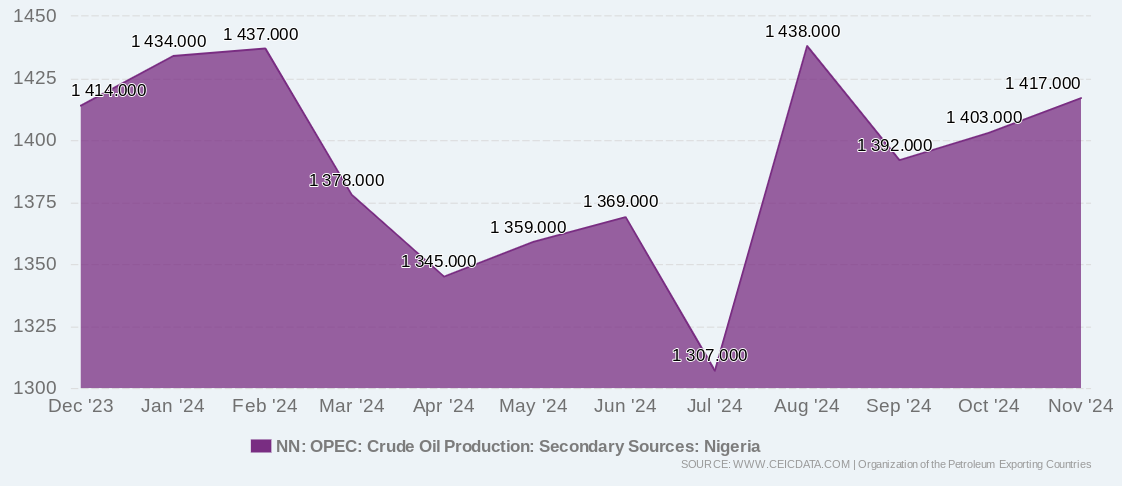
The Nigerian National Petroleum Company Limited (NNPC) has been indicted for unauthorised deductions of ₦82.9 billion ($50 million) from federation revenue for refinery rehabilitation, according to the 2021 Auditor-General’s annual report published in November 2024. The company was also criticised for irregular deductions from domestic crude sales, violating the Nigerian Constitution and Financial Regulations. Meanwhile, Nigeria surpassed its December 2024 quota set by the Organisation of Petroleum Exporting Countries (OPEC). According to tanker tracking data compiled by Bloomberg, the production reached over 1.5 million barrels per day, an increase of 40,000 bpd, marking the country's highest output in four years.
One of the perennial arguments against the NNPC is the opaqueness of its operations, a characteristic typical of the oil and gas sector in general. The inefficiencies of the Nigerian environment further compounded the NNPC’s bad behaviour and made it too big to be corrected. For instance, the Auditor-General's office, which checks the government’s financial character, is underfunded and releases its reports years after the culprits are no longer in office or have moved on to other endeavours.
Due to its size, lack of accountability (and oversight), and willingness to dance to the government’s tune, NNPC sources subsidy funds from wherever it pleases. This is why the NNPC did not remit funds from crude oil sales to the federation accounts allocation committee for several months in 2022 and 2023, claiming that these funds were used to cover the petrol subsidy – contravening the constitution. The persistence of successive governments in “resurrecting” the refineries for political propaganda also meant that faces were turned away as the NNPC spent scarce revenues on the decades-old facilities. For what it’s worth, the Port Harcourt refinery began operations after being financed by a crude-backed loan from the Afreximbank.
Much more needs to be done to improve transparency in NNPC. Some market watchers believe that the potential listing on the Nigerian Stock Exchange would help achieve this. The removal of the petrol subsidy also eliminates the excuse for the unilateral diversion of public funds. Sadly, there will be no consequence for the violation.
Speaking of consequences, Nigeria’s violation of its OPEC quota will not sit well with other members of the cartel. Angola, another big African oil producer, waved goodbye to its OPEC membership when it could not achieve its goal of a higher quota. It is now evident that the production cuts from OPEC and OPEC+ cannot significantly raise crude oil prices beyond the current range, so each party to the agreement will likely watch closely to see who is contravening the agreement.
Nigeria may, however, argue that the excess was set aside for domestic consumption, given the current upsurge in local refining capacity. The growth in oil output is a positive for the Nigerian economy. Nigeria desperately needs to improve its earnings; in the short term, it can achieve this by growing oil output. The MTEF sets the expected production for 2025 at over two million barrels per day, and a continuous increase is the way forward. If this momentum is sustained, improvements in petrol supply can be expected, especially with refineries coming online.