
Breaking point
In Accra, Ghana, hundreds of demonstrators convened for a third day of anti-government protests against the government due to economic…

In Accra, Ghana, hundreds of demonstrators convened for a third day of anti-government protests against the government due to economic hardships. The protesters, expressing concerns over the high cost of living and unemployment, marched under police supervision. Security forces blocked access to Jubilee House, the presidential residence, as organisers from Democracy Hub threatened to occupy it. On the initial day of protests, 49 individuals were arrested for unlawful assembly and breaching the Public Order Act. Subsequently, the situation remained relatively peaceful, with no reports of further detentions.
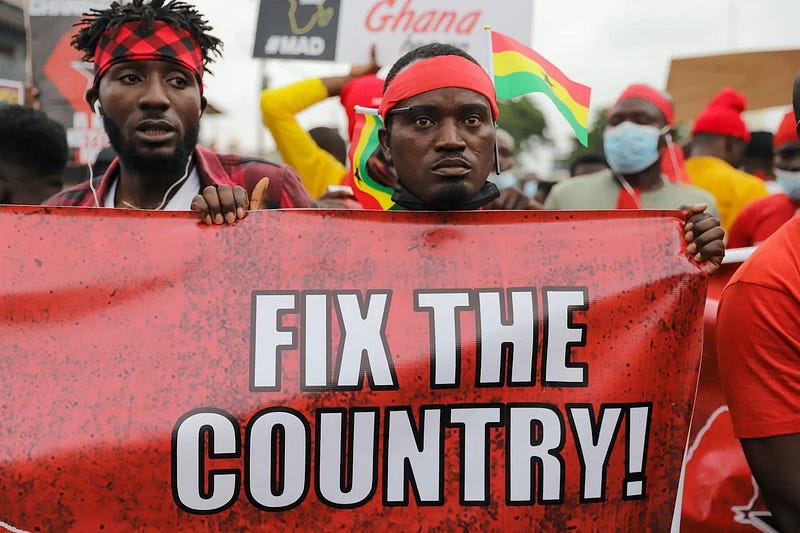
Ghana’s Democracy Hub, led by Mawuse Oliver Barker-Vormawor, is demanding reforms to address the high cost of living, corruption, youth unemployment, inadequate healthcare and poor infrastructure. The movement gained unprecedented attention with its #OccupyJulorbi protest initiated by a group of young Ghanaians expressing their discontent on social media. The protest, which originated on Twitter, spanned three consecutive days and featured participation from youth, top celebrities and influencers. This is not to say it is all rosy as politics has also come to the party. Barker-Vormawor is facing legal action on accusations of inciting a coup. He has also accused the National Security Minister Kan Dapaah of attempting to bribe him with $1 million and committee appointments to quell his activism. The National Security Ministry has refuted these claims and initiated legal action against Barker-Vormawor. Despite decades of practising democracy coupled with abundant natural resources, many Ghanaians struggle to afford basic necessities. Illegal mining continues to damage water bodies and forest reserves, and the cost of dialysis for kidney patients remains high and is expected to increase significantly. Ghana’s population is predominantly youthful, with over 55 percent of registered voters aged 18 to 35. This proportion is anticipated to rise in 2024. However, within the 15–35 age group, unemployment rates are high, standing at 19.7 percent, and even higher for young adults aged 15–24 at 32.8 percent. Within 24 hours of the protest, Alan Kyerematen, a prominent figure in the ruling party considered a potential successor to President Akufo-Addo, broke away from the party to announce his candidacy as an independent. He plans to lead a youth-powered movement, believing that a significant shift will enable Ghana to harness the talents of its youth for optimal performance in various institutions and organisations. Kyerematen is widely viewed as the champion of young Ghanaians and appears to be leveraging the momentum of the ongoing protest to rally the youth for change. Nevertheless, the protestors are demanding more than just the emergence of a third political force; they are seeking effective government action to alleviate the growing economic hardships they face. On that point, all the politicians, Kyerematen inclusive, have a lot of work to do in showing they have realistic answers. The long road to December 2024 continues.