
Breaking tension
Senegal’s President Macky Sall will not run for reelection next year, he said in a speech on 3 July 2023, ending widespread speculation…

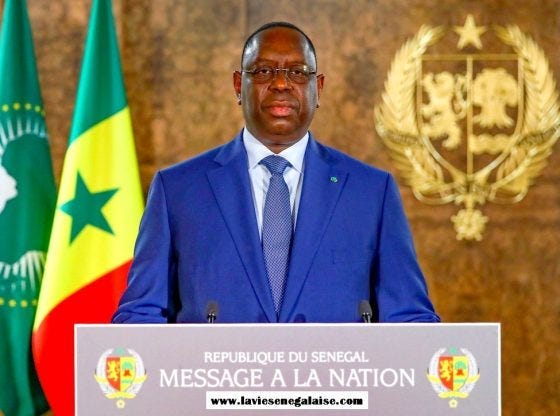
Senegal’s President Macky Sall will not run for reelection next year, he said in a speech on 3 July 2023, ending widespread speculation that he would seek a third term. “The 2019 term was my second and last term. My decision, carefully considered, is not to run as a candidate in the upcoming election on 25 February 2024. And this, even though the constitution grants me the right,” he said. Sall’s announcement will likely quell fears of a democratic backslide in Senegal, which have fuelled unrest since 2021 in which dozens have been killed, shaking Senegal’s reputation for calm in a restive region.
Military governments were practically the norm at some point in West Africa’s past, but the region has tried to develop a democratic process and culture, albeit with some difficulty. Over the past three years, three West African countries — Mali, Guinea, and Burkina Faso — have had their presidents overthrown by soldiers from their armies. Senegal has a long history of democratic stability and has never experienced a military coup since independence from France in 1960, but some people had fears that the volatility inspired by Macky Sall’s desire to seek a third term would make it feasible for the military to take over. The observers that blame Senegal’s unrest on rumours of Sall’s third-term ambition have strong reasons to do so. In an interview with French magazine L’Express in March, Sall argued that when the Constitutional Council was consulted before the 2016 constitutional revision, it considered his first term to be outside the scope of the reform. From then on, it became clear to many that opposition leader Ousmane Sonko’s legal troubles were possibly engineered to curb Sall’s major electoral challenge before the polls. His refusal to rule out a third term and Sonko’s conviction of “corrupting the youth” in March heightened agitations. Despite his refusal to seek a third term, such suspicions will not go away soon. For observers who see Sonko’s travails as one designed to keep him off next year’s ballot, Sall’s decision to respect the two-term limit might be a way to ensure that his Alliance for the Republic’s party wins the polls against a possibly less popular candidate from the African Patriots of Senegal for Work, Ethics, and Fraternity (PASTEF), which Sonko belongs to. It is not immediately clear if Sonko’s conviction is enough to keep him from contesting in the elections, and this means that the country’s constitutional courts could be called into action once again as it did in 2012 when it ruled that the then-President Abdoulaye Wade was eligible for a third term. Sall’s Monday announcement represents a much-needed silver lining in a subregion beset by anti-democratic actions. Senegal may have been able to handle its internal political issues for now, but that example, although insufficient, is a blueprint the Economic Community of West African States (ECOWAS) may want to build on. Nevertheless, it is sad that Sall was determined to set his country on fire for a misguided ambition that should not have happened in the first place. Now, he is leaving the country broken after he was forced to concede by his people’s violent protest. Sall has done his country bad, and he should bow out with his head held low.