
Budget squeeze
The Director General, Budget Office of the Federation, Mr Ben Akabueze, has said Nigeria is fast exceeding its limited borrowing space. He…

The Director General, Budget Office of the Federation, Mr Ben Akabueze, has said Nigeria is fast exceeding its limited borrowing space. He said the aggregate budgets of all governments in the country amount to about ₦30 trillion ($400 million), less than 15 percent in ratio to GDP. The Federal Government has incurred a deficit spending of ₦36.8 trillion in eight years under the administration of President Muhammadu Buhari from 2015 to 2022; 77 percent of the deficit spending occurred in the last four years, from 2019 to 2022.
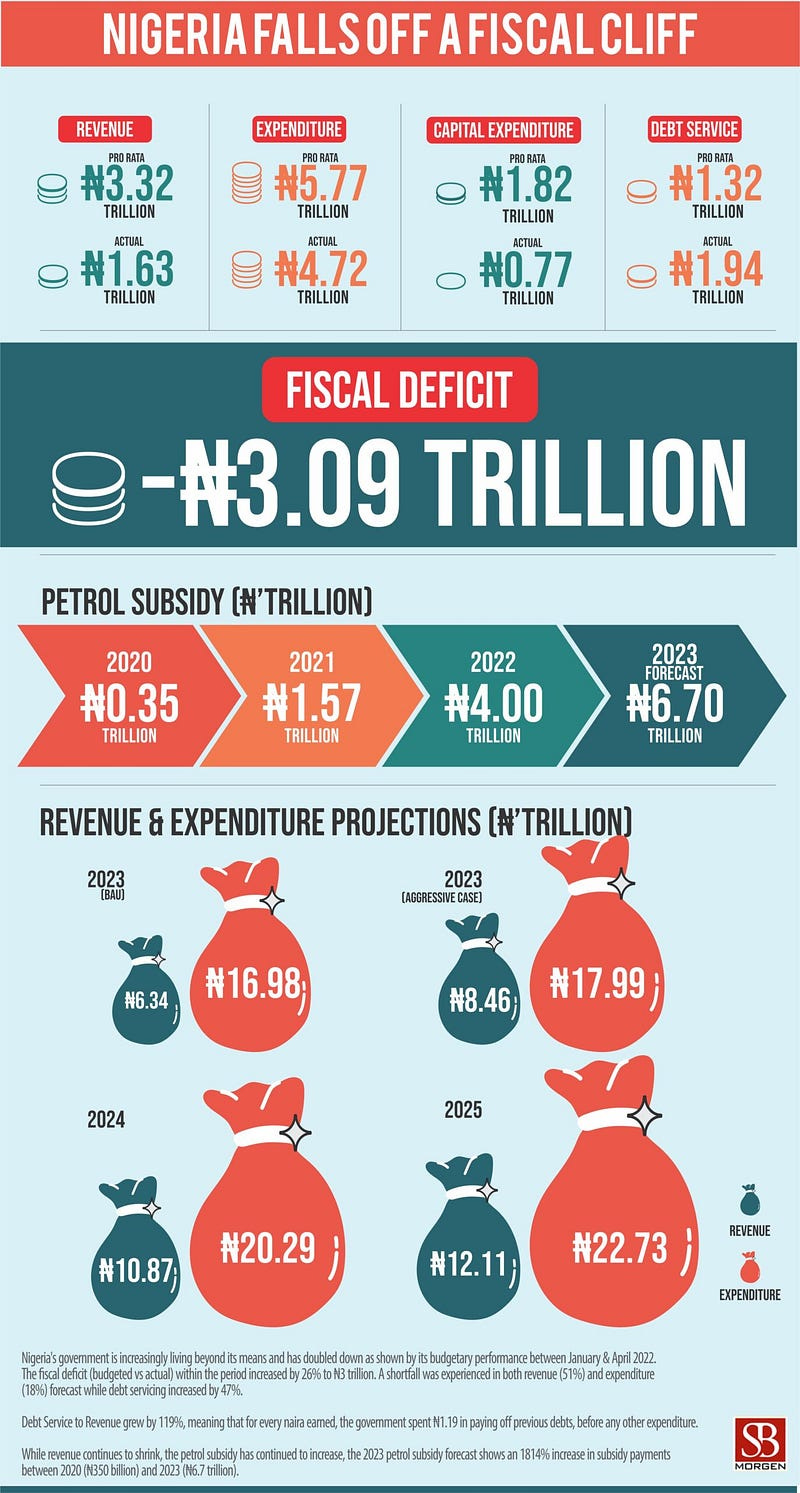
With just a few weeks to the end of the Buhari administration, it is a given that a key legacy of his tenure is its reckless borrowing spree paired with the distinct failure to pass any significant economic reform. The debt crisis is one of the three biggest economic issues the next administration will need to deal with. Mr Akabueze, who has been touted as a possible minister next term, was simply regurgitating what market watchers have said for the past five to six years — the borrowing is unsustainable and will put the economy on the brink of failure. The Buhari Administration’s borrowing habits have raised debt servicing to unprecedented levels in Nigeria, and to complicate matters, Nigeria’s revenue profile has tanked over the last decade as the global oil and gas industry struggles with low prices amid decreasing demand. To further compound this, a key issue that needs to be tackled is finding the money to make the needed infrastructure and human capital investments to enable the country to exit the current vicious cycle. It has to improve revenue collections by moving informal taxation (that doesn’t get into the public purse) into the formal taxation system instead of piling more tax commitments on Nigerians. Nigeria might have a low tax-to-GDP ratio officially, but it is a deceptive statistic that doesn’t tell the true story. For example, the Lagos chapter of the National Union of Road Transport Workers (NURTW) is estimated to make over ₦100 billion yearly from extracting value from public bus and tricycle drivers, yet this is not reflected in the government’s balance sheet. The World Bank estimates that informal taxation accounts for about 40% of total tax revenue in Nigeria. This means that the government is losing out on a significant amount of potential revenue that is not reflected in tax receipts but is still paid by the people. Navigating these challenges will require a discipline, skill and commitment which has been rarely seen in the country’s leadership. Abuja needs to do its homework to become more creditworthy.