
Bumper harvest
Nigeria's agricultural trade value surged 304% in 2024 to ₦8.2 trillion, driven by a volatile naira.

Nigeria has seen its highest agricultural trade value surge by 304 percent in 2024, the highest in five years. In the last five years (2020 – 2024), agricultural trade jumped to ₦8.2 trillion in 2024 from ₦2 trillion in 2020 due to volatile naira and diversification drive, according to data from the foreign trade report. In 2024, according to the National Bureau of Statistics (NBS), agriculture recorded a trade surplus, with exports surpassing imports by 17 percent for the period, marking the first time export surpassed import trade since 2020.
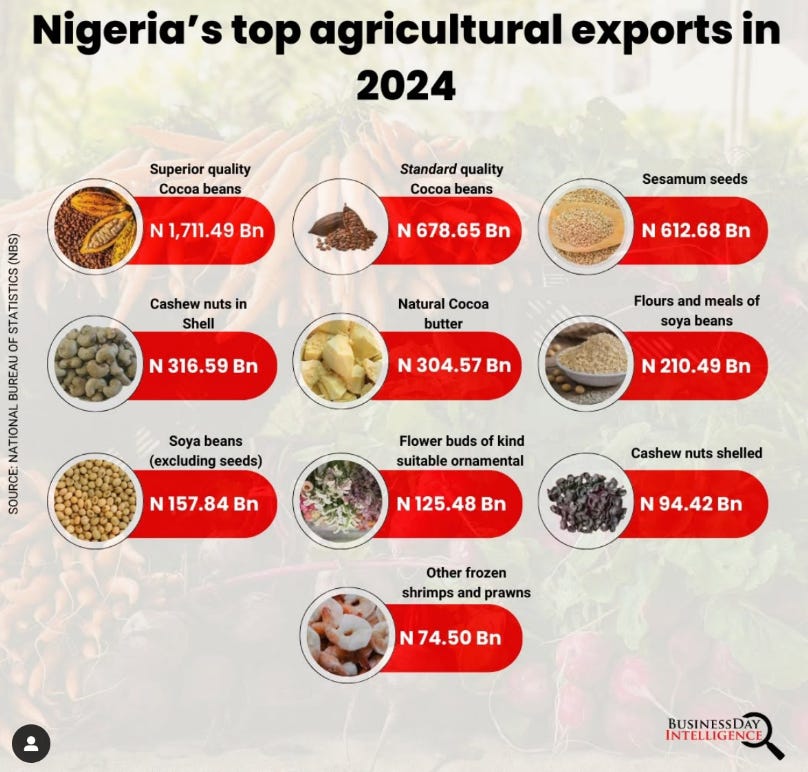
Agriculture plays a pivotal role in Nigeria’s economy, contributing 22.6% to the overall GDP in real terms in 2024, with a real growth rate of 1.41%. The sector is also the largest employer, engaging approximately 70% of the population, though much of this activity remains subsistence-based. Despite its significance, agriculture faces substantial challenges, including insecurity, climate change, and limited investment, which have stifled its growth potential. However, the sector has shown resilience, recording a trade surplus over the last five years, with exports surpassing imports by 17% in 2024—the first time since 2020. This suggests that with targeted interventions to address these challenges, agriculture could attract more investment and unlock significant growth opportunities.
The sector’s trade value surged by 304% in 2024, reaching ₦8.2 trillion compared to ₦2 trillion in 2020, driven by the volatile naira and Nigeria’s diversification efforts. While this growth appears impressive, it is important to note that it does not reflect real growth in dollar terms. The average exchange rate in 2020 was ₦380 to $1; in 2024, it depreciated to ₦1,465 to $1. This means that the nominal growth in naira terms does not translate into equivalent dollar value gains, highlighting the impact of currency devaluation on the sector’s performance.
To fully harness the potential of agriculture, Nigeria must address critical issues such as insecurity, climate change, and inadequate infrastructure. Investments in modern farming techniques, access to credit, and improved supply chains are essential to transition from subsistence farming to commercial agriculture. Additionally, policies stabilising the naira and creating a conducive environment for foreign and domestic investment will be crucial. While the recent trade surplus and nominal growth are positive indicators, sustained efforts are needed to ensure that agriculture becomes a true driver of economic transformation, capable of delivering real, long-term benefits in both naira and dollar terms.