
Burden of proof
Edo Governorship Election Tribunal dismisses PDP's petition against Governor Monday Okpebholo's victory, citing lack of credible evidence.

The Edo Governorship Election Petition Tribunal has dismissed the petition by the People's Democratic Party (PDP) and its candidate, Asue Ighodalo, challenging Governor Monday Okpebholo’s victory in the 21 September 2024 election. The tribunal ruled unanimously, stating that the PDP failed to prove claims of over-voting and non-compliance with electoral law. The PDP had alleged irregularities in the election and sued the Independent National Electoral Commission (INEC), Okpebholo, and the All Progressives Congress (APC). However, the suit was thrown out due to a lack of credible evidence. This marks the third dismissal by the tribunal, following similar rulings against petitions filed by the Action Alliance and the Accord Party.
The dismissal of the PDP's challenge against Governor Monday Okpebholo by the Edo Governorship Election Petition Tribunal marks a pivotal point in the state's post-election legal landscape. The tribunal's unanimous decision, citing insufficient evidence to support claims of over-voting and electoral non-compliance, not only affirms Okpebholo’s mandate but also highlights a persistent issue within Nigeria's electoral dispute resolution system: the difficulty of proving malpractice in court, even amidst widespread allegations. This case, arising from the 21 September 2024 governorship election, was deemed the most significant of the tribunal’s cases, given the PDP’s stature and its candidate, Asue Ighodalo—an experienced lawyer and technocrat widely regarded as a strong contender.
The PDP’s allegations of over-voting and procedural irregularities reflected familiar patterns in Nigerian electoral contests. However, echoing the previously dismissed petitions by the Action Alliance and Accord Party, the tribunal found these claims unsubstantiated. The tribunal’s unanimous ruling communicates a clear message: political parties must present compelling, verifiable evidence instead of relying on vague accusations to overturn election results. The PDP’s failure to provide credible proof highlights a critical reality in election litigation—the burden of proof rests squarely with the petitioner. No matter how loudly amplified in the media, allegations must be backed by unassailable data, credible witness testimony, and robust documentary evidence. This ruling underscores the importance of constructing strong legal arguments rooted in facts rather than depending on public sentiment or political momentum.
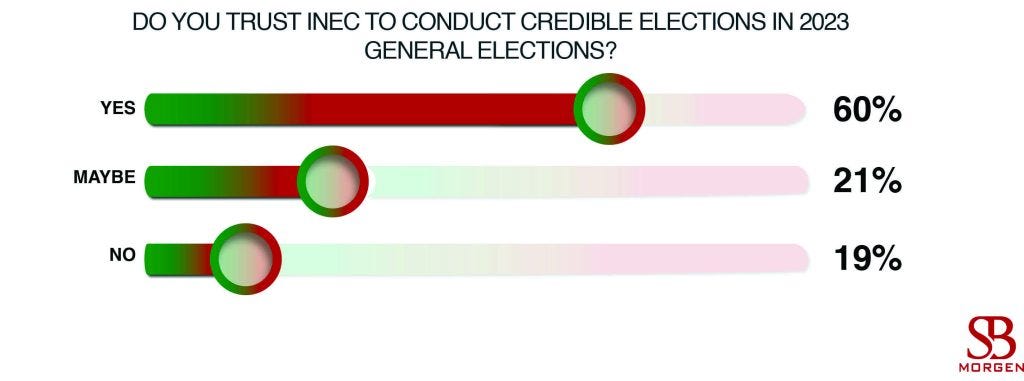
This outcome presents a mixed picture for INEC, whose conduct has faced sustained scrutiny in recent elections. The repeated failure of petitioners to prove substantial non-compliance or malpractice might be interpreted—whether accurately or not—as a vote of confidence in INEC’s processes in Edo. However, this interpretation is highly questionable given the widely reported irregularities and the perception of judicial unfairness. More importantly, the electoral body must be concerned that most legal challenges hinge almost entirely on conduct during Election Day. This may seem marginal, yet it remains a crucial aspect of democratic legitimacy, as consistent polling by SBM Intelligence has shown. For good reason, Nigerians harbour deep distrust regarding INEC's ability to conduct free, fair, and credible elections. INEC must urgently address this perception, particularly in light of the tribunal's rulings.
For the PDP, the tribunal's verdict necessitates a period of reflection. The party must now decide whether to escalate the case to the Court of Appeal or focus on rebuilding and re-strategising for future contests. Regardless, the judgment underscores a shifting landscape in Nigerian electoral jurisprudence, where judicial institutions are increasingly reluctant to entertain politically charged petitions lacking solid legal foundations. Meanwhile, Governor Okpebholo and the APC will undoubtedly capitalise on this moment of consolidation. With legal obstacles cleared, his administration can now concentrate on governance and fulfilling campaign promises. The coming months will reveal whether this judicial victory can be translated into political capital and tangible improvements in governance for Edo State.
The tribunal's unanimous dismissal might typically raise eyebrows for an election that many independent observers described as rife with widespread irregularities. However, in recent years, particularly since the APC’s rise to power, the judicial process seems to have shifted, raising concerns about impartiality. It is highly unlikely that the PDP candidate will find redress in the Appeal Court—or at the Supreme Court, given the current judicial climate. This perception of judicial unfairness, especially in light of the alleged election malpractice, will likely further undermine public trust in Nigeria’s democratic institutions.