
Captured
Gunmen abducted an unspecified number of students in Ughelli, Delta State, and three University of Calabar (UNICAL) students from their…

Gunmen abducted an unspecified number of students in Ughelli, Delta State, and three University of Calabar (UNICAL) students from their hostels. Meanwhile, the Nigerian Army announced the rescue of LEA School’s abducted pupils and teachers in Kaduna’s Chikun Local Government Area (LGA), Zamfara State, following a ₦1 billion ransom demand. Army Spokesman Major General Edward Buba confirmed the rescue of 137 victims out of 287, comprising 76 females and 61 males, with assistance from local authorities. This rescue follows the liberation of 16 pupils (Almajiris) and a woman in the Gada LGA of Sokoto State by the troops.
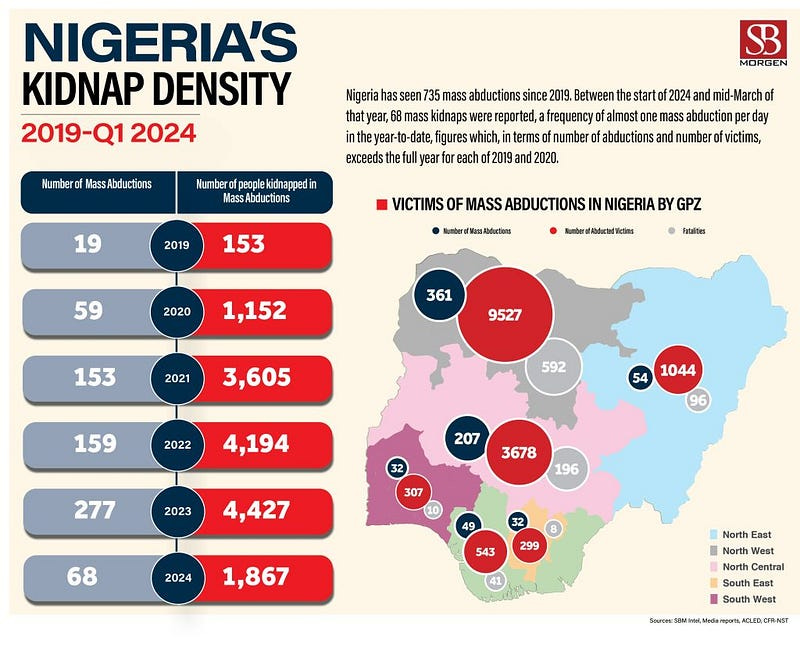
The military’s claim of “rescuing” the abducted students leaves more questions than answers. First, it was widely reported that 287 students were abducted. However, 137 students were said to be “rescued,” raising questions about the remaining 150 left behind. The Kaduna State Governor, Uba Sani, has refused to confirm the total number of students abducted in the Kuriga incident, and his response to press enquiries could mean that he does not know the exact figures. This reflects a general problem with record keeping and data collection in Nigeria, which is often treated cavalierly. For the military to assert that they rescued the abducted students, specific conditions must be fulfilled. The primary requirement in a successful rescue operation involves a confrontation between the operatives and the kidnappers, which was absent in this instance. The peaceful return of the students suggests that, contrary to the government’s claims, a ransom was exchanged. It is common practice for the Nigerian government to avoid using force in such situations. However, they typically remain secretive about any ransom payments made. The lack of willingness to be forceful has fuelled the kidnap epidemic because would-be abductors understand that a very good way to exert public and international pressure is to engage in large-scale abduction of vulnerable people, many of whom are students. This is one of the underlying causes of worsening campus security across the country. Kidnappers who had hitherto targeted travelling students have taken the war to their hostels in off-campus accommodations, as witnessed in the abduction of three students of the University of Calabar the previous week. While the initial kidnappings in Nigeria were linked to extremist groups, the trend has morphed into a lucrative criminal enterprise that is freely available to any group of violent criminals with the required firepower and nerve. Ransom demands can reach hundreds of thousands of dollars, as evidenced in the recent mass abduction of schoolchildren in Kaduna, where kidnappers demanded a staggering ₦1 billion (around $2.4 million) for their release. We recently showed that there were over 250 reported kidnap cases in 2023 alone, which is significant in a country where many crimes are officially unreported. This surge deters investment-sourcing efforts and increases the number of out-of-school children. Fear of abduction can deter parents from sending their children to school, hindering educational attainment and impacting the future workforce. A United Nations Children’s Fund (UNICEF) report estimates that school closures due to security concerns, often related to kidnappings, have already pushed millions of Nigerian children out of education. Appeals to morality are not an option at this point. Preaching and cajoling have not worked, so the government has to gather the political will to attack this wave at its roots while growing its capacity to respond proactively and reactively. Strengthening intelligence gathering and law enforcement at all federal, state and local levels is crucial.