
Carte blanche
Trump pauses enforcement of US foreign bribery law.

President Donald Trump signed an executive order rolling back enforcement of a law that bars US companies from bribing foreign officials, arguing that the restriction disadvantages American firms. Trump is ordering Attorney General Pam Bondi to pause actions taken under the Foreign Corrupt Practices Act until she issues new enforcement guidelines, according to a fact sheet on the executive order. All current and past actions will also be reviewed. The act bars a company or person with US links to pay money or offer gifts to foreign officials to win business overseas. Trump weighed trying to scrap the law during his first term.
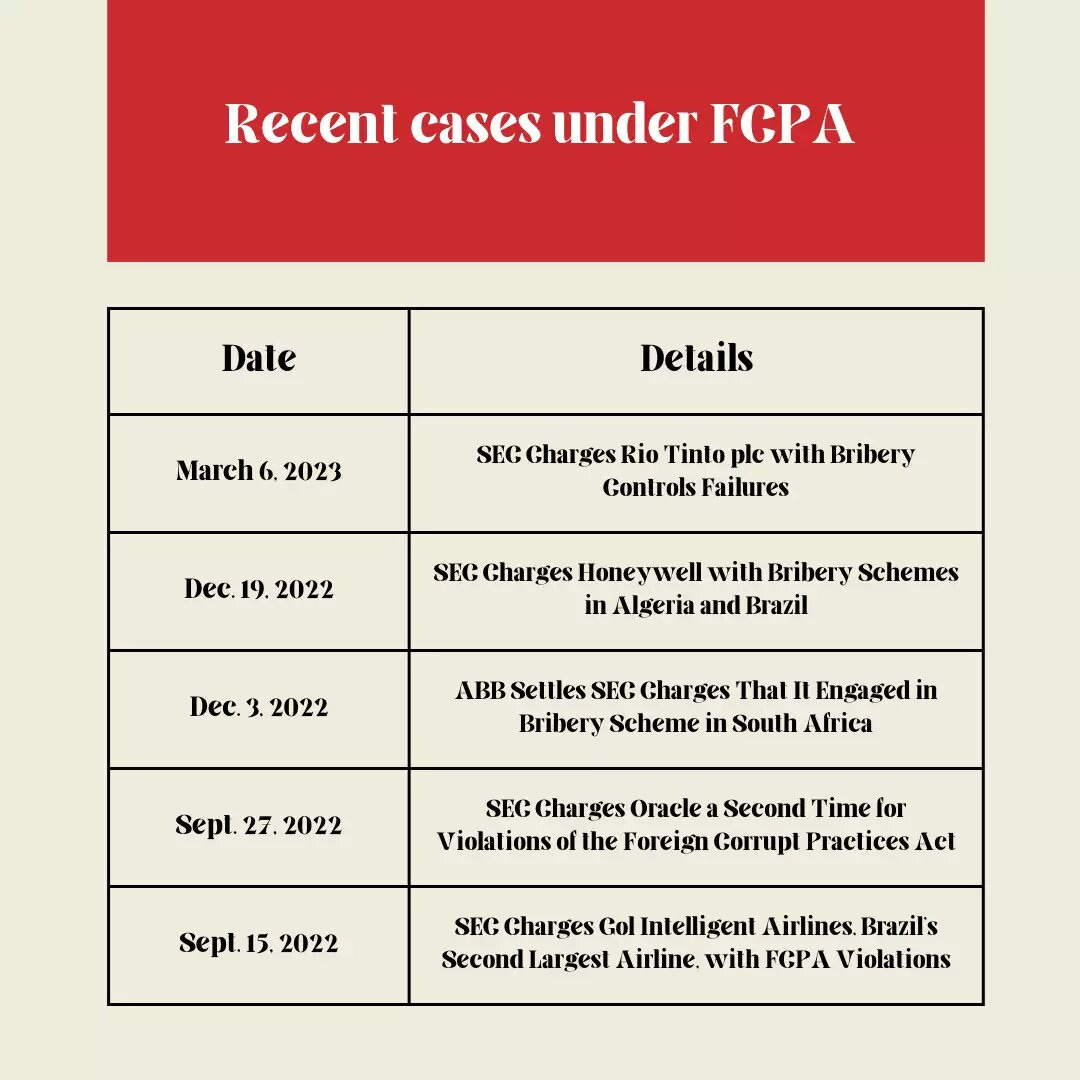
President Trump’s executive order rolling back enforcement of the Foreign Corrupt Practices Act (FCPA) marks a dramatic shift in the U.S. government’s stance on corporate ethics and global business practices. The move, framed as an effort to level the playing field for American firms operating abroad, is legally and politically consequential, with far-reaching implications for global anti-corruption efforts, corporate governance, and the U.S.’s broader reputation in international business.
The FCPA, enacted in 1977, was a landmark anti-corruption law designed to curb bribery by American companies and individuals in international business dealings. It was a response to widespread corruption uncovered in the 1970s, including revelations that over 400 American companies had made questionable payments to foreign officials. The law has since been a cornerstone of U.S. efforts to promote transparency and ethical business practices globally, enforced by the Department of Justice (DOJ) and the Securities and Exchange Commission (SEC).
While the law was controversial from its inception—especially among multinational corporations competing in markets where bribery was commonplace—it ultimately became a cornerstone of global anti-corruption enforcement, influencing similar legislation in other countries and shaping international corporate compliance standards. Mr Trump’s decision to weaken the law’s enforcement is not entirely surprising, given his past criticisms of the FCPA. He had previously dismissed it as a "horrible law" that made it difficult for American businesses to compete, especially in markets where corruption was deeply entrenched. He argues that by maintaining strict anti-bribery rules, the U.S. effectively handicaps its own companies while foreign competitors—many of whom operate under more permissive legal regimes—exploit the system to win contracts and gain market dominance.
His administration may be thinking long-term regarding strategic positioning amid America’s declining global dominance, but this policy will deliver massive gains in the short term. Many people who see this latest development purely within the confines of “America First” ideology may not be wrong, but such a view pales in comparison with the broader gambit by which it falls under: the fallout of current multilateralism of geopolitics fuelled by very naked and bare-boned interests. Furthermore, the difference between this development in the present development compared with its mooted introduction in Trump 1.0 is a question of “who?” not necessarily a question of “why?”.
During Trump's first term, his ruling base in both the White House and the electorate was overwhelmingly the White Evangelical section of the religious class, and as such, the US government’s preoccupation was with winning local culture wars. Trump’s sensational return to the White House might still have the Evangelical support base, but that is just one atom in a universe of colliding atoms, chief of which has been the backing of Silicon Valley billionaires who have formed the new tech oligarchy. A worthy mention is the anti-green revolution and renewable energy executives who not only got Trump to order a “drill, baby, drill!” proclamation during the inauguration but also rolled out the U.S. federal government’s initiative to phase out fossil fuels, including a unilateral withdrawal from the Paris Climate Accords.
The Trump administration’s order explicitly mentions the need to secure access to critical resources. For example, Twitter posts highlight potential benefits for American mining companies in countries with lax anti-corruption laws, where bribes could expedite permits or contracts. This could increase American visibility in places where it has lost economic and geopolitical ground to its eastern rivals, Beijing and Moscow. It could also stave off claims that it can no longer compete and instead resorts to protectionism through tariffs.
However, the rollback of FCPA enforcement raises serious concerns.
First, it signals a retreat from the U.S.'s long-standing commitment to combating corporate corruption, potentially emboldening American firms to engage in unethical practices abroad. This could lead to increased corrupt dealings, especially in regions where business transactions often hinge on informal payments or political favours. Furthermore, it undermines decades of diplomatic efforts to encourage other nations to adopt similar anti-bribery frameworks, such as the OECD Anti-Bribery Convention, which the U.S. helped champion.
Beyond the ethical concerns, Trump’s executive order could have economic and reputational repercussions. While some American companies might find temporary relief from regulatory scrutiny, they could also face legal risks in foreign jurisdictions that maintain strict anti-corruption laws. No less than 40 countries, including major economies like France and the UK, have adopted anti-bribery laws modelled on the FCPA, often with extraterritorial reach. If U.S. companies bribe foreign officials, these countries could prosecute them under their own laws, leading to legal and financial penalties. Moreover, the move could damage investor confidence, as many institutional investors and shareholders prioritise compliance and corporate integrity.
Politically, the decision adds another layer of controversy to Trump’s presidency, fueling criticism that his administration is dismantling critical legal safeguards in favour of short-term business interests. The directive to Attorney General Pam Bondi to review past and present enforcement actions could also be seen as a veiled attempt to shield allies or corporations with ties to Trump’s political circle from legal scrutiny. Furthermore, there is the risk of an uneven playing field within the U.S. Larger corporations with more discretionary funds could outbid smaller competitors in bribery schemes, contradicting the White House's claim of promoting "American competitiveness" by effectively shutting out smaller firms from opportunities.
For Africa, this development means an increased U.S. economic presence in barely stable countries with critical minerals, such as the Democratic Republic of Congo. Corrupt state officials are likely to seize the opportunity of being spoiled for choice in this geopolitical game of chess between the U.S. and China. The Gambaryan saga between Binance and Nigeria showed that America’s moral high ground, engineered by the fear of FBI prosecution, was enough to keep Binance from paying bribes to the Nigerian government. If that moral high ground erodes, the consequences will be far-reaching. The world has come a long way since 1630 when Puritan evangelist John Winthrop charged Americans to be “a shining city on a hill.” The dam has opened, and as the gloves come off, there will certainly be more than enough congratulations to go around.