
Cats and dogs
Nigeria’s Federal Government says no fewer than ten states and the Federal Capital Territory experienced various floods or recorded…

Nigeria’s Federal Government says no fewer than ten states and the Federal Capital Territory experienced various floods or recorded casualties. Water resources minister Joseph Utsev explained that the Annual Flood Outlook released in April predicted 148 Local Government Areas in 31 states are at high flood risk. In Lagos, the flooding brought down a two-storey building in Mushin, grounded vehicular movement on the roads, and overwhelmed thousands of residents, while some pupils could not attend school. Mr Utsev also warned that cholera might spread further.
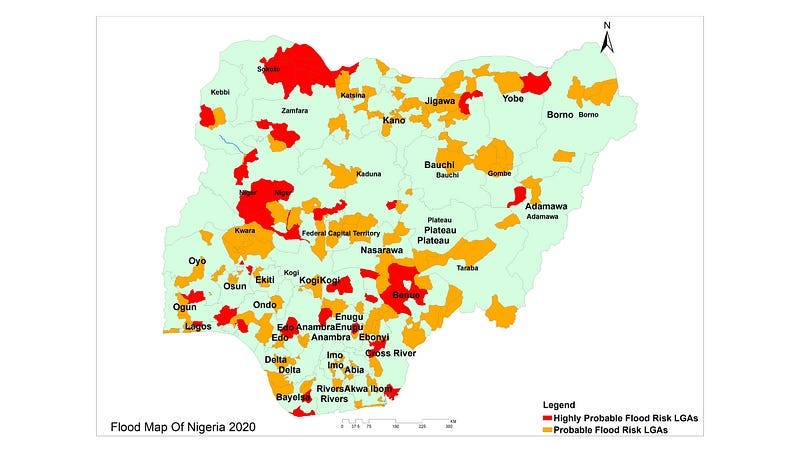
In Nigeria, flooding is a recurrent and severe issue. Outside of Abuja and some parts of Lagos, most cities and towns in Nigeria felt the effect of poor urban planning, significantly contributing to the recurring flooding issues, even when rainfall levels are not particularly high. Coastal and riverine areas, such as parts of Lagos and the Niger Delta, are particularly vulnerable due to their low elevation and proximity to the large bodies of water. Urban areas with poor drainage systems are also highly susceptible to flooding. Cities and towns with inadequate infrastructure struggle with flash floods during heavy rainfall. We need to retrofit buildings and infrastructure to help already built-up areas deal with flooding. This includes raising foundations, constructing flood barriers, and improving essential services’ resilience. Upgrading and regularly maintaining drainage systems is crucial to handling larger water volumes and preventing blockages. For new towns and cities, comprehensive urban planning involves a thorough understanding of local geographic and hydrological patterns to choose suitable sites for development. Post-independence, Nigeria has struggled to grow a coherent town-planning culture, often opting for an unsuccessful top-down approach for which its society needs to be wired. The imposition of modern urban planning techniques above does not resonate with the local context or cultural practices, leading to ineffective implementation and widespread non-compliance. To address flooding (and other issues), Nigeria needs to build a town-planning culture from the ground up. Local communities, equipped with local knowledge and understanding of their geographic and environmental dynamics, are best positioned to identify flood-prone areas and implement tailored solutions. Moreover, fostering a sense of collective responsibility among residents fosters a culture of preparedness and proactive action, reducing vulnerability to flooding and its associated impacts.