
Cedi on the edge
Ghana's Cedi depreciates 19% annually from 2022-2024 amid economic instability.

Ghana’s Cedi has depreciated over 19% annually from 2022 to 2024, compared to the 9.4% average from 2001 to 2021. Despite a slight improvement in 2024 with a 19.2% depreciation rate, concerns over macroeconomic stability persist. Such high depreciation rates were historically rare, but the current three-year trend highlights economic instability. However, early 2024 shows promise, with the Cedi depreciating by less than 1% against the dollar. In response, Ghana has introduced a National Economic Dialogue plan focusing on fiscal-monetary policy coordination, tax reforms, infrastructure, and governance. President John Dramani Mahama will submit a report for implementation.
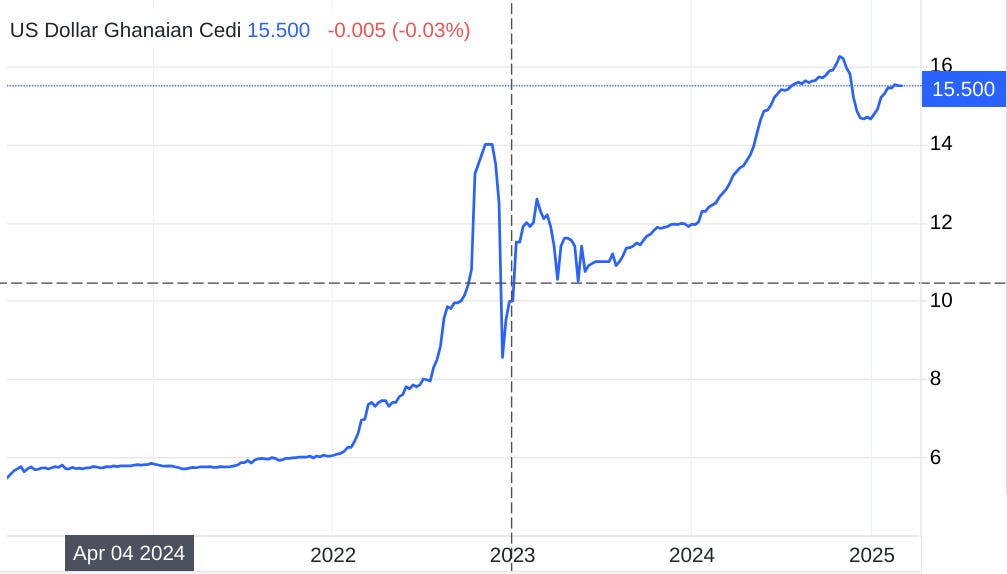
Ghana's economy is highly susceptible to exchange rate crises, as its local currency, the cedi, consistently struggles against major trading currencies such as the US dollar and the euro. The West African nation has been working to recover from one of its deepest economic crises, which began after the pandemic.
Although Ghana entered a three-year IMF bailout programme in 2023, the recovery has been slow and uneven due to the cedi's instability. The country remains heavily import-dependent, with its import bill exceeding $10 billion over the past three years, compounded by high inflation and dwindling international reserves. Although reserves appreciated significantly in the past year, import cover remains below four months.
During this week’s two-day National Economic Dialogue, macroeconomic stability was a key focus, emphasising strategies to prevent the cedi from further depreciation against the dollar. The current government, led by President John Dramani Mahama, is pinning its hopes on establishing a Gold Board to regulate small-scale gold mining and purchases. The primary goal is to build strong forex buffers by increasing control over gold exports and enhancing foreign exchange retention. The idea is to bolster reserves and stabilise the cedi.
However, many experts familiar with the Cocoa Board—on which the Gold Board's framework is based—have raised concerns that the initiative could fail. They warn that mismanagement could lead to reckless borrowing, with expected inflows used as collateral for external loans, potentially pushing the country further into economic distress.