
Choking on credit
UNCTAD warns developing nations, including Nigeria, face record-high external debt, projected to reach $100.67 billion by 2025.

The United Nations Conference on Trade and Development (UNCTAD) warns that developing nations face record-high external debt, reaching $11.4 trillion in 2023. Nigeria’s debt is projected to exceed ₦155 trillion ($100.67 billion) by 2025, up from ₦142.3 trillion ($92.42 billion) in September 2024. The country still struggles with financial constraints despite reducing its revenue-to-debt service ratio from 97% to 65%. UNCTAD Secretary-General Rebeca Grynspan highlights how rising debt forces governments to prioritise repayments over crucial sectors like infrastructure, education, and healthcare. She calls for urgent reforms to ensure that debt fosters progress rather than becoming a burden. Addressing these challenges is crucial for Nigeria’s economic stability and development.
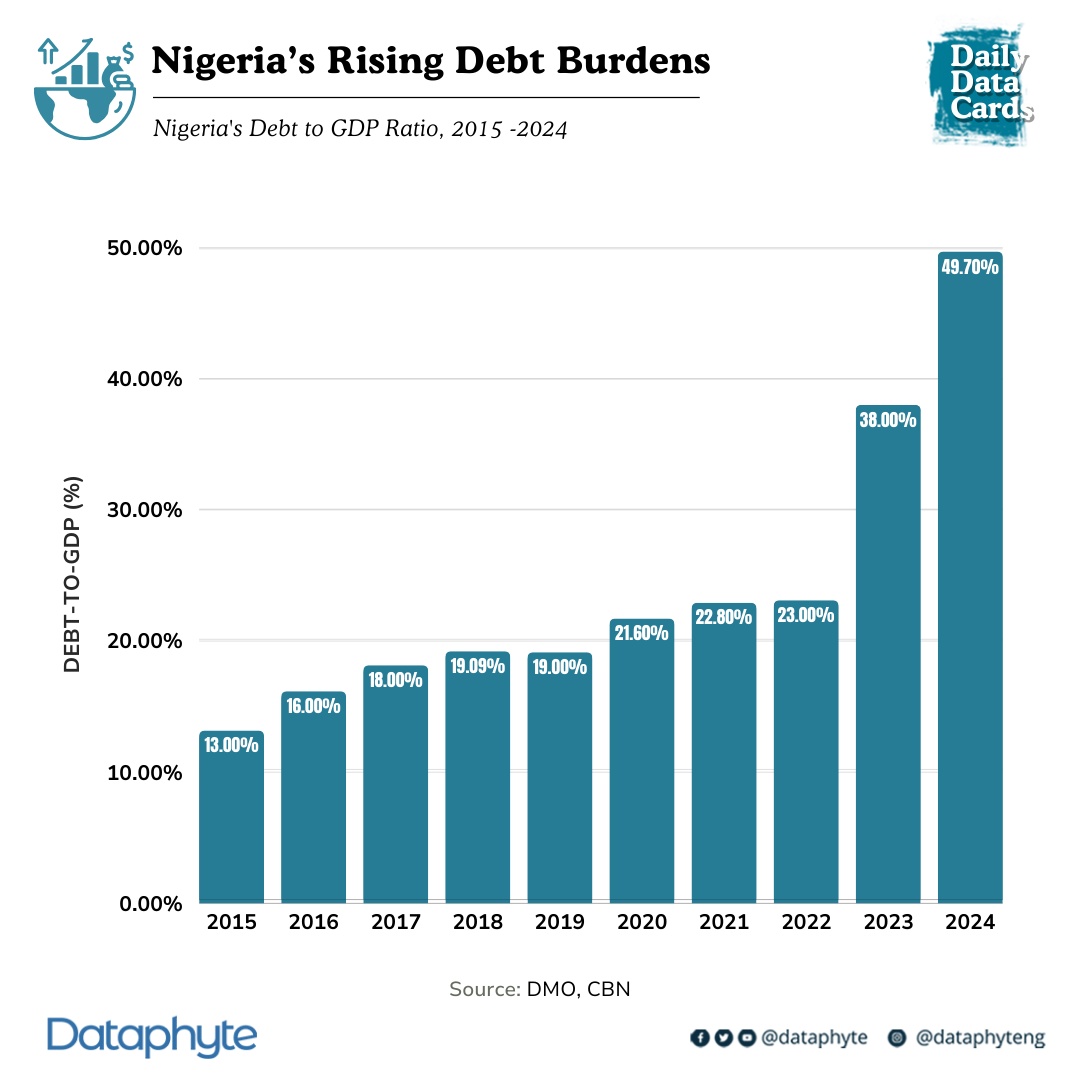
The UNCTAD warning about record external debt levels among developing countries finds stark relevance in Nigeria, where total public debt has ballooned from ₦12.6 trillion in 2015 to a projected ₦155 trillion by 2025 - a twelvefold increase in just a decade. This alarming trajectory sees Nigeria allocating 96% of its 2024 federal revenue (₦9.3 trillion out of ₦9.7 trillion) to debt servicing and personnel costs, leaving barely 4% for critical capital expenditures.
While the government rightly highlights progress in reducing the revenue-to-debt service ratio from 97% to 65%, this remains dangerously above the 30% threshold recommended by the World Bank. The human cost is measurable: debt servicing now consumes three times more funds than the combined budgets for health (₦1.2 trillion) and education (₦2.2 trillion) in 2024. UNCTAD Secretary-General Rebeca Grynspan's call for reform resonates acutely in Nigeria, where debt service payments $3.5 billion in 2023) exceed annual foreign direct investment ($1.1 billion).
The solution requires structural transformation. Expanding Nigeria's abysmal tax-to-GDP ratio (10.9% compared to 16.5% in Ghana and 34.1% in South Africa) could generate ₦6 trillion annually if brought to regional averages. Strategic debt management should prioritise concessional loans (currently just 14% of external debt) over Eurobonds with punishing 8-10% interest rates. Most critically, borrowed funds must catalyse productivity - if Nigeria gets to a $1.1 trillion economy at the current population, it will achieve just $2,229 GDP per capita, versus $6,797 in peer-country Indonesia.
This is more than an accounting challenge - it's a development emergency. Nigeria risks joining the 58 developing countries already in debt distress without reforms. The alternative path - leveraging credit for infrastructure (power generation remains below 5,000MW for 220 million people) and industrialisation - could yet transform debt from an anchor to an engine of growth. The window for action is closing fast.