
Cholera’s grim toll
The Nigeria Centre for Disease Control and Prevention (NCDC) reported 1,141 suspected and 65 confirmed cholera cases, resulting in 30…

The Nigeria Centre for Disease Control and Prevention (NCDC) reported 1,141 suspected and 65 confirmed cholera cases, resulting in 30 deaths across 96 Local Government Areas (LGAs) in 30 states. Bayelsa, Zamfara, Abia, Cross River, Bauchi, Delta, Katsina, Imo, Nasarawa, and Lagos account for 90% of the cases. Cholera is a food and water-borne disease caused by ingesting contaminated water and food and is bound to spread as the rainy season intensifies. The NCDC has issued a public health advisory and is collaborating with the National Cholera Technical Working Group to support affected states.
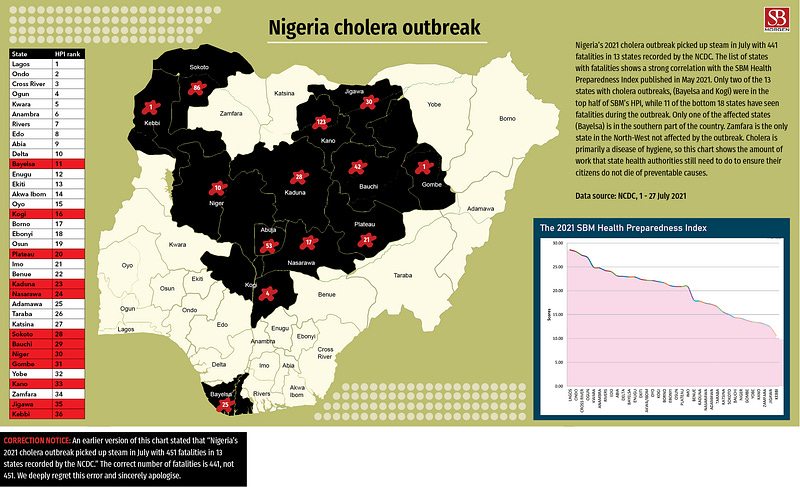
Sad as it is, Nigeria has experienced multiple cholera outbreaks between 1999 and 2023. The most severe occurred in 2021, resulting in more than 2,300 deaths. These recurring outbreaks underscore the inadequate provision of amenities, particularly safe drinking water and proper sanitation. As of 2021, an estimated 70 million Nigerians lacked access to basic drinking water, and 114 million lacked basic sanitation facilities. Nigeria, alongside India, ranks among the top two countries globally in terms of open defecation. While India has reduced its open-defecation population by 450 million between 2015 and 2019, only 16% of Nigeria’s 774 local governments have been declared open defecation-free. Governance encompasses more than economic indicators like inflation or infrastructure development; it must not neglect critical social issues such as education, water and health.