
Clampdown
Ghana’s Central Bank has barred eight Money Transfer Organisations (MTOs) from offering remittance services without regulatory approval…

Ghana’s Central Bank has barred eight Money Transfer Organisations (MTOs) from offering remittance services without regulatory approval. According to a notice seen by TechCabal, these companies include LemFi, Wise, Transfer Go, PayPal’s Xoom, SendValu, Boss Revolution, Aza Finance and Supersonicz. The Central Bank warned the public, commercial banks, Dedicated Electronic Money Issuers (DEMI) and Enhanced Payments Service Providers (EPSP) about dealing with the listed companies. According to Section 29.1 of the Act, operating without a licence attracts a fine “of not more than seven hundred penalty units or a term of imprisonment of not more than eighteen months or both.”
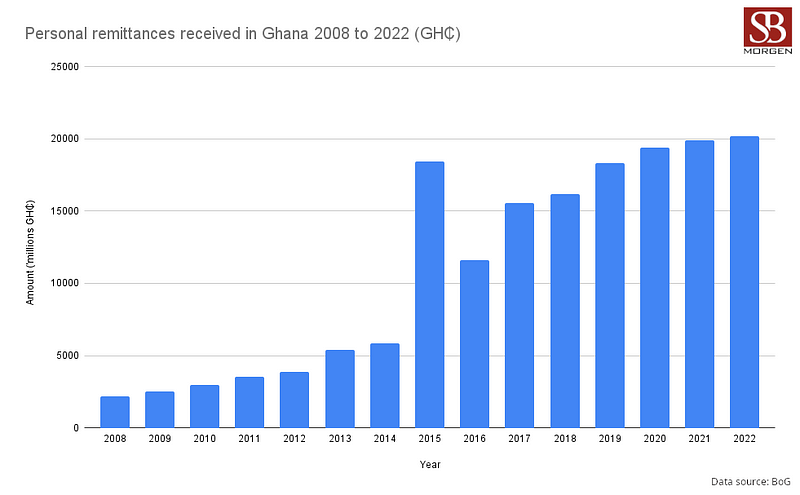
Inward remittances, a crucial source of foreign exchange for Ghana, face challenges when regulations are not stringent enough, potentially fuelling a black market and impacting exchange rates. In the 2022 fiscal year, remittances became Ghana’s third-largest forex source, surpassing cocoa exports by more than double. World Bank data positioned Ghana as the second-highest recipient of remittances in Sub-Saharan Africa after Nigeria. However, a significant discrepancy emerged as the Bank of Ghana recorded over $2 billion less than the World Bank’s reported $4.7 billion. Unregulated money transfer institutions and platforms often handle this unreported sum, contributing to the depreciation of the Ghanaian cedi against the US dollar. The gap between World Bank and Bank of Ghana records has widened, raising concerns about the effectiveness of regulatory measures. Despite efforts like the Payment Systems and Services Act (2019) and the National Payment Systems Strategic Plan (2019–2024), intended to foster financial innovation, the unintended consequence has been the proliferation of unregulated forex transactions. Due to their reliability and convenience, money Transfer Companies (MTCs) play a pivotal role in remittance transfers. In Ghana, MTCs such as Vigo, Small World, Ria, Western Union, MoneyGram, Cigue, Unity Link and Express Money Transfer, along with telecommunication companies like Tigo, Airtel, MTN and Vodafone, contribute significantly to money transfers within and outside the country. The emergence of Dedicated Electronic Money Issuers (DEMIs), exemplified by Zeepay, reflects a shift towards Fintech-driven electronic money services. However, this diversification challenges Ghana’s economy, particularly in forex oversight, impacting exchange rates and inflation policies. The compilation of remittance data by the Bank of Ghana is intricate, needing a comprehensive framework, potentially jeopardising the gains achieved through Ghana’s IMF programme. Addressing these discrepancies is vital to preventing economic instability in the West African state.