
Collaboration for peace
Nuhu Ribadu, Nigeria’s National Security Adviser, visited Chad’s President Idriss Déby to enhance security cooperation in the Lake Chad…

Nuhu Ribadu, Nigeria’s National Security Adviser, visited Chad’s President Idriss Déby to enhance security cooperation in the Lake Chad basin. Ribadu, accompanied by top military officials, delivered a message from President Bola Tinubu and discussed joint operations against jihadist groups. Ribadu described the talks as “fruitful,” reaffirming Nigeria’s commitment to working with Chad. Meanwhile, in Nigeria’s Zamfara State, terrorists killed five residents in Dayau village, burning houses, shops, and food silos. After more than an hour of initial confrontation with local vigilantes and members of the Community Protection Guards, the attackers withdrew but returned hours later to carry out their deadly assault, taking the community off guard.
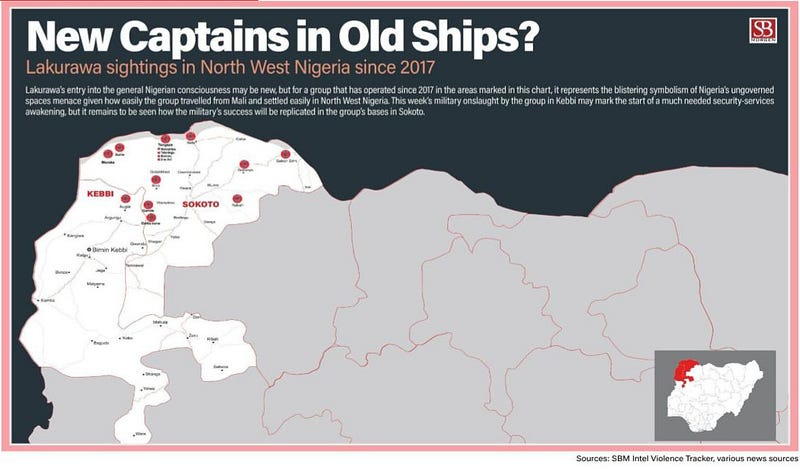
Mr Ribadu’s visit to Chad is a long overdue meeting, especially when the mounting regional security challenges are put in focus. Despite the public commitments to strengthening regional cooperation against the challenges posed by non-state actors, it appears that the more things changed, the more they stayed the same. What prompted this particular visit by Ribadu and other security chiefs was the Islamic State West Africa Province’s attack on Chadian forces on 27 October, which led to the death of no fewer than 40 soldiers on the border with Nigeria. In two ways, the circumstances surrounding that incident and the succeeding events closely resemble what happened in March 2020 when Boko Haram killed more than 100 Chadian soldiers in a surprise attack at the Bohoma islet of Lake Chad. In both instances, poor coordination and complacency under the regional Multinational Joint Taskforce allowed Boko Haram’s presence in Southern Chad to grow large enough to take on an entire battalion successfully. In both cases, the Chadian government responded forcefully, claiming to kill hundreds (or thousands, as in the first instance) of Boko Haram militants. Finally, in both cases, counterterrorism efforts were personally led by the head of state, who threatened to leave the Multinational Joint Taskforce. Although it is pretty early to tell if Mahmat Kaka Deby will hold firm on his threat to pull Chad out of the MNJTF, what the current experience has in future projection to the former is that the severed cooperation in whatever form will be a spectacular gift for ISWAP and the Bakura-led JAS faction, who would take advantage of the cooperation breakdown between the Lake Chad Basin Countries to reclaim the Lake Chad Islands that ISWAP drove them out of. With this visit, it appears that this is a reality the Nigerian side understands, but its history of not taking it with the deserved seriousness tells a different story. Idris Deby’s decision to end Chadian participation in the MNJTF was due to his frustration with Nigeria for failing to maximise the gains it made in its 2015/2016 offensive, having lost grounds that made ISWAP regroup into a formidable outfit from 2018. That negligence is responsible for its expansion away from the North East and into the North West, where its cells have been found in the Gummi and Gusau areas of Zamfara. As such, the latest attack on Kaura Namoda could have been carried out by them or any of the other armed Islamist groups trying to gain a foothold in Zamfara. The fact that the attackers were able to attack for seven hours unimpeded indicates a few things, one of them being that the cross-security service coordination spearheaded by the army, using the police, state-backed vigilante groups, and local self-help organisations is barely existent enough to put up a challenge. This is possible because the rivalry between the incumbent governor and his predecessor, the current junior defence minister, affects military operations in the state. Finally, the struggles with security in rural areas of the state are here to stay. Increased coordination, which has been the centre point of this piece, can bring insecurity in these areas to a heel. However, it is not likely to be found in the short term.