
Côte d’Ivoire cashew support leaves processors nuts
Côte d’Ivoire's cashew processing programme is failing due to chronic loan delays, threatening over 150,000 tonnes of annual industrial capacity.

Côte d’Ivoire’s programme to support local cashew processing is facing major challenges, threatening more than 150,000 tonnes of annual industrial capacity. The initiative, launched about four years ago by the Cotton-Cashew Council and backed by financing from Banque Nationale d’Investissement (BNI), was designed to help local companies process more cashew nuts domestically and reduce reliance on raw exports. However, the programme has struggled due to repeated delays in financing, with loans often released months after the cashew season begins. These delays have weakened many processors, forcing several companies to shut down. Today, only six processors remain active, including Ivory Cashew Nuts and SITA SA. A new three-year framework agreement meant to prevent funding delays has been approved by government authorities, but has not yet been signed by BNI, delaying its implementation. Industry players say resolving the financing issue is critical to protecting investments and strengthening Côte d’Ivoire’s local cashew processing industry.
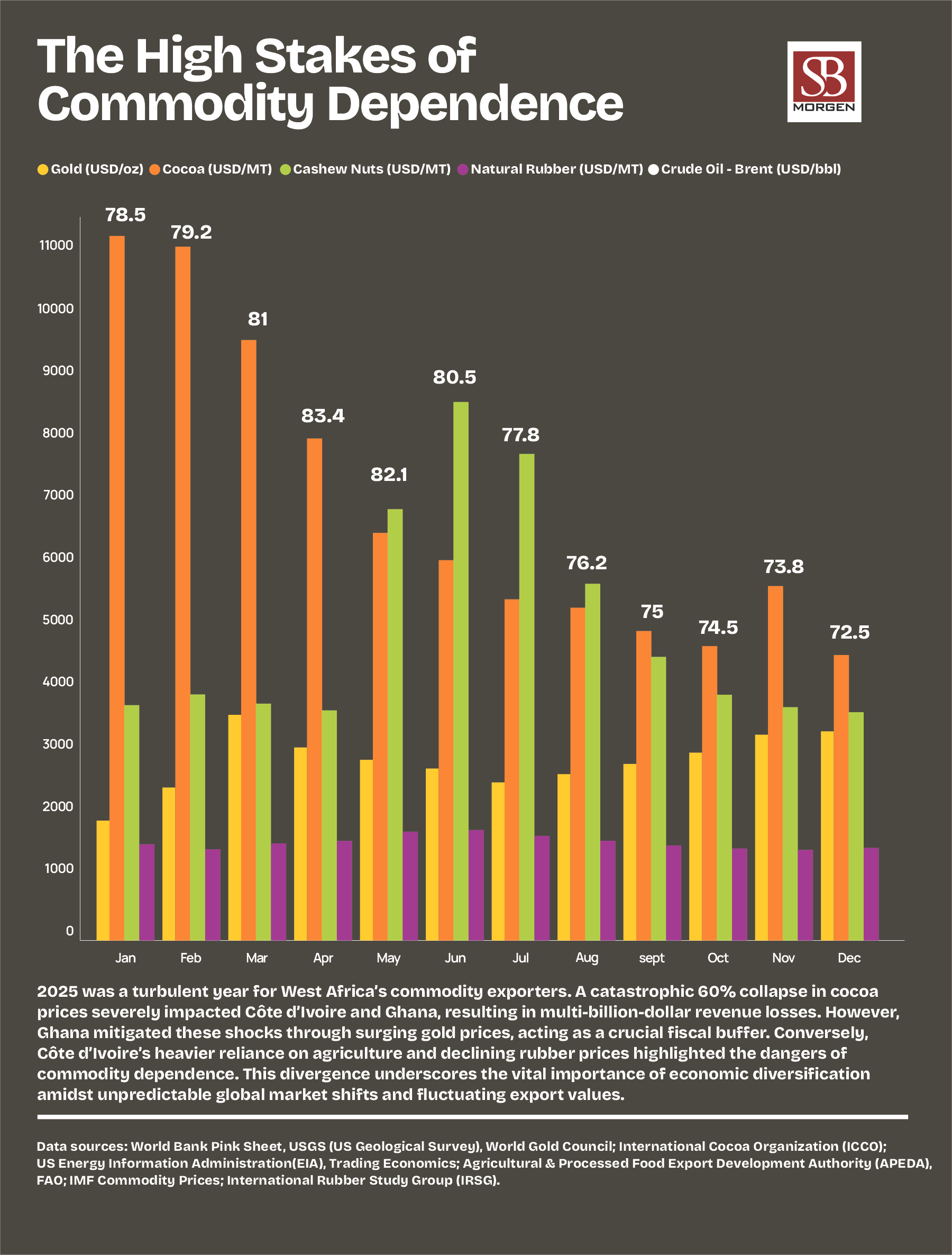
Côte d’Ivoire’s agro-processing sector is under pressure as cashew financing delays hit hard, while cocoa, the country’s top export, struggles with lower prices and operational bottlenecks. In its fifth IMF review, the government reported that cocoa processing capacity rose to 1.08 million tonnes in 2025, with processing rates improving for cocoa (42%) and cashew (36.4%) since 2022. Despite these gains, the setbacks create a “double whammy” for the economy.
Reliance on commodities leaves the economy vulnerable. Reduced cocoa and cashew processing results in lower export earnings, reduced fiscal revenues, and weaker rural incomes. Exporting raw nuts instead of processed products reduces value capture and slows industrialisation.
Revenue impacts are immediate. Lower foreign exchange inflows and reduced taxes from processors threaten fiscal stability. Industrial growth and employment, particularly in rural areas tied to processing, could also decline.
The economy has also become more diversified, with increased domestic transformation of agricultural commodities such as cocoa and cashews, higher production of gold and hydrocarbons, and a considerable contribution from the services sector to overall growth. Even so, the risks from underperforming cocoa and cashew processing remain significant and could undermine these broader gains.
The combination of reliance on commodities and operational setbacks in key sectors leaves Côte d’Ivoire in a fragile economic position. The slowdown in agro-processing could dampen export revenues, weaken fiscal balances, and reduce the growth contribution of industrial and rural employment sectors.