
Crude contrasts
Petrobras eyes Nigerian deepwater oil amidst new spill concerns and a local firm's strong production debut.

Brazil’s Petrobras is looking to re-enter Nigeria’s oil sector, targeting deepwater frontier blocks, as both nations prepare for the 2025 Nigeria-Brazil Strategic Dialogue. The move comes amid contrasting developments in Nigeria’s energy landscape. Environmental activists condemned a fresh oil spill from the Trans Niger Pipeline in Ogoniland—its second major incident in two months—highlighting delayed cleanup efforts. Meanwhile, Renaissance Africa Energy exceeded its oil production target by 40% in its debut month, earning praise from NNPC, which owns 55% of the joint venture. Despite ongoing environmental and operational challenges, the company’s early success signals renewed momentum in Nigeria’s oil sector.
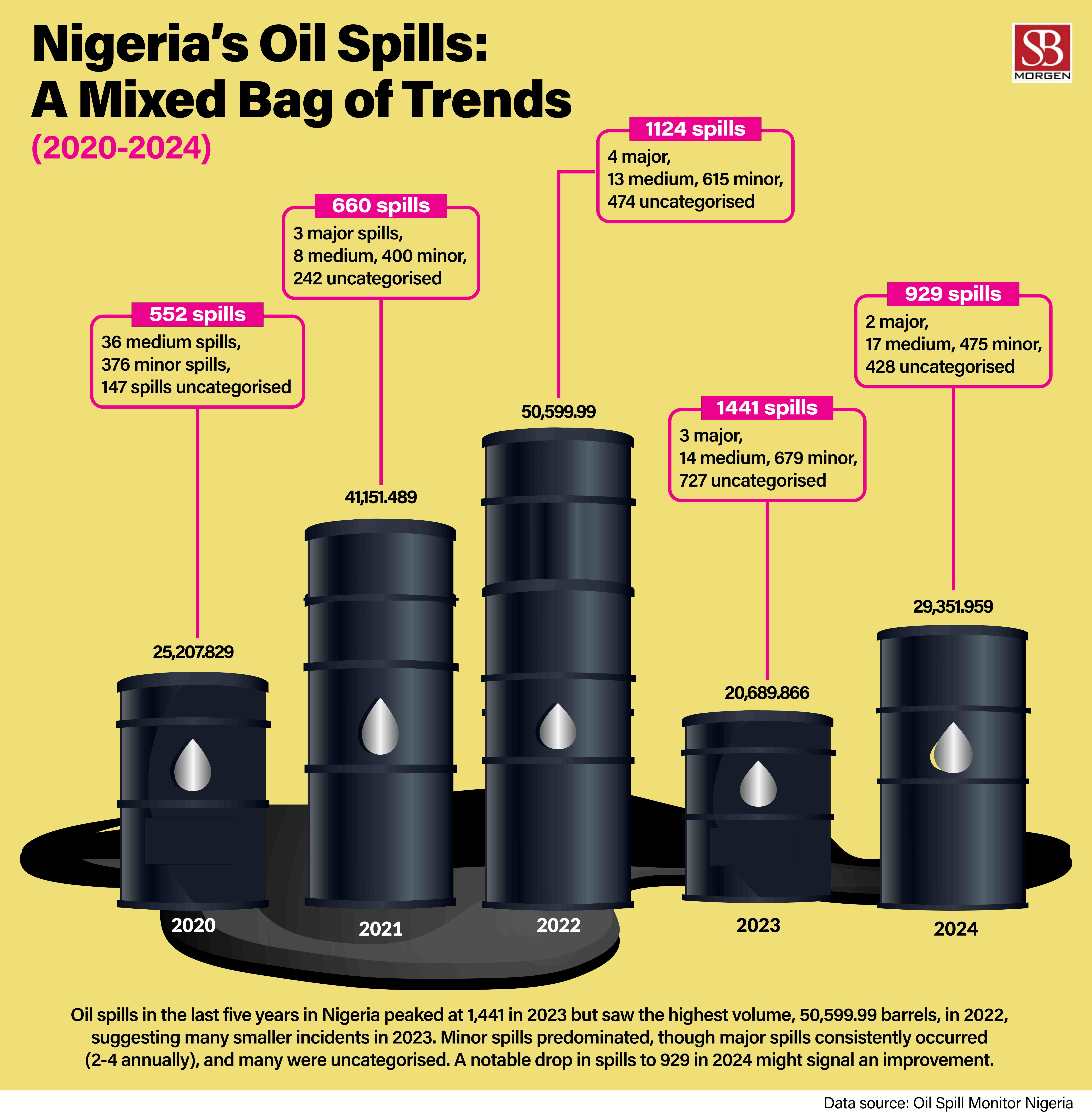
Brazil's Petrobras's decision to re-enter Nigeria's oil sector, specifically targeting deepwater frontier blocks, signals the enduring strategic value of Africa's most populous country for global energy players. This move coincides with the upcoming 2025 Nigeria-Brazil Strategic Dialogue. This tenacity of foreign interests to navigate persistent structural dysfunctions and secure a share of Nigeria’s oil wealth is evident in the steady shift of IOCs from volatile onshore and shallow water fields to the relative safety of deepwater offshore assets. While this strategic pivot offers Nigeria benefits such as signature bonuses and potential revenue, it simultaneously raises critical questions regarding the sustainability and oversight of offshore operations, including the enhancement of local capacity, the prompt detection and containment of oil spills, and transparent crude oil production figures. These pressing questions remain largely unanswered.
Petrobras's focus on deepwater acreage is unsurprising given the nearly complete exit of oil majors from onshore and shallow terrain. Their continued participation in Nigeria's oil sector now depends on operating in zones where the complexity and remoteness of extraction offer a natural deterrent to theft and sabotage, a characteristic inherent in offshore platforms. The severe risks associated with onshore operations are starkly illustrated by recent events, such as the two major oil spills from the Trans Niger Pipeline in Ogoniland within two months, which environmental activists have condemned due to delayed cleanup efforts. Furthermore, Renaissance Africa Energy's experience with the Trans Niger Pipeline (TNP), a former cornerstone of Shell’s Nigerian portfolio, underscores this challenge. The TNP was shut down for all of 2023 due to repeated sabotage incidents, and upon resuming operations in 2024, 460 illegal connections were removed. Shell's annual report revealed that 81% of its oil spill incidents were due to sabotage, with the number of large-scale spills more than doubling from 9 in 2023 to 20 in 2024.
Renaissance Africa Energy's predicament highlights a broader truth: Nigeria’s onshore terrain is increasingly unviable, both commercially and operationally, remaining plagued by criminality, under-governance, and regulatory inertia. Conversely, Renaissance Africa Energy's initial success in exceeding its oil production target by 40% in its debut month, earning praise from NNPC (which owns 55% of the joint venture), signals renewed momentum in Nigeria’s oil sector despite these ongoing environmental and operational challenges. With the Tinubu administration offering fresh incentives for offshore investment, more such deals are anticipated. However, the long-term impact of this shift depends on more than fiscal incentives; unless the government addresses fundamental issues such as regulatory capacity, environmental stewardship, and production transparency, the promise of deepwater development could prove to be another missed opportunity.
As it stands, the outlook for Nigeria’s oil sector remains uncertain. While global interest persists, the domestic framework for managing this interest remains weak, with the Tinubu administration seemingly prioritising political considerations over institutional reform. The responsibility now falls to NNPC’s new leadership, specifically Group CEO Mele Kyari’s successor, Mr Ojulari, to demonstrate a departure from previous practices and navigate these complex challenges. We await his move.