
Crude work
NNPC's $21.565 billion forward crude sales hinder domestic supply, forcing refineries to import and underperform.

Since 2019, NNPC Limited has made forward crude sales worth $21.565 billion, affecting its ability to meet Domestic Crude Supply Obligations (DCSO). The company has entered 11 deals, excluding the Dangote refinery, with maturity dates from 2025 to 2034. Notable agreements include Project Gazelle ($3.4 billion, 2032) and Project Gazelle II ($7.5 billion, 2034). Additionally, NNPC secured a $3.3 billion emergency crude repayment loan in 2023. These commitments limit crude supply to local refineries, forcing them to import and operate below capacity.
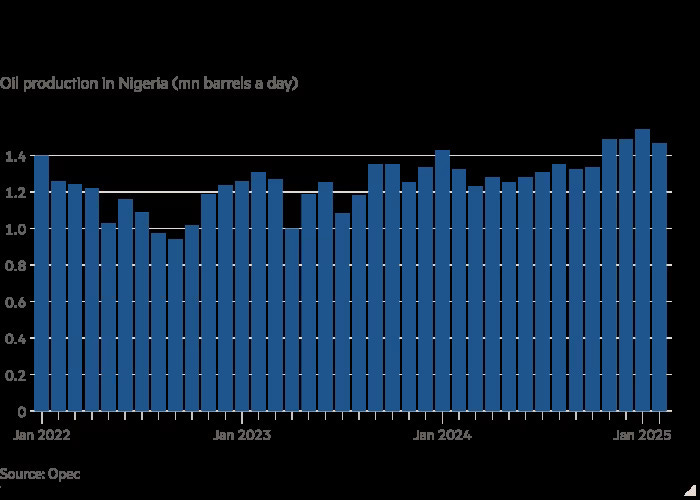
The veil has finally been lifted on NNPC's crude supply challenges to local refiners, revealing a complex web of financial commitments and operational tensions. As long speculated, the Federal Government's excessive borrowing in recent years was partially secured by pledging future crude production - a practice now complicating domestic supply chains. The situation came to a head last year when NNPC publicly accused Dangote Refinery of failing to secure adequate feedstock months before operations commenced, contrary to standard industry practice.
This dispute unfolds against Nigeria's precarious refining landscape. The country's local refineries could process over one million barrels per day at full capacity. However, with current crude production languishing at approximately 1.5 million bpd - much of which is extracted and exported by international oil companies (IOCs) - NNPC faces severe limitations in meeting local refiners' crude requirements in the short to medium term.
The ongoing price war between NNPC and Dangote, as reported by oil marketers, has forced some operators to slash purchases amid unsustainable losses. This tension highlights the delicate balance between national energy security and commercial viability in Nigeria's evolving oil sector.
Dangote appears to have moved beyond reliance on domestic crude supply in a strategic pivot. After initially sourcing feedstock from international traders like Trafigura and Glencore, the refinery is now capitalising on opportunities in markets where refineries are undergoing maintenance or facing supply gaps. This agile approach has already borne fruit, as evidenced by Dangote's recent export of two million barrels of jet fuel to the United States, which demonstrates its ability to mobilise large volumes competitively.
The situation reveals deeper complexities in Nigeria's energy transition. While the NNPC-Dangote standoff continues, both parties are navigating an ecosystem where international market forces increasingly dictate local realities. Much remains behind the scenes, suggesting this evolving dynamic may reshape Nigeria's position in global energy markets.