
Debt-ridden
Nigeria's public debt rose by 6% to ₦142.3 trillion by September 30, 2024.

Nigeria’s public debt rose to ₦142.3 trillion by September 30, 2024, a 5.97% increase (₦8.02 trillion) from June’s ₦134.3 trillion, according to the Debt Management Office (DMO). The debt includes ₦68.89 trillion in external debt and ₦73.4 trillion in domestic debt. It slightly increased by 0.29% to $43.03 billion in dollar terms. However, external debt surged 9.22% in naira due to currency depreciation, as the exchange rate weakened from ₦1,470.19/$ in June to ₦1,601.03/$ in September. This depreciation significantly inflated Nigeria’s external debt burden in local currency.
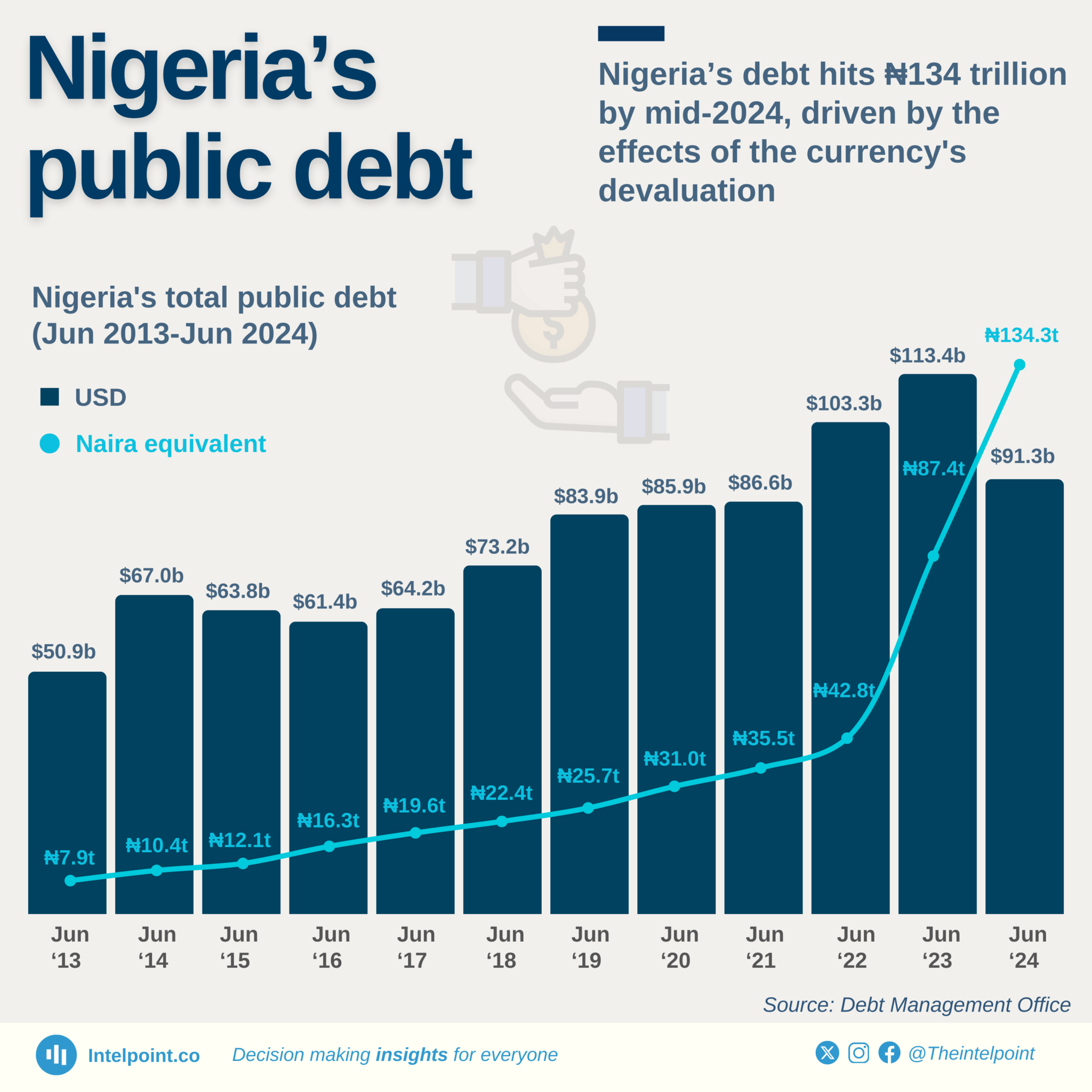
The increase in Nigeria’s public debt highlights a deepening fiscal challenge that requires immediate and strategic intervention. This surge in debt is particularly concerning given the broader economic context, including inflationary pressures, exchange rate volatility, and the need for critical infrastructure and public services investment. A closer examination of the debt composition reveals that external debt accounts for ₦68.89 trillion, a significant portion of the total debt stock. The sharp rise in the naira value of this external debt is primarily driven by the depreciation of the naira, which has weakened from ₦1,470.19/$ to ₦1,601.03/$ within a few months. This depreciation has effectively inflated the cost of servicing foreign debt in naira terms, even though the dollar value of the debt increased by a modest 0.29%.
The naira’s vulnerability to exchange rate fluctuations underscores Nigeria’s exposure to global economic dynamics, including fluctuating oil prices, capital flow reversals, and tightening global financial conditions. These factors compound the challenges of managing public debt, as they increase the cost of borrowing and limit the government’s ability to access affordable financing. The rising debt burden in local currency exacerbates inflationary pressures, as the government may resort to increased domestic borrowing or money creation to meet its obligations. This, in turn, could crowd out private sector investment, stifle economic growth, and further erode the purchasing power of citizens.
The implications of this growing debt burden extend beyond fiscal metrics. It raises serious concerns about Nigeria’s debt profile's long-term sustainability and ability to meet future obligations without compromising essential public services and infrastructure development. High debt servicing costs already consume a significant portion of government revenue, leaving little room for critical health, education, and infrastructure expenditures. This creates a vicious cycle where limited investment in these areas hampers economic growth, further constraining revenue generation and increasing reliance on borrowing.
Nigeria must adopt a multi-pronged approach that balances short-term fiscal consolidation with long-term structural reforms to address these challenges. First, there is an urgent need to diversify revenue sources and reduce dependence on oil exports, which remain highly volatile and susceptible to global market shocks. Expanding the tax base, improving tax administration, and leveraging the potential of non-oil sectors such as agriculture, manufacturing, and technology could provide more stable and sustainable revenue streams. Additionally, efforts to curb illicit financial flows and improve transparency in public financial management could free up resources for development priorities.
Second, Nigeria must enhance its debt management strategies to mitigate risks associated with exchange rate volatility and rising borrowing costs. This could involve renegotiating terms with creditors, exploring concessional financing options, and prioritising domestic borrowing where feasible. The government should also consider issuing debt in local currency to reduce exposure to foreign exchange risks, although this requires building investor confidence in the naira and the broader economy.
Third, structural reforms to improve the business environment, foster private sector growth, and attract foreign direct investment are critical to reducing reliance on debt financing. Policies that promote ease of doing business strengthen institutions, and address infrastructure deficits can unlock Nigeria’s economic potential and create a more resilient fiscal framework.
Finally, policymakers must prioritise transparency and accountability in debt management to build public trust and ensure that borrowed funds are used efficiently and effectively. Regular audits, public disclosure of debt terms, and robust oversight mechanisms can help prevent mismanagement and corruption, which have historically undermined Nigeria’s fiscal health. Without comprehensive reforms, the growing debt burden could undermine economic stability, exacerbate poverty, and hinder the country’s development aspirations. Policymakers must act decisively to address the root causes of the debt crisis, strengthen fiscal resilience, and chart a sustainable path toward economic growth and prosperity. The stakes are high, and the time to act is now.