
Demand in decimation
Manufacturers in Nigeria are facing a severe crisis, with the inventory of unsold finished products soaring to ₦1.24 trillion in the first…

Manufacturers in Nigeria are facing a severe crisis, with the inventory of unsold finished products soaring to ₦1.24 trillion in the first half of 2024, a 357.6% increase from ₦271 billion in 2023’s first half, the Manufacturers Association of Nigeria (MAN) stated in its H1 Economic Review report. MAN attributes this “alarming increase” to weakened consumer purchasing power amid escalating inflation, subsidy removal, and naira devaluation, coupled with high electricity costs and rising energy expenses. Meanwhile, Multichoice Nigeria lost 243,000 DStv and GOtv subscribers between April and September 2024, citing high inflation impacting household budgets. Across its African operations, Multichoice faced 566,000 subscriber losses over six months.
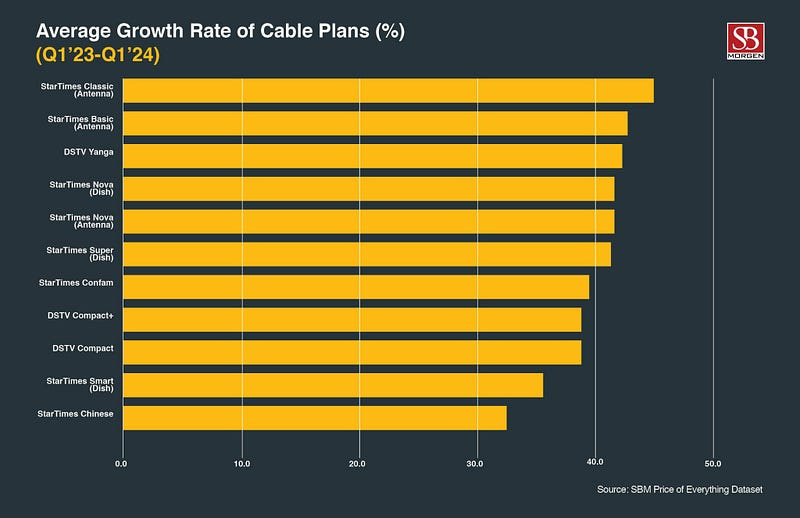
In both cases, declining demand is largely driven by the loss of purchasing power of the consumers, resulting in the decimation of demand for non-essential items, and a drop in even essentials. The biggest implication of recent reforms by the Tinubu administration was the significant devaluation of the naira which caused the spending capacity of Nigerians to drop substantially in the last year. Any wage increase received by Nigerians has not translated to any gains because inflation has wiped out any such gains. The average Nigerian is much poorer than a year ago and there appears to be no respite. Thus, people have eliminated non-essential expenses, as the average Nigerian now spends roughly 97% of their income on food, according to a 2023 SBM income survey. The remaining portion goes toward transportation and loan repayments. As the Multichoice report demonstrates, this trend is not limited to Nigeria; the company has experienced subscriber losses in other markets facing similar economic pressures. However, this is not the full story. For years, Multichoice targeted the premium market segment, catering to customers who could afford higher-end packages with exclusive movie series, music, and sports content. They also appealed to the lower market segment, which prioritised quantity over content quality. Overall, Multichoice was the largest investor in content creation and licensing in Nigeria. However, new competitors have emerged, targeting specific segments — like Netflix and Amazon Prime for quality-conscious, high-end users, or YouTube for quantity-seeking viewers — and branching into new content verticals like YouTube and TikTok for music. Unlike Multichoice, platforms like YouTube and TikTok offer monetisation strategies that reward content creators without high financial barriers, incentivising creators to migrate. This shift has worsened Multichoice’s subscriber losses, with more viewers drawn to these alternate platforms.